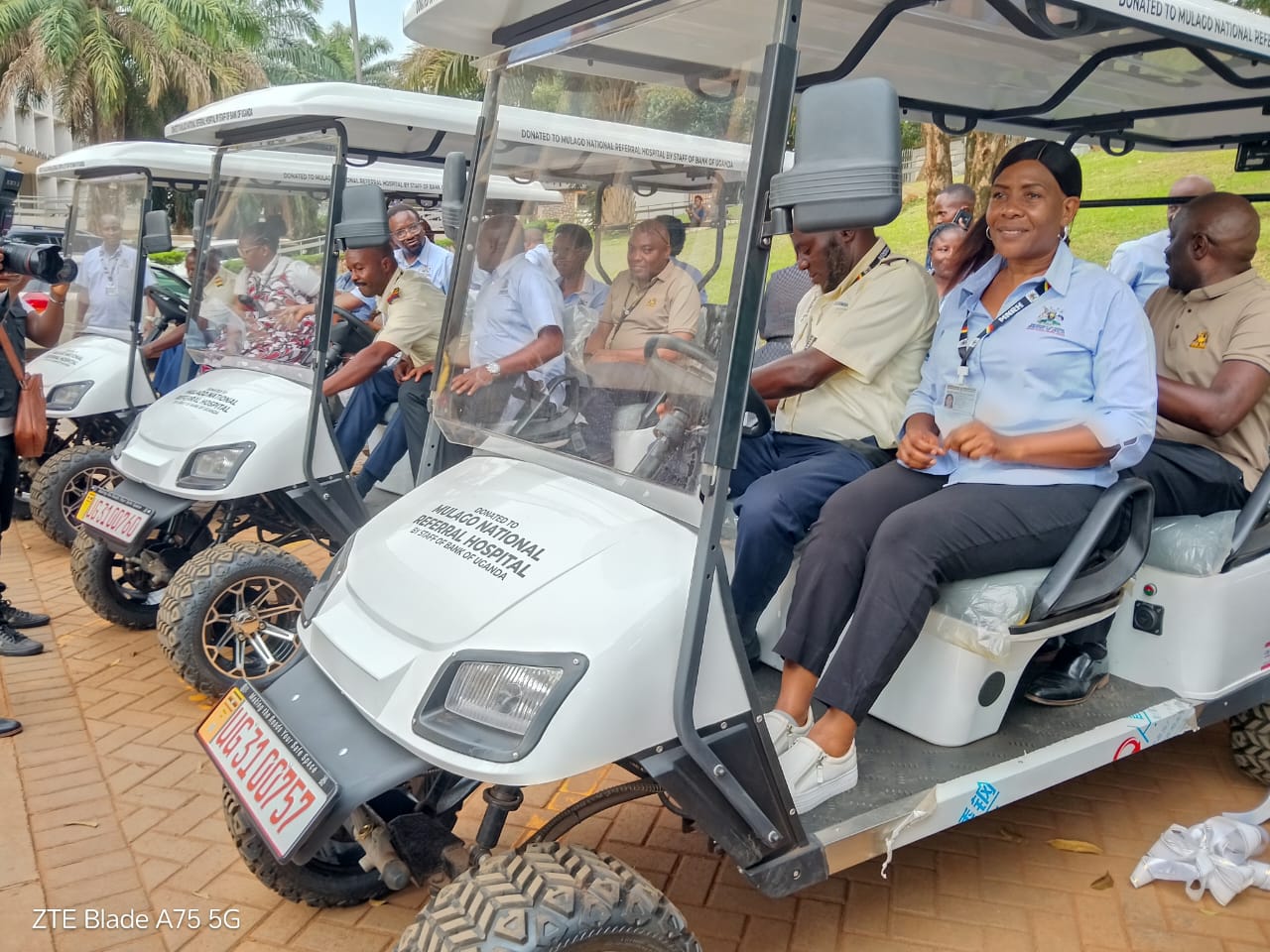
Mulago Hospital has received three golf carts from the Bank of Uganda in a move aimed at improving transportation and emergency services within the country’s largest public health facility.
The golf carts, which can each carry up to eight people, are expected to ease movement of patients, nurses, medical samples and other hospital staff between the Upper Mulago and Lower Mulago sections of the hospital.
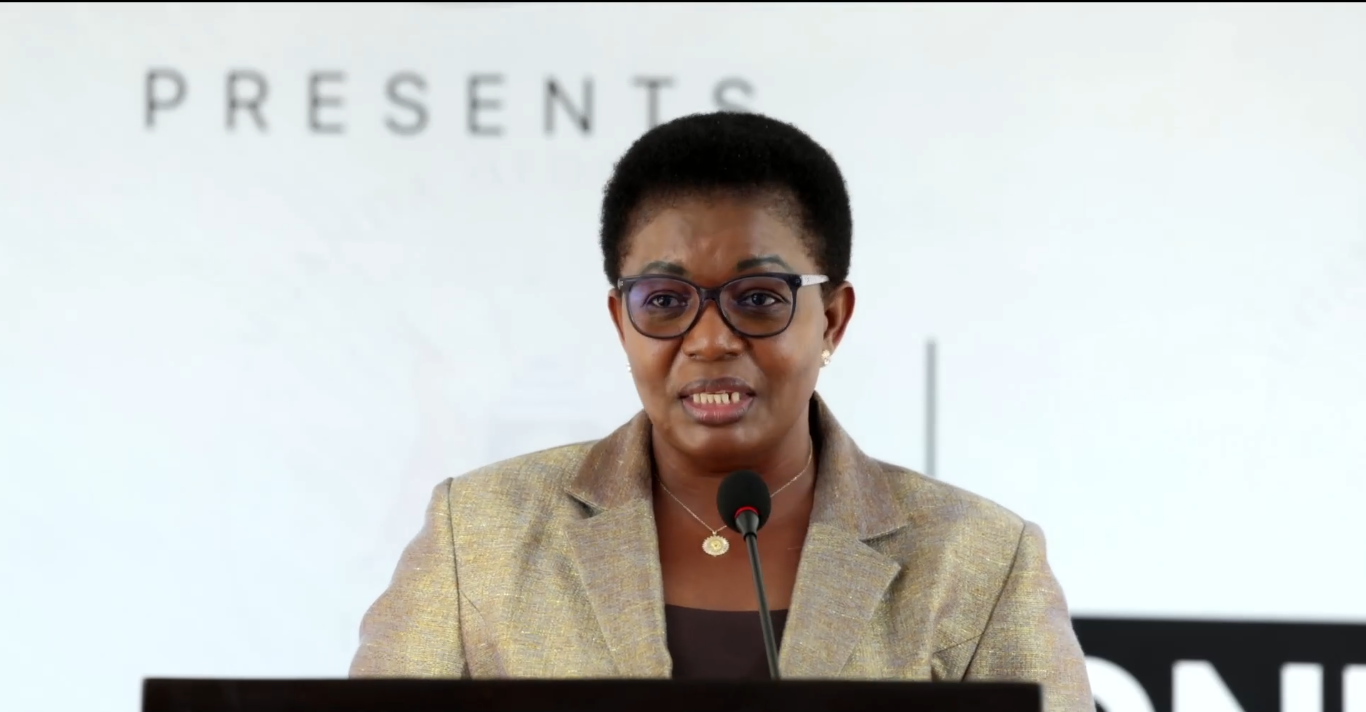
Speaking during the handover ceremony, the hospital’s executive director, Dr. Rosemary Byanyima, welcomed the support and described it as a major boost to service delivery.
“As management, we salute the Bank of Uganda and the staff who came up with the idea of contributing towards the purchase of these golf carts. They will support the transportation of nurses, medical samples and patients between different wards in both Lower and Upper Mulago,” Dr. Byanyima said.
She noted that the hospital has largely relied on ambulances to transport patients and medical supplies within the facility, a situation that sometimes slowed movement across the expansive hospital complex.
Dr. Byanyima said the new golf carts will help transport some patients, including those in critical condition, more quickly within the hospital.
However, she clarified that ambulances will remain essential for patients requiring advanced emergency care and transportation.
“Some emergency cases will still require ambulances because they are equipped to provide specialized medical support during transportation,” she said.
The executive director for People and Culture Administration at Bank of Uganda, Oscar Edwin Kiiza, said the central bank responded to a request from Mulago Hospital after recognising the need for improved transportation within the facility.
He said the golf carts would enhance efficiency and enable faster movement of patients, staff and medical supplies.
Kiiza emphasized the importance of investing in health services, noting that good health is fundamental to national development.
“Health is a basic human right. A healthy population is a productive population. Poor health reduces labour supply and increases household expenditure. When children are healthy, they learn better, and when workers are healthy, they are able to report to work and perform effectively,” he said.
Hospital officials said the donation is expected to improve internal mobility and contribute to faster delivery of services, particularly in emergency situations where time is critical.