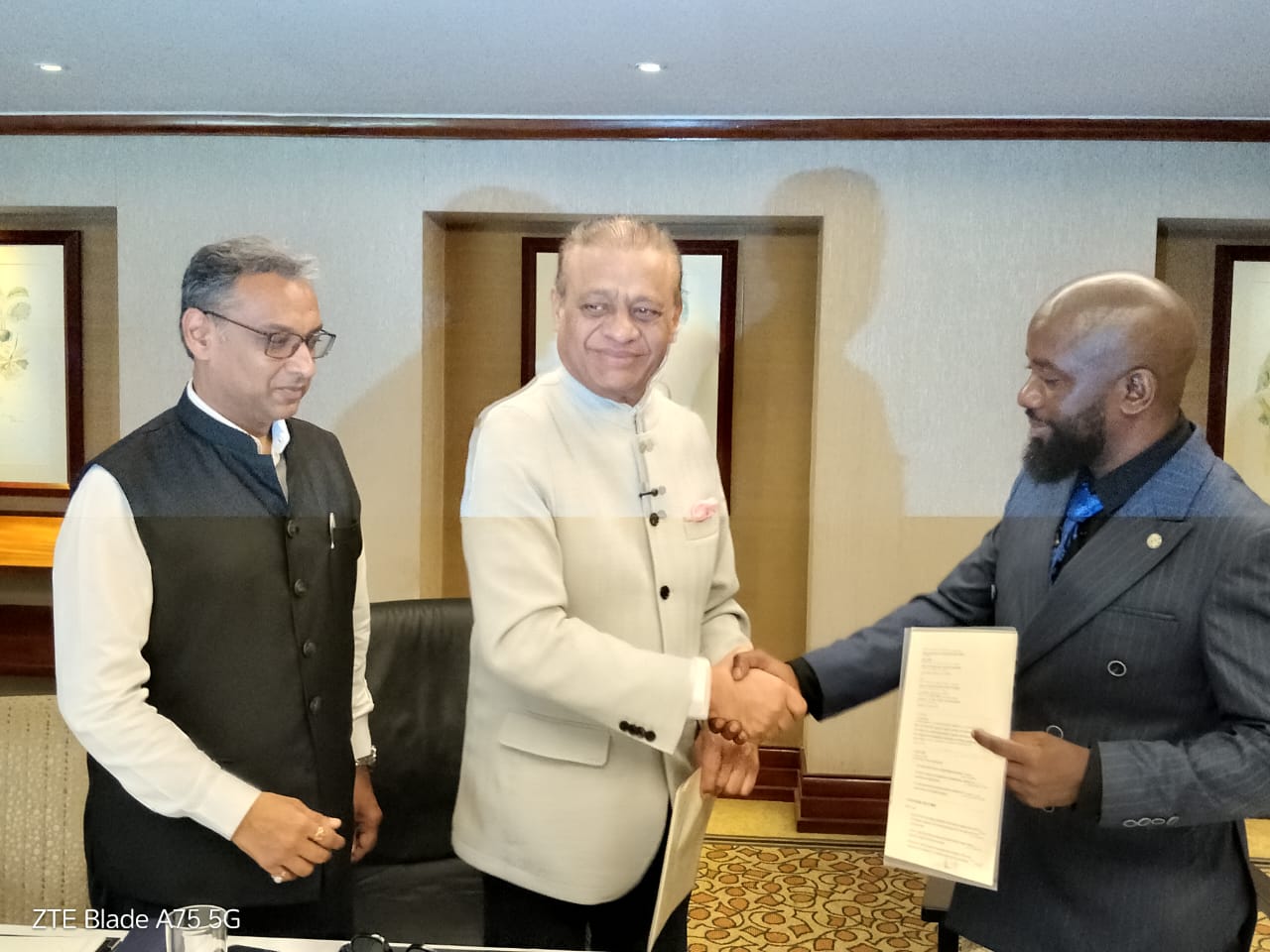
The Ajanta Pharma Group, through its partnership with Make A Child Smile, has launched an initiative to provide free specialised healthcare services to vulnerable communities across Uganda.
The programme will focus on heart surgeries, artificial limb donations, cancer screening, eye treatment, and the distribution of sanitary pads to women and girls in disadvantaged communities.
Speaking during the launch, Madhusudan Agrawal, Uganda’s consul in Mumbai, said the partnership seeks to improve access to healthcare for people who cannot afford specialised treatment.
Agrawal, who was appointed consul by President Museveni nine years ago, said the initiative is already working with Mulago hospital to provide free artificial limbs to people living with disabilities.
“We partnered with Mulago Hospital to provide free services, especially artificial limbs for those who have lost their legs,” Agrawal said.
“We shall be giving out an average of 100 artificial limbs every month depending on the need. People should not pay for these services as long as they follow the proper procedures.”
He added that discussions are ongoing with the government to begin distributing free sanitary pads to vulnerable communities.
Agrawal said the group also plans to establish a sanitary pad manufacturing plant in Uganda to reduce the burden faced by women and girls who cannot afford menstrual hygiene products.
“We intend to put up a sanitary pad manufacturing facility to make the products more accessible and affordable,” he said.
He noted that the partnership will also support Ugandans seeking specialised heart surgery and eye treatment in Mumbai, India.
According to Agrawal, patients who qualify for the programme will receive free medical operations, provided they can meet the cost of air travel.
Agrawal recently received a Diamond Jubilee Award from President Museveni in recognition of his contribution to Uganda’s health sector.
Meanwhile, Alex Sembatya, the chief executive officer of Make A Child Smile, said the idea was developed after discussions with Agrawal about the growing number of vulnerable people unable to access specialised medical care.
Sembatya said the cost of acquiring artificial limbs remains beyond the reach of many families.
“Getting artificial limbs is expensive and many people cannot afford them,” he said. “We are optimistic that this partnership will help many vulnerable people. At least 100 artificial limbs will be given out every month to those in need.”
He said the organisation plans to intensify public awareness campaigns through the media and community outreach programmes to ensure people understand how to access the services.
“People should not pay for these services. They should contact us whenever necessary,” Sembatya said.