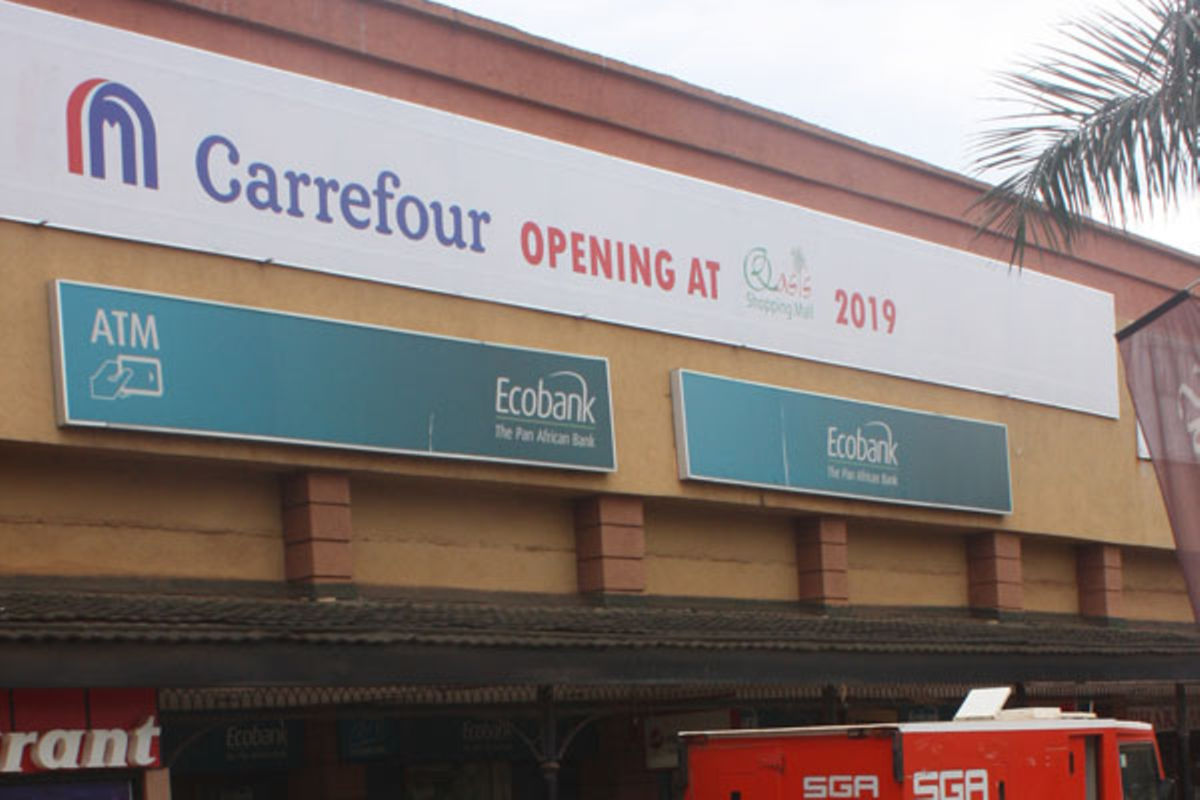
Gabriel Achuk, a South Sudanese businessman who claimed he was locked inside the toilet of Ecobank at the Oasis Mall branch, where he had gone to withdraw money, has lost the case against the bank because his affidavit was “defective and incompetent”.
Achuk had gone to court accusing the bank and police of violating his rights after a dramatic incident that began with what appeared to be a normal banking transaction.
At the time the case was heard, Achuk was still under police detention, so his affidavit was sworn on his behalf by Nyuon Thikuiy Gang Lual, the general manager of Tamam Brokerage Services.
Achuk is a director of the company that deals in forex trading and the stock exchange.
The company held a dollar account with Ecobank Uganda, and on October 5, 2024, the account received $17,500 (Shs 65 million) through several transfers from Ecobank South Sudan.
Two days later, on October 7, Achuk withdrew $10,000 (Shs 37 million) from the account to invest in various forex trading platforms.
But unknown to him, the money had already raised suspicion.
Ecobank Uganda had been alerted by its South Sudan branch that the funds could have been part of a fraud involving $120,000 (Shs 450 million) that had been hacked from customer accounts.
This set the stage for the dramatic events that happened at the bank’s Oasis Mall branch, a few days later when Achuk went back to the same branch to withdraw additional money.
He was told there was a system problem and asked to wait in the bulk teller room.
Then, shortly, a bank manager approached him and led him to a toilet inside the bank. The manager locked him inside the toilet and alerted the police, who came and interrogated him for more than two hours.
Achuk claimed he was never told why he was being held, nor was he allowed to explain himself.
Later that afternoon, at around 3 pm, he was taken to Wandegeya Police Station and ordered to record a statement.
However, at Wandegeya Police Station, the situation escalated further.
Police officers led by Sarah Kataike, the OC/CID at the station, allegedly told him to return the $10,000 he had withdrawn earlier and have the issue resolved once and for all.
He was also told that the money in the company account had been traced to a hacking incident at Ecobank South Sudan and that the sender was suspected to be the perpetrator.
Achuk maintained that neither he nor his company knew anything about the alleged fraud.
His lawyers from Stratten Advocates later arrived at the police station and requested that he be released on bond.
They also assured police that Achuk was willing to cooperate with investigations, but police declined the request, arguing that this was a sensitive matter.
Days passed.
On October 14, Ecobank officials went to Wandegeya Police Station and told Achuk that unless he returns the $10,000, he will not be released.
Kataike, the OC/CID at the station, allegedly insisted on the same condition, refusing to grant bond despite Achuk meeting the requirements.
So Achuk remained in custody beyond the constitutional 48-hour limit.
Through his application, Achuk asked the court to declare that his arrest and detention were unlawful, that he had been subjected to cruel and degrading treatment, and that his rights to liberty and property had been violated.
He also sought compensation of Shs100 million and punitive damages of Shs20 million.
Ecobank, however, strongly denied any wrongdoing.
Julius Alex Ssekabira, who heads the bank’s internal audit department, said it acted on “reasonable suspicions of fraudulent transactions.”
He explained that once it received information from South Sudan about suspected fraud, it restricted the account and alerted its audit team.
Ecobank’s lawyers from V.Agaba Advocates and Legal Consultants said when Achuk attempted another withdrawal, the bank intervened, and they handed him over to the police for further investigations.
The Attorney General’s chambers, which represented police officer Kataike, also opposed the case, describing Achuk’s claims as false and arguing that he had no cause of action against the government.
Shs 8.5m was withdrawn from her account in Absa. Judge says she was ‘careless’ with PIN
Before Justice Collins Acellam could even examine whether Achuk’s rights had been violated, a key legal issue emerged.
The bank argued that the affidavit supporting the case was invalid because it had not been sworn by Achuk himself but by his business partner, Nyuon Thikuiy Gang Lual, who was not a party to the case. Therefore, they argued, it was defective.
Justice Acellam agreed with this position.
“It is my opinion… that the deponent cannot claim to swear the affidavit in support of the application on behalf of the applicant,” he ruled.
He added that the affidavit contained statements whose sources were not disclosed.
Although the law allows flexibility in human rights cases, Justice Acellam said this defect was too serious to ignore.
He said Achuk could have sworn the affidavit himself, even while in custody.
“There is nothing that stops a person in police custody from deponing an affidavit,” he said.
In the end, Justice Acellam struck out the affidavit and dismissed the entire case without considering the substance of Achuk’s allegations.
Each party was ordered to bear its own costs, meaning Achuk received no compensation.