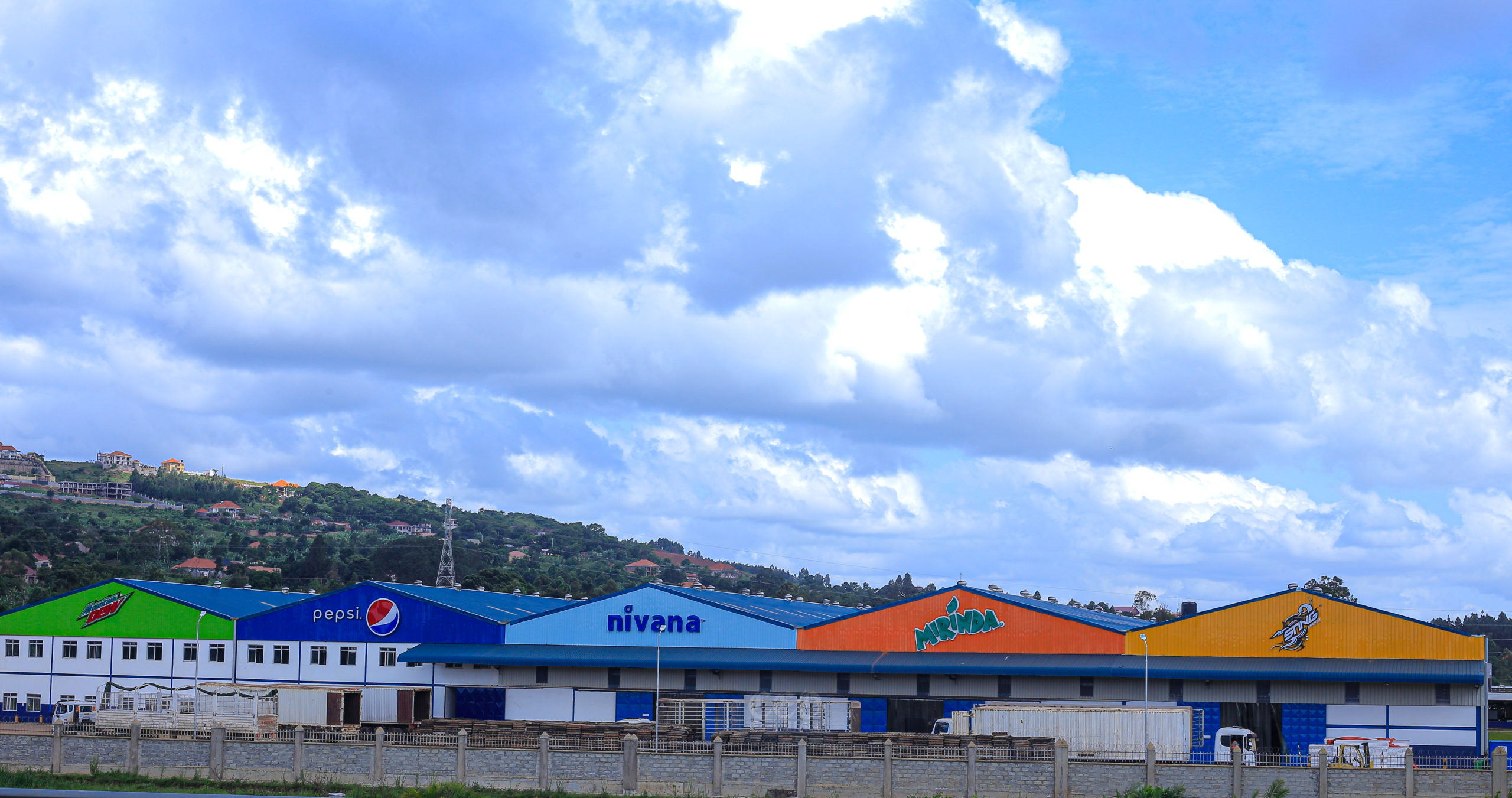
Oscar Musinguzi worked at Crown Beverages’ Kakungulu plant off the Entebbe Express Way, as an operations supervisor for Nivana mineral water.
He claims that the work was risky since it involved getting in close contact with ozone gas, a powerful, chemical-free oxidant used for water purification to rapidly destroy bacteria, viruses, and parasites.
Yet Crown Beverages, the bottlers of Pepsi, did not give him any protective gear.
He claims that at the time, workers manually filled and sealed the water bottles, exposing them directly to ozone gas.
After some time, he says he developed severe health problems that left him with “acute pain and life-threatening illness.”
He says he sought treatment from the Lung Institute at Mulago Hospital, but the treatment only helped to manage pain rather than cure him.
He started missing work. Later, he informed his bosses about his condition, but instead, he claims, they turned on him and dismissed him.
They did not ask about his condition, nor did they compensate him.
Feeling that his rights had been violated, Musinguzi, through his lawyers, Nyanzi, Kiboneka, and Mbabazi Advocates, took Crown Beverages to court.
Among other prayers, he was seeking compensation, medical care, and even a court-ordered audit of the company’s production processes.
However, Crown Beverages strongly denied Musinguzi’s claims.
Through Raymond Aruho and Company Advocates, the bottling company said Musinguzi was not directly operating the bottling line. Instead, he was supervising workers from an independent contractor called Job Connect Limited.
It also dismissed claims that he had been exposed to ozone gas.
Crown Beverages explained that ozone gas is commonly used in water treatment around the world and is safe when properly managed.
“Most packaged drinking water… is referred to as ‘ozonated drinking water’ due to accepted use of ozone gas,” the company argued.
Crwon Beverages added that it uses modern machines with sensors to monitor gas levels and that its employees are always provided with protective gear such as respirators, gloves, and safety shoes.
Okay, then, why did they dismiss him? Musinguzi’s lawyers asked the company.
Crown Beverages said Musinguzi was fired for assaulting a fellow worker, and that he even wrote an apology letter after a disciplinary hearing.
The company further argued that if Musinguzi had suffered any injury at work, there was already a clear legal path for such claims.
“There are well-established processes under the Workers Compensation Act,” it said.
Court stops Goldmine Finance from dismantling Towerco telecom tower
After reviewing both sides, Justice Simon Peter Kinobe asked one simple question: Was this the right kind of case to be brought as a human rights claim?
He said no.
He explained that courts only handle constitutional cases where there is a clear violation of fundamental rights.
“The matter must relate directly to fundamental rights and freedoms guaranteed under the Constitution,” he said.
But in this case, Justice Kinobe discovered that Musinguzi was mainly seeking compensation for illness and loss of employment.
Justice Kinobe said Musinguzi’s claims fall under ordinary labour and compensation laws, not constitutional litigation.
“This is not a matter of enforcement of human rights,” he emphasized.
Justice Kinobe quoted a previous decision, saying it is wrong to treat every legal complaint as a human rights violation.
In the end, he declined to hear the case, meaning Musinguzi’s woes will have to continue. He will now have to pursue the case in the Industrial Court.