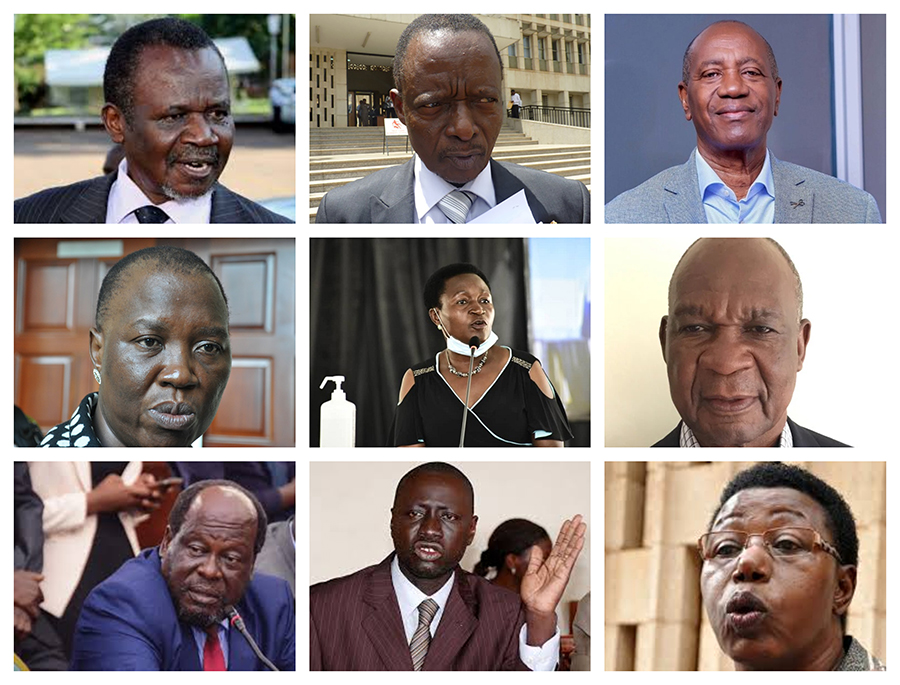
Last week’s parliamentary elections brought some shocks. Ssemujju Ibrahim Nganda was felled in Kira Municipality by NUP’s George Musisi. Abdu Katuntu’s long and tight grip on Bugweri was loosened by NRM’s Sadala Wandera, ending 25 years of his dominance there.
Mathias Mpuuga, Medard Sseggona, and Muwanga Kivumbi, three of the most prominent leaders in Buganda, did not survive. Neither did Erias Lukwago, who had superintended over Kampala City for 15 years.
It is still too early to judge how some of the incoming MPs who replaced prominent figures such as Ssemujju, Katuntu, or Sseggona will perform in the 12th Parliament.
Yet it is not too late to look at how the defeat, death, or withdrawal of previous prominent political figures affected the fate of the constituencies they once represented. Many of these constituencies literally died.
Those who are old enough, before the advent of social media, will remember a time when mentioning a constituency in Uganda immediately evoked the name of a particular MP.
Busiki meant Basoga Nsadhu. Mbarara Municipality meant Winnie Byanyima. Rubaga South meant Ken Lukyamuzi. Nyabushozi meant Elly Karuhanga. Busiro South meant Patrick Musisi. Kagoma meant Dr Frank Nabwiso.
All the above individuals did not just represent their voters. They shaped debate, influenced legislation, and constantly forced the executive to explain itself.
Today, all those constituencies still have MPs, but one can describe them as “dead” constituencies.
Basoga Nsadhu aka “Mr Loverman”
Busiki’s political identity was closely tied to Basoga Nsadhu. He first made his mark in the National Resistance Council (NRC) sessions during the debate on the privatization of parastatals before he went on to become a minister.
During the debate on passing the 1999 budget, Nsadhu warned parliament against approving funds without scrutiny.
“This House will lose its meaning the day we fear to question how public money is spent,” Nsadhu said. A few months later, he was appointed Minister of State for Information, a move some say was intended to shut him up.
He died in April 2003 and when Parliament paid respect to Nsandhu one of the MPs said he had a soft spot for beautiful women. He was Mr Loverman. Busiki has consequently been represented by Moses Mutabali, Asupasa Mpongo, and, recently, Peter Akamba. They have not made any significant contribution on the floor of Parliament.
Elly Karuhanga
Similarly, Elly Karuhanga set a high bar for Nyabushozi. A senior lawyer, he was influential in constitutional and legal debates in the 6th Parliament. After leaving parliament in 2001 and returning to legal practice, Nyabushozi struggled to maintain the same level of influence. Successive MPs like Mary Mugyenyi and Col Fred Mwesigye have been largely absent from major national debates.
Ken Lukyamuzi
Ken Lukyamuzi, “the man”, turned Rubaga South into one of the most recognisable constituencies in parliament in Uganda. Long before Kira’s Ssemujju came on the scene, Lukyamuzi was widely regarded as a “national MP.” He was combative and unapologetically confrontational. Who remembers his opposition to the use of DDT by the government to curb malaria?
His replacements, including his daughter Susan Nampijja, Actor Kato Lubwama, and Aloysius Mukasa, never matched Lukyamuzi’s consistency in motions, petitions, or sustained debate. Lukyamuzi has lost on three attempts to return to the House. But his contribution, however dramatic, will never be forgotten.
Sseninde aka “Mama Wakiso”
You can say whatever you want, but Rosemary Sseninde shaped Wakiso into her image. She was at one point christened “Mama Wakiso.” Even when other seats in Wakiso came under siege from the opposition in 2006, 2011, and 2016, Sseninde of the NRM somehow found a way of retaining her position until NUP’s Ethel Naluyima came along in 2021. Sseninde was active on the floor, especially on matters about education and women’s emancipation.
“Universal Primary Education cannot succeed if Parliament treats teachers as an afterthought,” she once argued on the floor of Parliament in 2008, urging the government to increase salaries of primary school teachers.
Naluyima has served one term so far and was reelected last week. Her impact in Parliament has been negligible.
Dr Kisamba Mugerwa and Muyingo
The late Dr Kisamba Mugerwa was a force to reckon with in Bamunanika, Luwero district. He may not have been very eloquent, but he often stood out because he was persuasive. His interests lay in agricultural reform and fiscal discipline,
When he resigned in 2004 to take up a job with the International Food Policy Research Institute (IFPRI), Chrysostom Muyingo, his replacement, added intellectual weight, particularly on education reform.
After both left parliament, Bamunanika’s visibility declined. Robert Ssekitoleko, the incumbent MP, has failed to match the pair in every aspect of legislation.
Aggrey Awori
What would the 6th and 7th Parliaments have been without Aggrey Awori? He was vocal and stubborn. He was a constant thorn in the flesh of the executive, and given his eloquence, he was a provider of memorable soundbites to the media.
After his defeat in 2006, Samia Bugwe North lost much of its national prominence. He later joined NRM, but by then his star was fading. Yet none of his replacements in Samia Bugwe North have hit the standards that he set. Who is the MP for Samia Bugwe North (05 marks)?
Kassiano Wadri aka “Nyama Ntono”
“Nyama Ntono”, Kassiano Wadri aka “Nyama Ntono” of the FDC, was another force of nature on the floor of Parliament. He represented Terego from 2001 to 2016 and returned briefly in 2017 as Arua Municipality MP. He was loud (you could hear him from a mile away) but witty.
Obiga Kania, his replacement, has not been quite as visible.
Byanyima’s fearlessness
Winnie Byanyima was among the most influential MPs of her generation. She was one of the first female MPs to win a direct MP constituency seat at a time when many women were opting for the ‘affirmative and safe’ women’s district seats.
Byanyima often challenged military expenditure and lack of transparency and was at the forefront of some of the crucial decisions in the 6th Parliament, like the censure of Jim Muhwezi.
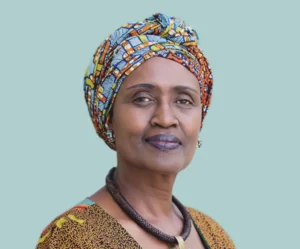
Her exit to take up an international job left a noticeable gap. Mbarara Municipality has had many successive MPs, but it struggled to regain the prominence it enjoyed during her tenure. Not even Dr Medard Bitekyerezo, another fine legist, came close.
Matembe
The same applies to the Mbarara Woman MP seat, which was occupied by Miria Matembe from the NRC to CA between 1996 and 2006. Matembe’s time in parliament was marked by strong advocacy for women’s rights and judicial independence. She was loud and controversial, but her constant voice gave the seat national visibility. She was defeated by NRM’s Emma Boona in 2006.
Matembe’s successors, Boona, Margaret Rwebyambu, and Rosette Kajungu Mutambi, have not matched her national impact.
Okumu Reagan
There was a time when Reagan Okumu was untouchable in the Aswa and Acholi sub-regions. He was the ultimate kingmaker. He was active on the floor and in the committees of parliament and one of the leading lights of the 6th, 7th, and 8th Parliaments. In 2016, he fell out with FDC and contested as an independent and still won. However, in 2021, he was defeated by NRM’s Simon Wokorach. He got a mere 2,000 votes. But since his defeat, Aswa’s profile has declined sharply.
Latigo
As the first Leader of Opposition under multiparty politics, Prof Ogenga Latigo gave Agago a central role in national politics. He was eloquent, measured, and mentored several young opposition leaders. Such was his influence that when he lost his seat in 2011 to NRM’s John Okot, a young man committed suicide.
Latigo came back to Parliament in 2016 but lost in 2021. His departure from the scene has diminished Agago’s prominence on the national stage.
The others
In the same vein, Kashari had Maj John Kazoora, Kagoma had Dr Frank Nabwiso, Bugabula South had Proscovia Salaamu Musumba, and Buzaaya had Issac Musumba, MPs who left an indelible mark in Parliament. None of their replacements was able to fit into their shoes.
For our readers, the above constituencies are not permanently dead. They still exist but only in name. You hardly read about their MPs in the newspaper or see them on TV.
In some ways, their decline illustrates how the loss of strong MPs sometimes weakens parliamentary debate.