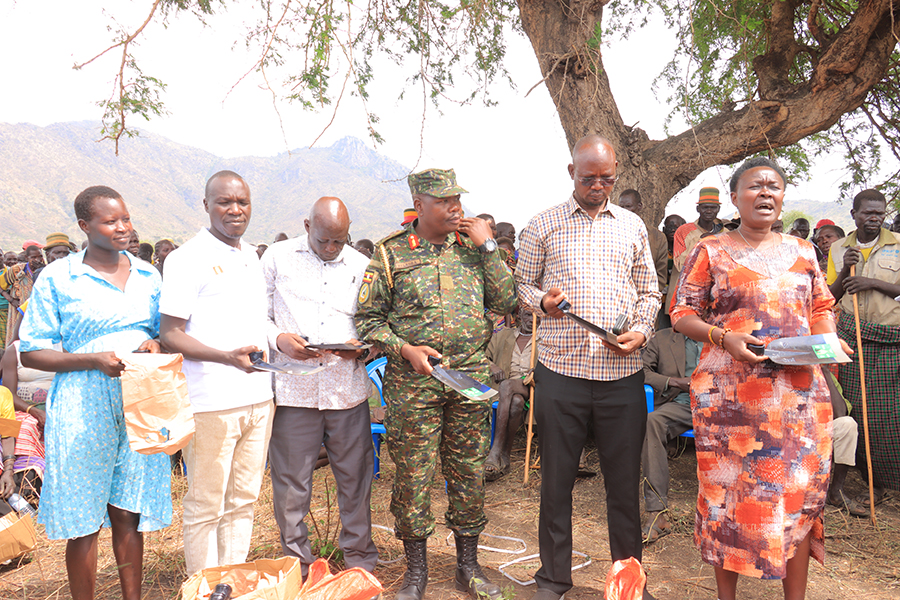
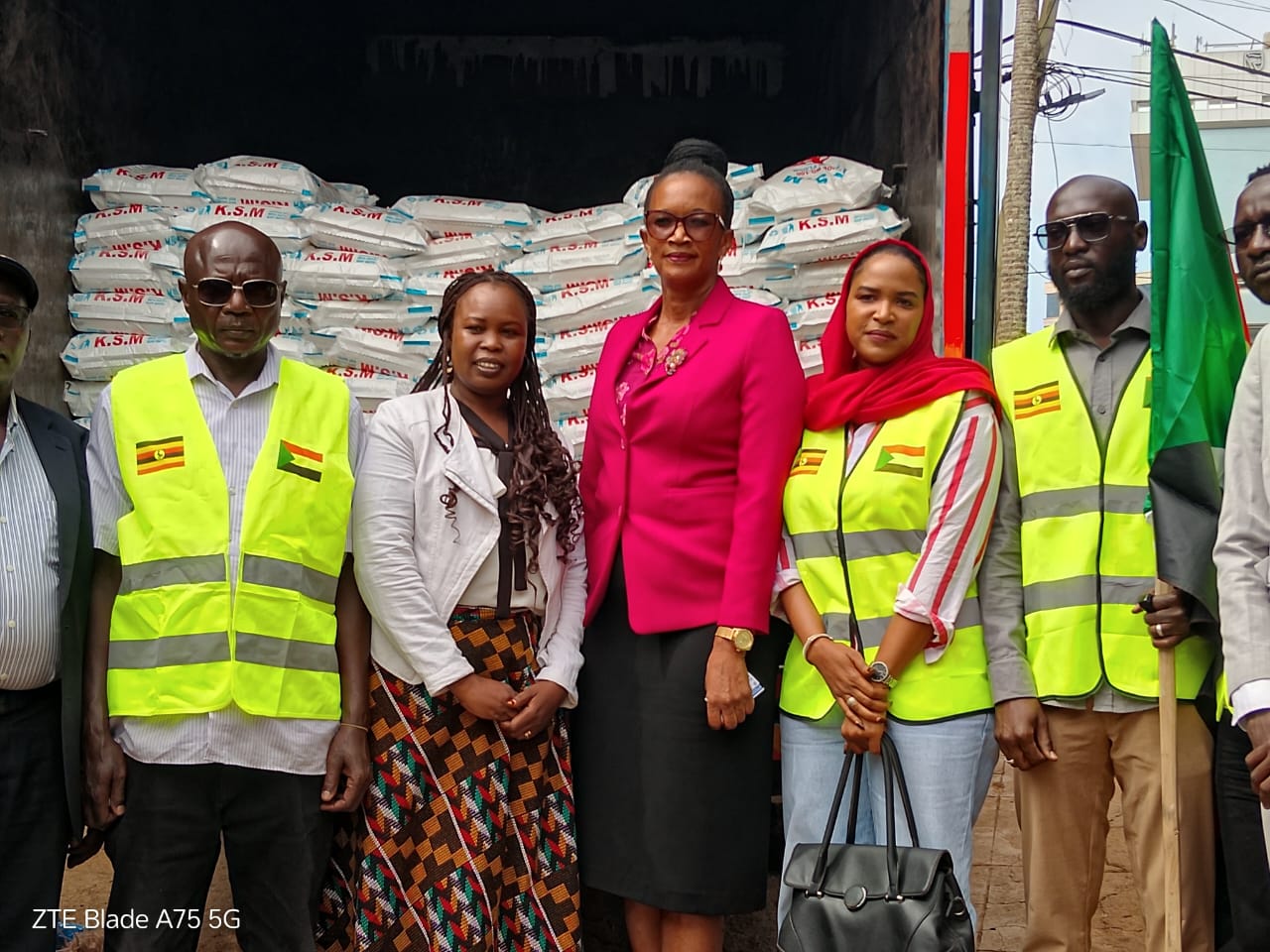
The Sudanese community in Uganda has donated six tonnes of maize flour to support communities in the Karamoja sub-region facing food shortages caused by prolonged drought.
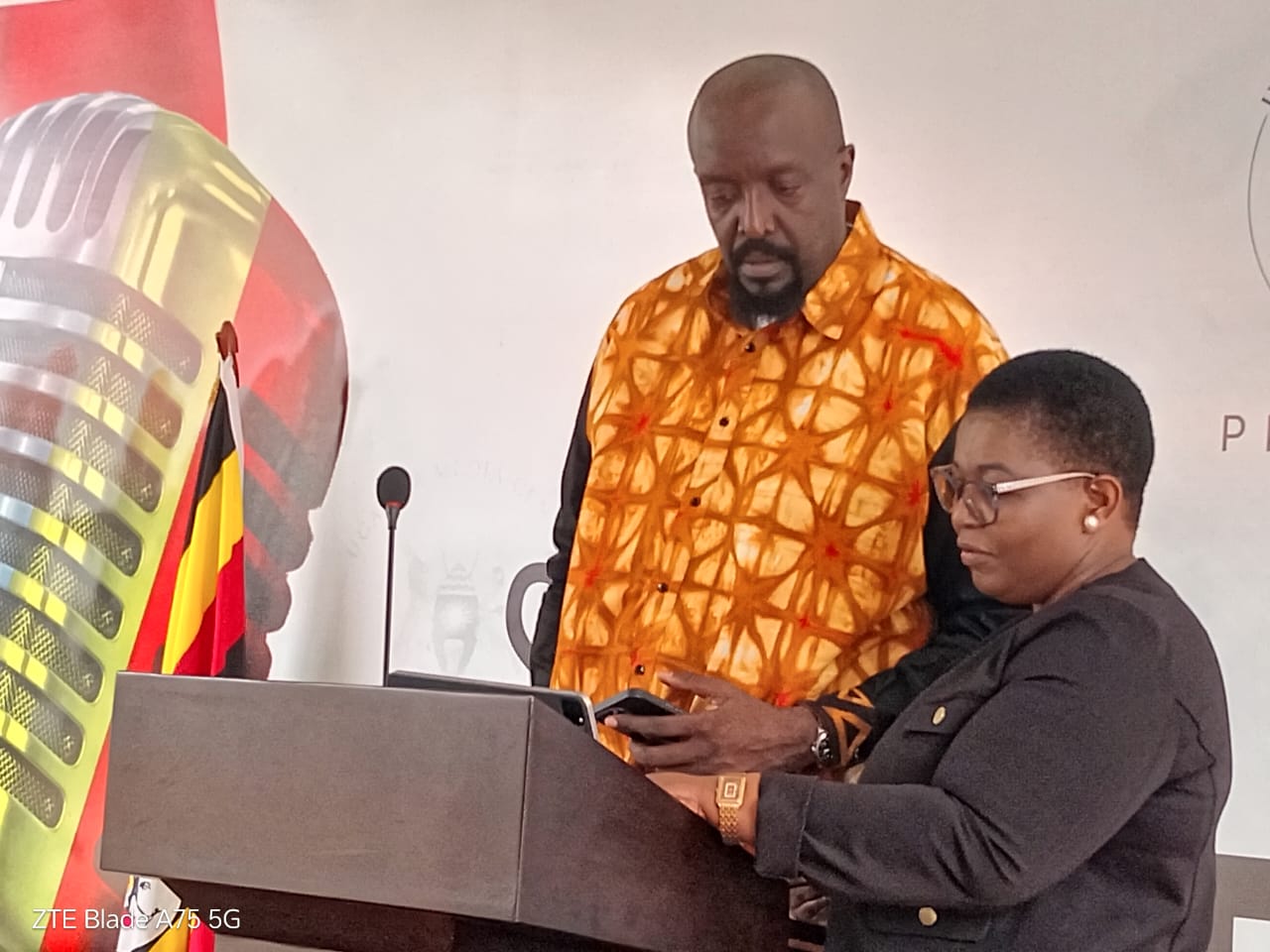
The food relief was handed over to the government at the Uganda Media Centre, where the Minister of State for Karamoja Affairs, Esther Davinia Anyakun, received it on behalf of the government.
Anyakun thanked the Sudanese community for the donation, describing it as a gesture of solidarity and brotherhood with the people of Karamoja, who continue to struggle with food insecurity.
She said the government was working with development partners and other organisations to address the recurring food shortages in the region.
The minister said the government had committed more than Shs45 billion towards addressing the humanitarian situation in Karamoja, with part of the money intended to support short-term food relief interventions.
She noted that several development partners had also joined the government’s efforts, including the United States government, which she said was working with the United Nations. Churches and other humanitarian organisations had also contributed food and other forms of assistance.
Anyakun said the government was pursuing both immediate and long-term measures to reduce the region’s dependence on food donations.
She explained that existing government programmes, including the Northern Uganda Social Action Fund (NUSAF) and the Karamoja Regional Development Programme, would be used to increase agricultural production and improve household incomes.
The interventions include constructing water dams, addressing water shortages and promoting agriculture through irrigation systems to enable communities to grow food even during prolonged dry seasons.
Speaking on behalf of the donors, Ramia Rahama, the team leader of Nafeer Karamoja and the Sudanese community in Kampala, said the donation was an expression of solidarity with Ugandans who had welcomed Sudanese nationals fleeing difficult conditions in their home country.
Rahama acknowledged that many Sudanese living in Uganda were also facing financial challenges, partly because of the ongoing conflict in Sudan, but said they had decided to contribute whatever little they could to support vulnerable communities.
“Although we, as Sudanese, are not well off here or even in our own country because of the wars, we have managed to collect the little we have to give back. We are proud to be part of those supporting the people of Karamoja, and we pledge to contribute more in the future,” Rahama said.
The donation comes amid continuing concerns about food insecurity in Karamoja, where prolonged dry spells have affected agricultural production and left many households struggling to access adequate food.