
The Leader of the Opposition Joel Ssenyonyi, has questioned the government’s plan to address rising fuel prices, warning that Uganda’s fuel reserves in Jinja may not be sufficient to sustain the country for long during a supply crisis.
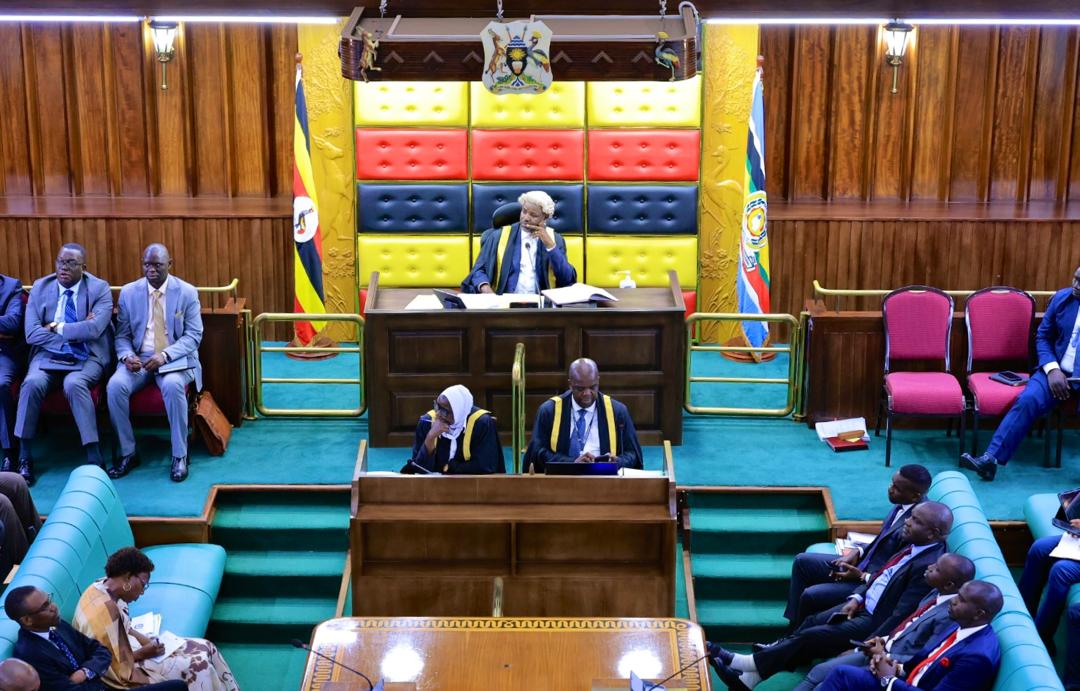
Ssenyonyi, who represents Nakawa West in Parliament, made the remarks during a plenary sitting in which Energy and Mineral Development Minister Dr Monica Musenero Masanza presented the government’s position on the rising cost of petroleum products.
He blamed the government for failing to anticipate the possible economic consequences of the Sovereignty Bill, arguing that its enactment could have affected Uganda’s international trade and contributed to the increase in fuel prices.
“I can state without any hesitation that the recently passed Sovereignty Bill had an impact on the increase in fuel prices,” Ssenyonyi said.
Uganda depends heavily on imported petroleum products, making its fuel supply vulnerable to international market movements, disruptions in transport routes and changes in the cost of importing fuel.
Ssenyonyi also attributed the high pump prices to taxes, particularly excise duty, and called for reforms to reduce the tax burden on essential petroleum products, including petrol, diesel and kerosene.
He argued that although Uganda operates a liberalised petroleum market in which oil marketing companies determine their pump prices, the government should intervene when high fuel costs threaten household incomes and economic activity.
However, Deputy Speaker Thomas Tayebwa challenged Ssenyonyi’s argument that the Sovereignty Bill was responsible for the increase.
Tayebwa said fuel prices had continued to rise even before the law was passed, suggesting that other factors were contributing to the problem. He then asked Musenero to proceed with the government’s position on the matter.
In her response, Musenero said the government was working to strengthen fuel supplies through the Uganda National Oil Company (UNOC) and continued engagement with Kenya and Tanzania to secure alternative supply routes.
She explained that Uganda’s landlocked position made it dependent on neighbouring countries and regional transport networks to access imported petroleum products.
The minister said the government planned to address weaknesses in the fuel supply system by strengthening key transport corridors, particularly those serving northern Uganda, while improving cooperation with regional partners.
Musenero referred to storage infrastructure in Jinja and the planned expansion of storage capacity in Kampala as part of efforts to improve the country’s ability to manage fuel supply disruptions.
The proposed Kampala Storage Terminal, being developed by UNOC, is designed to hold 320 million litres of petroleum products.
The government launched its construction in September 2026, meaning the facility is not yet an operational reserve.
The minister’s statement came as MPs raised concerns about the wider economic consequences of expensive fuel, including higher transport costs, rising prices of essential commodities and pressure on the Uganda shilling.
The minister of Defence Kiryowa Kiwanuka told Parliament that Uganda’s dependence on imported petroleum products had exposed the country to the effects of the conflict in the Middle East.
Kiwanuka said the country had limited control over some of the international factors affecting fuel prices because it did not yet produce its own petroleum for domestic consumption.
“Where we get the product from is very critical,” Kiwanuka said.
However, several MPs maintained that the government should take domestic measures to cushion Ugandans against the effects of rising fuel prices.
Nansana Municipality MP Zambali Bulasio Mukasa warned that expensive fuel was contributing to pressure on the exchange rate and increasing the cost of essential goods and services.
Isaac Ismail, the MP for Padyere County, called on the government to invest more in transport infrastructure to improve the movement of goods, services and people.
Pian County MP Remigio Achia similarly called for government intervention, warning that rising fuel prices were adding pressure to the economy and contributing to the depreciation of the shilling.
Budadiri East MP Julius Nakiyi questioned whether UNOC had the capacity to fulfil its mandate and asked the government to review its supply arrangements with petroleum suppliers.
He said Parliament needed clarity on the terms of the contracts and the company’s ability to guarantee reliable supplies at competitive prices.
Bushenyi-Ishaka Municipality MP Basajja Iddi attributed the rising cost of fuel to imported inflation, explaining that higher international prices and import costs were feeding into domestic transport and commodity prices.
He cautioned against assuming that the start of domestic oil production would automatically eliminate the problem, arguing that Uganda would still need effective supply arrangements and policies to protect consumers from price fluctuations.
Adjumani District Woman MP Jesca Ababiku rejected Ssenyonyi’s claim that the Sovereignty Bill was to blame for the rising fuel prices.
She argued that other countries were also experiencing the effects of expensive petroleum products, suggesting that Uganda’s situation could not be explained by domestic legislation alone.
Mbale Industrial Division MP Karim Masaba called for a reduction in excise duty on petroleum products to ease the pressure on consumers.