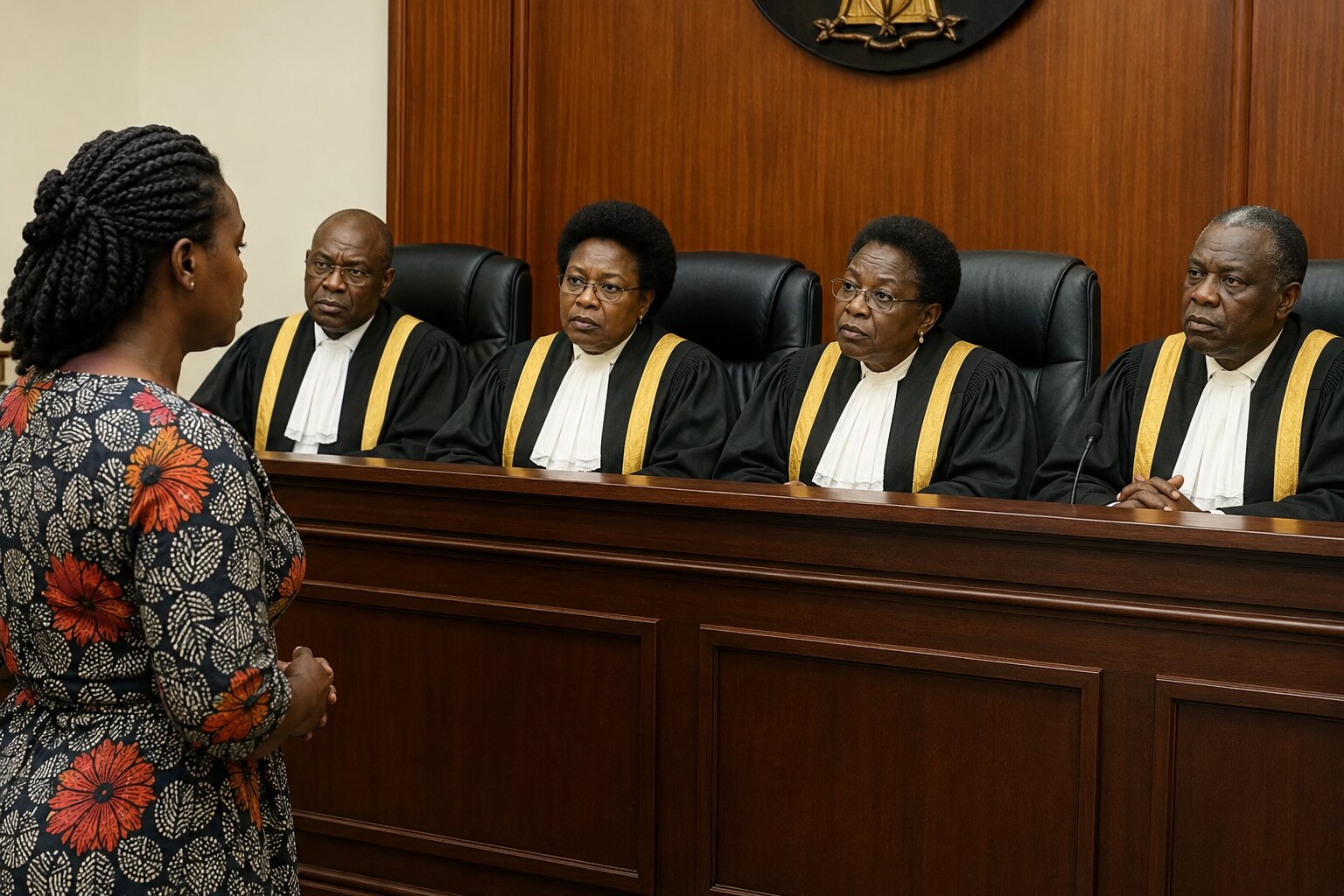

The High Court has overturned a decision that had given the husband sole custody of the children he shares with his former wife, saying that the magistrate who issued the first orders had acted outside the law when she changed an earlier consent agreement between the couple.
Justice John Eudes Keitirima said the lower court had no power to give a person who had not been requested in the case before it.
The dispute had its roots in a family case in which Junior Luhinda, the man, and Faith Umutesi, the lady, had agreed on how their children would be cared for.
The agreement was reached through mediation and under that agreement, the children were to remain under joint custody of the couple.
During the Covid-19 lockdown, the couple was to share custody equally, with each parent keeping the children for two weeks at a time.
The arrangement further provided that Luhinda would have custody during school holidays and third-term holidays, with those periods to be shared halfway while Umutesi was to have custody of the children during the rest of the time.
Furthermore, Luhinda was to pay school fees and medical insurance for the children, while each parent would meet the other expenses of the children during the period when that parent had custody.
The agreement also barred the children from leaving Uganda without the written consent of either party and authorisation from court.
Importantly, the consent settlement provided that each party would bear their own costs.
But the arrangement later broke down, and Luhinda returned to court accusing Umutesi of disobeying the consent judgment.
First, he wanted Umutesi to be found in contempt of the court orders. Secondly, he asked the court to commit her to civil prison until she complied with the orders. Thirdly, he asked that costs of the application be provided for.
The proceedings took a different turn at the Chief Magistrate’s Court because Umutesi was found to be in contempt of the consent judgment, and an order was issued directing a bailiff to recover the children and take them to Luhinda.
The court later went further and granted Luhinda full custody of the children.
It was this decision that prompted Umutesi to appeal to the High Court.
She complained that the magistrate had granted orders that Luhinda had never asked for in his contempt application.
She also argued that the magistrate had wrongly given Luhinda sole custody despite the earlier consent judgment, which had provided for joint custody.
Umutesi asked the High Court to overturn the magistrate’s decision and award her the costs of both the appeal and the proceedings in the lower court.
Court orders Bitature to pay over Shs 2 billion to architects who designed his hotel, home
Justice Keitirima explained that the High Court had a duty to reconsider the evidence and reach its own conclusions on both facts and the law.
He also considered the legal position concerning consent judgments, citing the Supreme Court decision in Attorney General and another versus James Mark Kamoga and another, which held that a party who has consented to a decree can, in appropriate circumstances, seek to have it reviewed or set aside.
Such circumstances, he said, can include illegality, fraud or mistake.
But Justice Keitirima drew a clear distinction between reviewing a consent judgment and contempt proceedings.
He explained that contempt proceedings are intended to ensure that court orders are obeyed and to protect the authority of the courts.
“The purpose of contempt proceedings is to uphold the authority, integrity and power of the courts to ensure that legal orders are obeyed and to protect the fair administration of justice from disruption or disrespect,” he said.
He added that contempt proceedings should not be used as a way of changing an earlier court decision.
In Justice Keitirima’s view, the magistrate therefore made an error when she changed the custody arrangement while dealing with the contempt application.
“The application was not meant to review the consent judgment that had been entered,” he said, adding that it was erroneous on the part of the magistrate to vary the consent judgment in contempt proceedings when the said order was never sought for.
He nevertheless observed that Umutesi’s conduct, which had resulted in her being found in contempt of court, could potentially have provided grounds for a separate application to review the consent judgment.
But Justice Keitirima allowed Umutesi’s appeal and set aside the order that had given Luhinda sole custody of the children.
This means that the earlier joint custody arrangement was restored as opposed to Luhinda retaining sole custody under the magistrate’s order.
Justice Keitirima said both parents still had responsibilities towards their children and that their interests had to remain the priority.