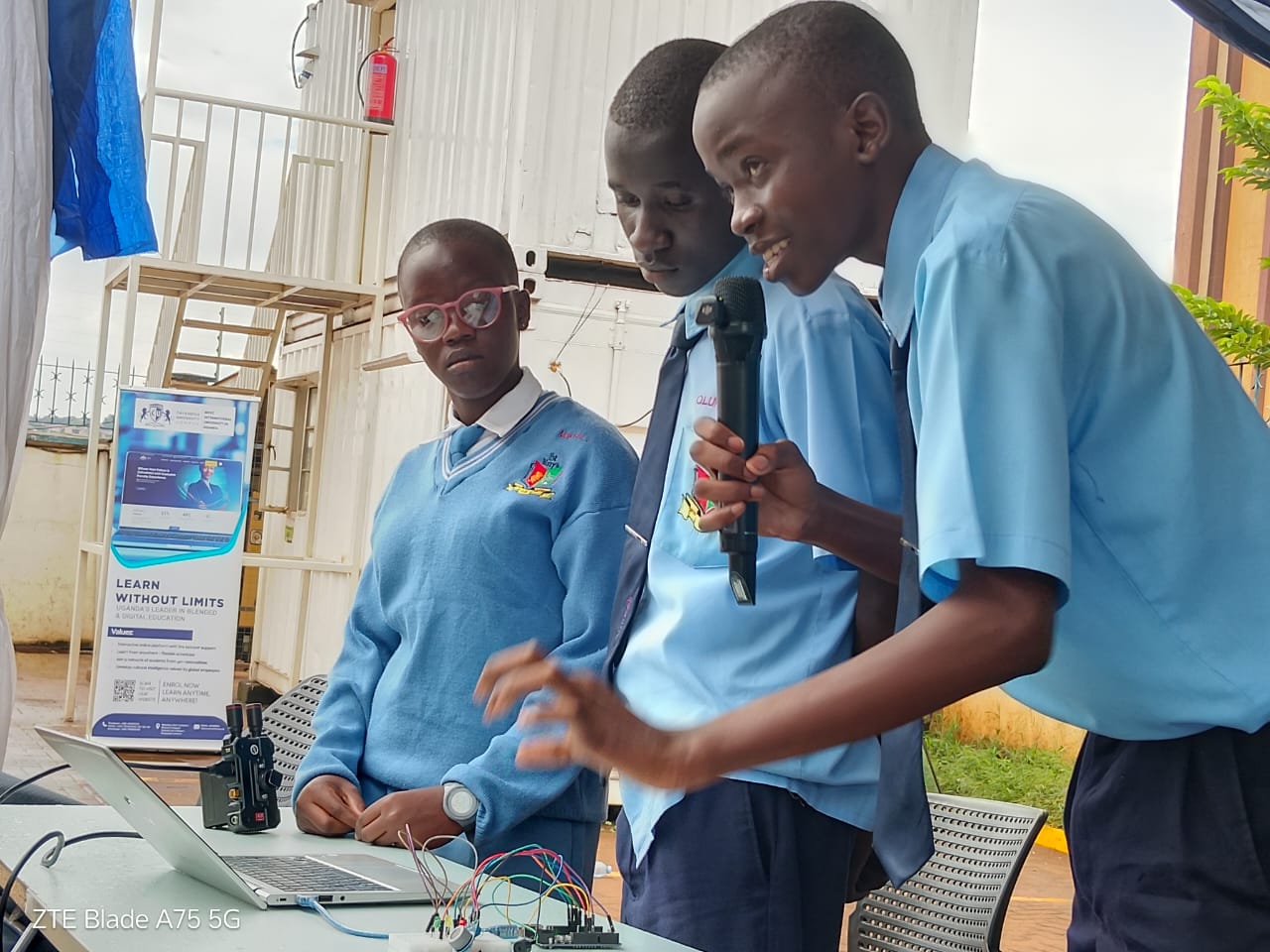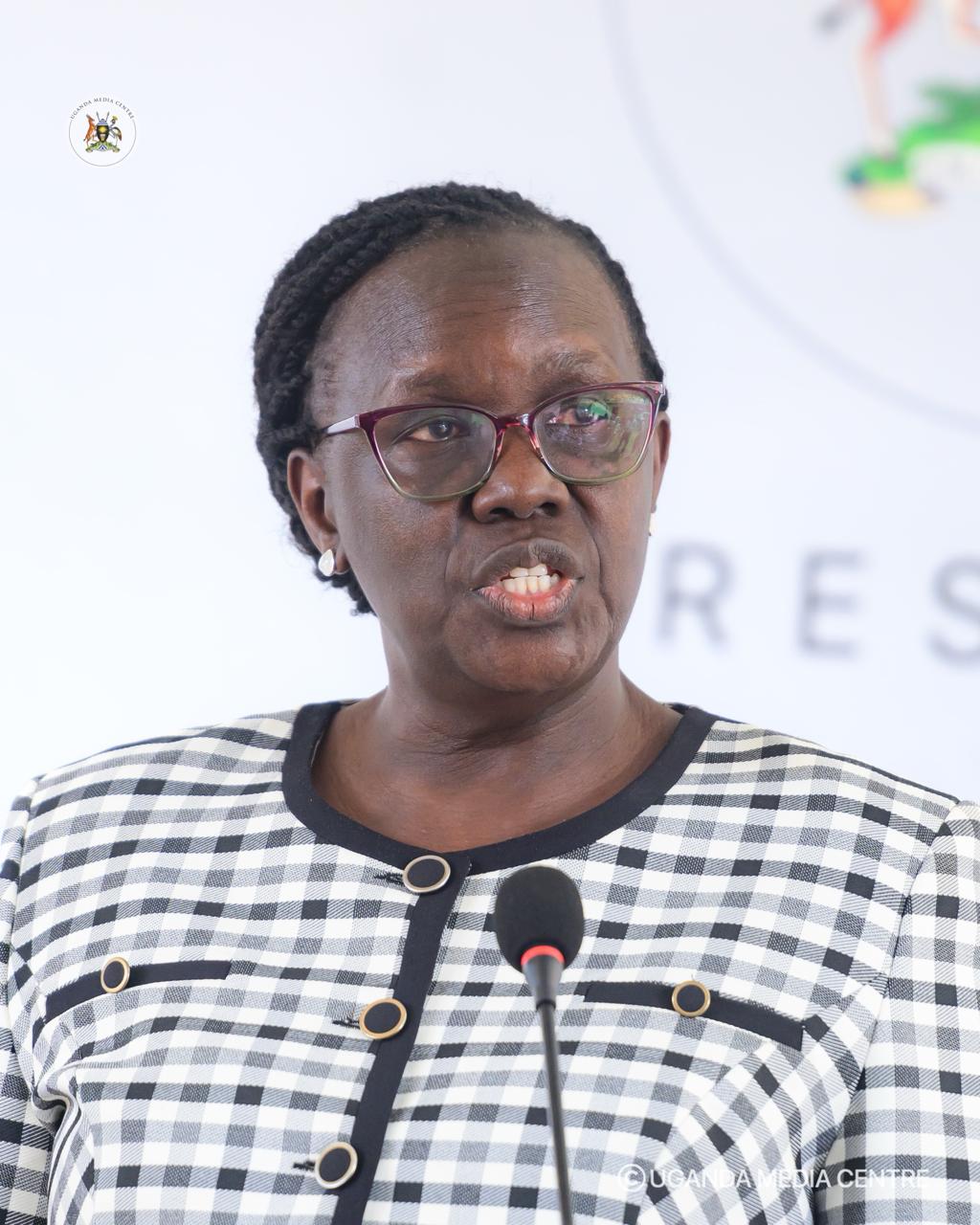
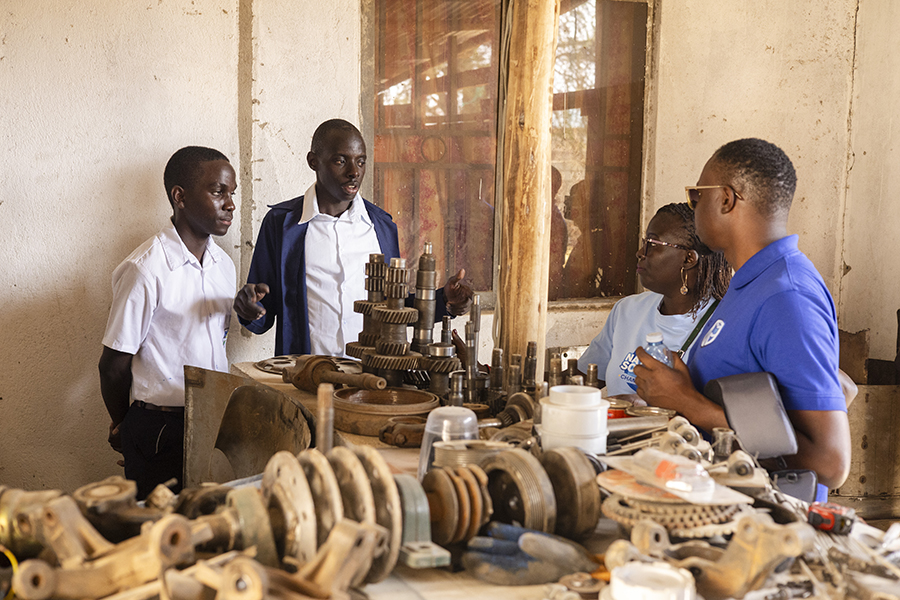
For many teenage girls and women, menstruation is more than a monthly inconvenience. Painful cramps can make it difficult to attend lessons, concentrate in class, work, or take part fully in daily activities.
At St Theresa Girls Secondary School in Kasese District, students are using their own experiences and observations to develop a possible solution to the problem.
Through the Stanbic National Schools Championship, the students have developed the Terra Menstrual Pain Relief Belt, a wearable device designed to help women and girls manage menstrual cramps through heat therapy.
Catherine Kabugho, a Senior Two student at the school, said her personal experience with menstrual cramps inspired her to work on the project.
“I know the pain of cramps and the toll it can have on someone, and that is why I wouldn’t desire to see anyone go through the same pain,” Kabugho said.
She said the belt is designed to generate heat of up to 40 degrees Celsius, which the students believe can help ease menstrual discomfort. The project is still being developed as the students work to improve the device and assess its potential.
Kabugho said she hopes the innovation can eventually reach women and girls beyond Uganda.
“I know many girls need this solution, and I believe this project can go beyond the borders of Uganda,” she said.
Sadrace Byaruhanga, a member of the school’s Board of Governors, praised Stanbic Bank Uganda for extending the National Schools Championship to schools in remote communities such as Nsenyi in Kasese.
She said students in rural areas often have ideas and abilities but may lack the opportunities, mentorship and resources needed to develop them.
“Not many institutions are willing to come this far to support young people. Seeing Stanbic Bank take the initiative to nurture young innovators gives us hope for a brighter future,” Byaruhanga said.
She said the support could help young people turn challenges in their communities into practical solutions.
Kabugho also credited the championship with giving her the confidence to pursue her idea.
“Stanbic Bank has made my voice heard and helped me pursue my mission of making a difference in people’s lives. Without the National Schools Championship, I don’t think I would have had the confidence or enthusiasm to pursue this project,” she said.
At Kyebambe Girls School, students are using technology to tackle challenges in agriculture through a project known as EduFarm.
The students have developed a smart irrigation kit that automatically waters crops without requiring constant manual operation.
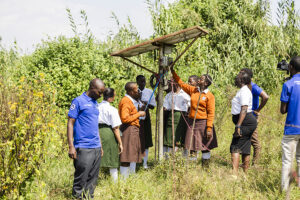
Marian Wembabazi, a Senior Three student, said the system is already functioning, although it remains under development.
“At the moment, we have already developed a smart irrigation kit that is not manually operated. It is a system that works on its own and irrigates automatically. Although it is still in the development stage, it has made significant progress and is already functioning,” Wembabazi said.
She said the project is intended to address problems such as water wastage, silting and the heavy dependence on manual labour in irrigation.
“Our innovation is addressing challenges such as water wastage, silting and dependence on manual labour, which can sometimes be unreliable,” she said.
Wembabazi said the students’ system is solar-powered and uses a microcontroller to automate irrigation.
“The machine uses solar energy and has an automation system with a microcontroller that makes the entire system work. Once installed, it operates on its own without any manual intervention. It is also more affordable than many of the existing systems,” she said.
The students say their focus is not necessarily on creating a completely new technology, but on developing a system that can be affordable and useful to farmers in Uganda.
At Sedes Sapientiae Academiae in Kazo District, students are focusing on another challenge facing farmers through an agritech project to develop an affordable, multi-purpose poultry feed-making machine.
Turyamwesiimire Steven, one of the students behind the project, said many poultry farmers can access raw materials for making animal feed but lack affordable machinery to process them.
“So we decided to make a machine that can help farmers process their feeds at home without having to pay others to do it. This helps them reduce feeding costs by up to 60 per cent and increase their monthly profits,” he said.
According to Steven, the machine is designed to chop and grind different materials used in making animal feed.
He said the machine could help farmers reduce processing costs while giving them greater control over the quality and composition of their poultry feed.
Steven said the championship has also helped students think about how their ideas can eventually become businesses.
“Stanbic Bank has gone a long way in training young people to become job creators instead of job seekers. It is a very big achievement for them and for us. We appreciate Stanbic and urge them to continue supporting as many young people across the country as possible,” he said.
The projects are part of the Stanbic National Schools Championship, an annual initiative launched in 2016 by Stanbic Bank Uganda to identify, nurture and support promising young entrepreneurs and innovators.
The programme encourages students to identify challenges in their communities and develop practical solutions using skills such as science, technology, engineering, mathematics, creativity, critical thinking and teamwork.
Diana Ondoga, manager of Corporate Social Investment at Stanbic Bank Uganda, said the programme is intended to prepare young people for future opportunities by giving them practical skills and exposure.
“We see this programme as our contribution to building Uganda’s next entrepreneurs, employees and leaders,” Ondoga said.