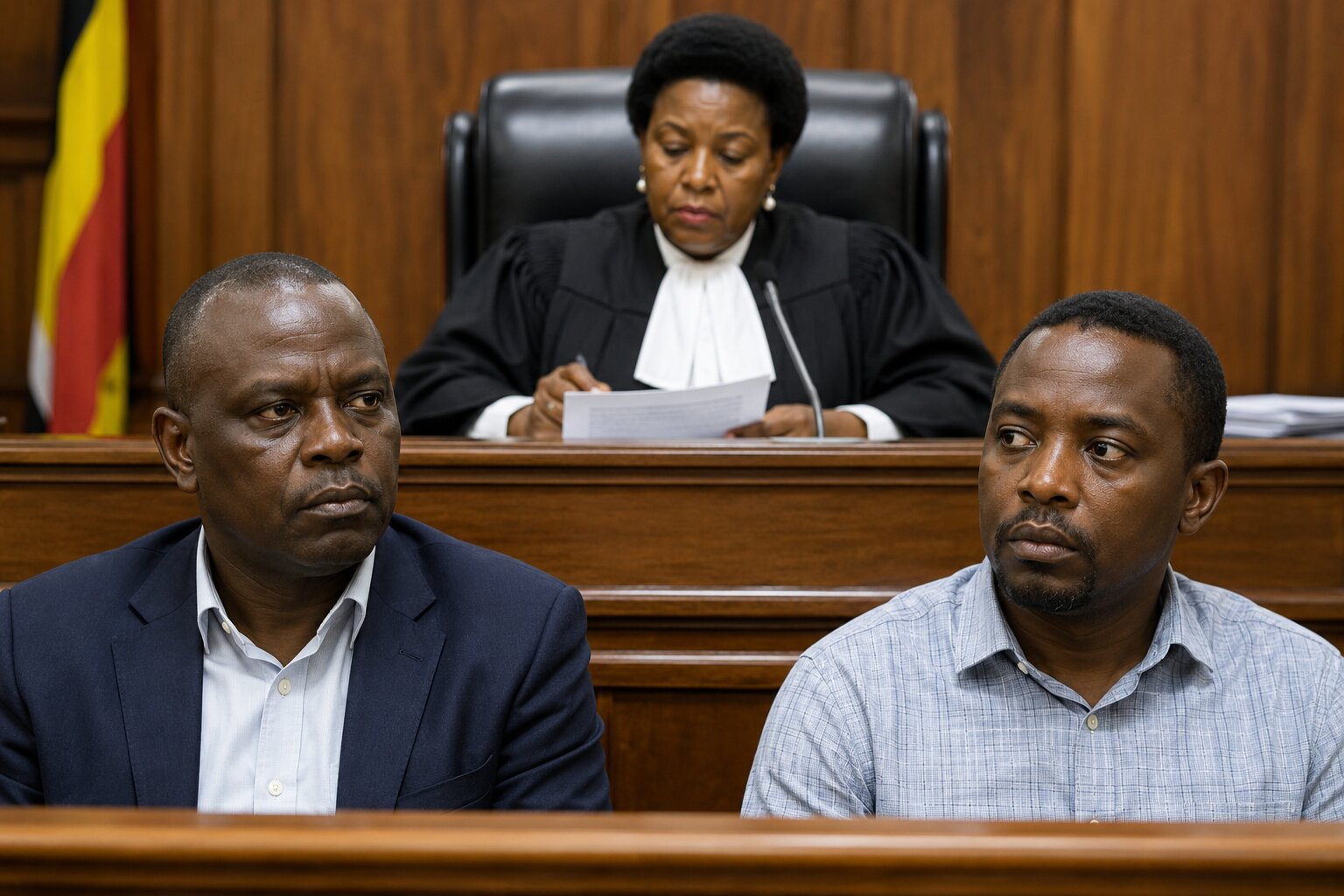
The High Court has acquitted Uganda Revenue Authority (URA) officer Joseph Nsubuga of receiving a Shs15 million bribe, but upheld the conviction and one-year prison sentence imposed on his colleague Gerald Mujurizi for corruption.
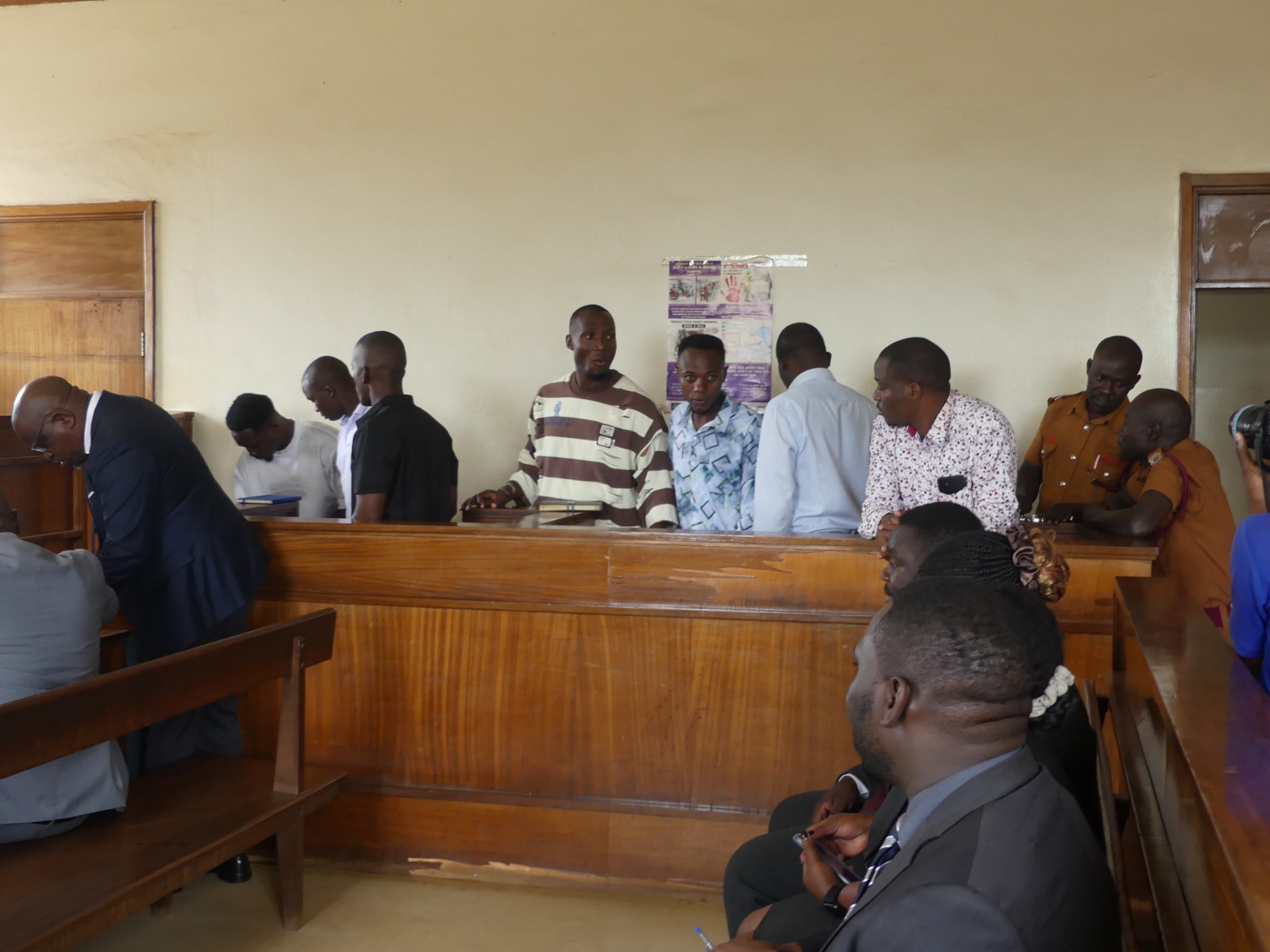
Justice Jane Kajuga delivered the judgment on 3 August 2026 after hearing an appeal by Mujurizi and Nsubuga against their convictions by the Anti-Corruption Court at Nakasero.
The two had been convicted on December 5, 2025, over a Shs15 million payment linked to the release of a truck carrying 500 bags of sugar.
The appeal therefore produced a mixed result. Mujurizi lost his appeal and remains convicted, while Nsubuga won his appeal and was acquitted.
The case began on August 28, 2023, when a truck belonging to Modern Group of Industries was intercepted near the Nile Bridge in Jinja.
The truck was carrying 500 bags of sugar, each weighing 25kg. According to the judgment, the sugar did not have digital tax stamps or an EFRIS invoice.
The truck was intercepted by URA Customs enforcement officer Jerome Mugume and taken to a yard belonging to Emmanuel Obadi.
Mugume immediately informed his supervisor, Richard Rumena, who later ordered the truck’s release under circumstances that prosecutors considered suspicious.
Mujurizi and Nsubuga were both URA tax compliance officers stationed at the Jinja office, while Rumena was a customs enforcement officer at the same office.
Jagdish Srivastava, the chief executive officer of Modern Group of Industries, went to the URA Jinja office to find out what had happened to his company’s truck.
He was referred to Mujurizi, who prepared a taxpayer engagement report. The agreed procedure was for the Jinja URA team to seek guidance from the authority’s headquarters in Kampala because the sugar was destined for Modern Distillers.
According to the evidence presented in court, Mujurizi asked Srivastava to meet him at Salt and Pepper restaurant in Jinja that evening. At the meeting, Mujurizi allegedly asked for a bribe ranging from Shs 15 million to Shs 30 million to make the truck’s release faster.
In his police statement, Srivastava said he had met Mujurizi alone and that Mujurizi had asked for Shs20 million to facilitate the quick release of the truck.
In court, however, he said Mujurizi came with another man and that it was the unidentified man who asked for the money.
The prosecution declared Srivastava a hostile witness because of the contradictions.
PostBank not liable for salary paid to wrong account, Justice Kinobe rules
But Justice Kajuga explained that this did not automatically mean every part of Srivastava’s evidence had to be thrown away. She said the evidence against Mujurizi was strong enough when considered together.
She noted that Mujurizi was present when the demand for money was allegedly made, was involved in discussions about the truck, advised Srivastava on the zero-value invoice and remained involved in the process leading to the truck’s release.
Justice Kajuga said it did not matter whether Mujurizi personally spoke the words demanding the money.
“It is also irrelevant whether it was Gerald who asked for the money or someone else. [He] cannot escape culpability for the crime as he is well implicated in the solicitation either way,” she ruled.
A URA compliance supervisor, Madina Nabutono, told court that investigators asked Mujurizi where the money was and he referred to a person called James.
Justice Kajuga said that the truck was eventually released without following the normal process and that there was evidence of coordination between Mujurizi and Rumena.
“The paperwork was concluded by [Mujurizi], the witness testimony shows a coordinated movement between Rumena and [him],” the judge said.
Mujurizi’s appeal therefore failed, but Nsubuga’s case was different.
The prosecution alleged that Nsubuga was the URA officer who collected the money at Salt and Pepper. But Justice Jajuga found serious problems with the evidence used to identify him.
Srivastava testified that another URA officer, whom he had seen before at the URA office, came to collect the money. He said the man was wearing a sky-blue shirt and navy-blue jacket and was sitting in a car.
However, under cross-examination, Srivastava repeatedly said that Nsubuga was not the man who received the money. He also said he had known Nsubuga for years.
Justice Kajuga was also troubled by evidence about the vehicle allegedly used by the person who collected the money because Srivastava told court that he did not see the vehicle’s number plate.
Yet a registration number, UBH 631 N, appeared in his police statement.
She questioned where that number came from because the police officer who recorded the statement was also the investigator who said he had seen the vehicle.
She was also concerned about the distance between the place where a police officer said he watched the handover and Salt and Pepper restaurant.
The police officer said he was at Rippons Gardens and could see what was happening. The defence disputed this and presented evidence suggesting the location and distance made identification difficult.
Justice Kajuga concluded that the prosecution had failed to provide sufficiently strong evidence identifying Nsubuga as the person who received the money.
“In my considered view, it was incumbent on the prosecution to tender evidence supporting an identification of the person who received the money. They failed to do so,” she ruled.
She said the uncertainty became even more important because Srivastava had himself insisted that Nsubuga was not the person to whom he gave the money.
Justice Kajuga also faulted the earlier court for relying too heavily on Srivastava’s police statement instead of properly explaining why parts of his sworn evidence were rejected.
Shet found that the errors in the lower court’s assessment of the evidence caused a miscarriage of justice.
In the final order, Justice Kajuga maintained Mujurizi’s conviction and sentence but acquitted Nsubuga of receiving or accepting a bribe.
She also cancelled the order barring Nsubuga from holding public office for 10 years.