
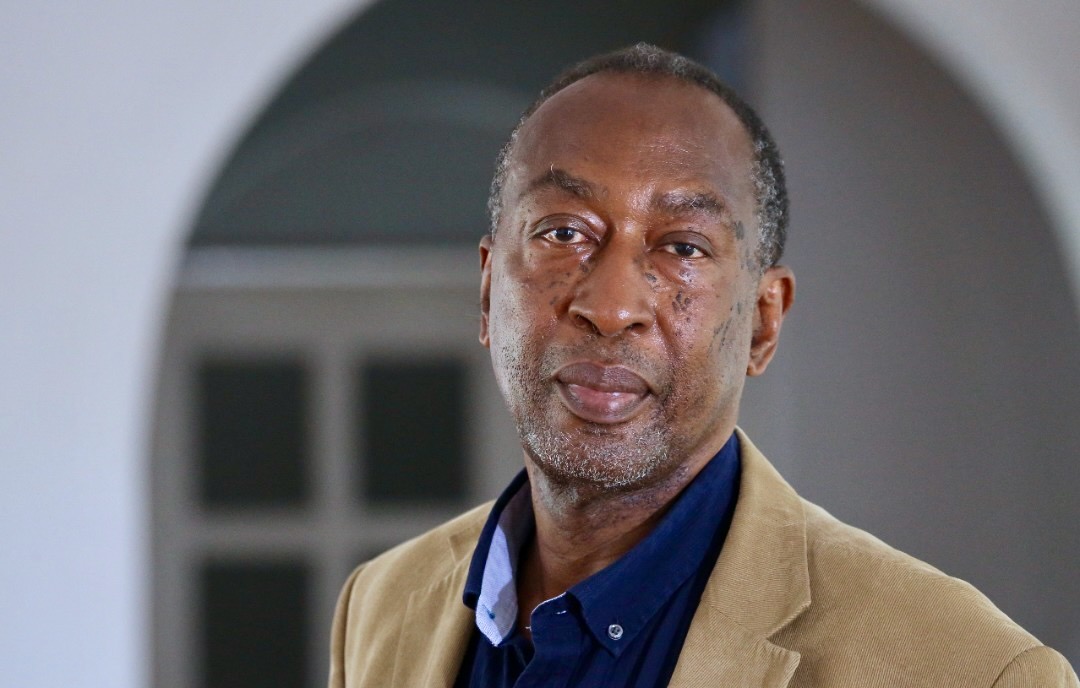
The High Court has refused to cancel orders that attached a bank account of SM & Co Advocates, a law firm founded by prominent lawyer Dr Alan Shonubi.
Justice Farouq Lubega dismissed the application by Dr Shonubi against Sal Oil Limited over a Shs 100 million land sale deal.
On September 12, 2019, four sellers agreed to sell land at Pallisa Road in Mbale to Sal Oil for Shs 350 million.
The sellers were represented by Dr Shonubi, who held their powers of attorney and was also the lawyer handling the transaction.
Sal Oil paid Shs 100 million into a Stanbic Bank account in the name of Dr Shonubi’s firm.
Hassan Hashim, a director of Sal Oil, said the money was to be held by the firm as an “escrow”, meaning it was not available to any party, including Shonubi, until each side had met its duties.
However, the deal fell through, and Sal Oil sued the four sellers. On 15 August 2025, the court ordered the money to be recovered from the four sellers, who were the judgment debtors.
They did not pay.
When the judgment debtors failed to refund the money as ordered, Sal Oil turned to the courts again to enforce the judgment.
In 2026, the company filed execution proceedings seeking a garnishee order against Shonubi and Stanbic Bank Uganda.
A garnishee order allows a judgment creditor to recover money owed by a third party to the person who lost the case, or money that the third party holds on that person’s behalf.
Sal Oil argued that although the account was registered in the law firm’s name, it contained money connected to the land transaction and held for the parties involved.
The company wanted the funds attached to help recover the money awarded by the court.
However, the matter took a new turn when Stanbic Bank informed the court that the account, which had received Shs100 million, no longer held the original amount.
According to Sal Oil’s managing director, Hassan Hashim, the bank reported that only about Shs5 million remained in the account.
The discrepancy raised questions about what had happened to the money and who had withdrawn it.
The deputy registrar subsequently made the garnishee order absolute on July 7, 2026, directing the attachment of the account.
The deputy registrar also directed the bank to provide specimen signatures, signature cards and withdrawal records to help establish who had operated the account and withdrawn the money.
However, Shonubi challenged those decisions before Justice Lubega, arguing that the deputy registrar had acted outside the law.
Represented by his law firm SM & Co. Advocates, Shonubi asked the High Court to set aside the July 7 orders, cancel the garnishee order absolute and stop the disclosure of the bank records.
His lawyers argued that the proceedings had violated the mandatory seven-day notice period under the Civil Procedure Rules.
The lawyers relied on an earlier decision involving Uganda Revenue Authority and Uganda Consolidated Properties Limited, arguing that statutory timelines must be followed strictly.
They also argued that the law firm’s money could not be attached to satisfy a judgment against other parties unless the court established that the firm owed those parties money.
Their position was that garnishee proceedings could not create a new debt or expand the obligations imposed by the original judgment.
The lawyers further challenged the order requiring Stanbic Bank to disclose signatures and withdrawal records, arguing that Sal Oil had not requested that relief in its original application.
They maintained that a court should not grant orders beyond what the parties had asked it to determine.
Sal Oil, represented by Palm Advocates, opposed the application, describing it as misconceived and without merit.
The company’s lawyers argued that Shonubi had held the Shs100 million as an escrow agent and that the money was not his personal property.
They said the money had been deposited in the account under the land sale agreement and was supposed to remain there until the agreed conditions were met.
Sal Oil’s lawyers also argued that the money was liable to attachment because it was being held by Shonubi on behalf of the parties involved in the transaction.
They relied on an earlier decision involving Muwema & Co. Advocates and Bank of Uganda, which recognised that money held by an advocate on behalf of a client can be attached if it constitutes a debt owed to a judgment debtor.
The company further defended the order for disclosure of banking records, saying the information was necessary to establish how the money had disappeared and identify those responsible for withdrawing it.
KCCA ordered to pay Shs123.9 million to family of hawker who drowned in Nakivubo Channel
Justice Lubega examined the arguments and the court record before rejecting Shonubi’s application.
On the seven-day notice issue, he found that the objection had already been raised before the deputy registrar.
The court record showed that the matter had initially been scheduled for June 26, when Shonubi’s lawyers objected to the hearing taking place before the expiry of the required period.
Sal Oil’s lawyers conceded the objection, and the matter was subsequently adjourned.
The deputy registrar later rejected the objection when delivering the ruling on July 7.
Justice Lubega held that it would be an abuse of court process for Shonubi to bring the same issue before the High Court again through the application.
He found that Shonubi had not disputed his liability as garnishee before the deputy registrar. His objection at the earlier hearing had concerned the notice period.
Justice Lubega also confirmed that the Shs100 million had been deposited into the account held in the law firm’s name and that Shonubi had acted as an agent for the sellers in the transaction.
In the ruling, Justice Lubega stated that the sellers had failed to refund Sal Oil’s money as ordered by the court.
He concluded that the order attaching the account was lawful because the money had been deposited there as part of the transaction and was being held in the applicant’s name.
Justice Lubega also upheld the order directing Stanbic Bank to provide signatures and withdrawal records.
He said the deputy registrar, as an officer responsible for enforcing court judgments, had the authority to make orders necessary to implement a judgment.
Shonubi had sought a stay of execution, which would have temporarily stopped enforcement of the orders, but the judge rejected that request, finding that the applicant had failed to demonstrate sufficient grounds.
In his final order, Justice Lubega stated: “[Dr Shonubi] has failed to establish any justifiable grounds to warrant the remedies sought; therefore, this application is dismissed with costs to [Sal Oil].”