
Prominent lawyer Fred Muwema has been granted permission by the High Court to serve papers on Isaac Nsejjere, a Ugandan businessman living in the United States, clearing a key hurdle in a long-running commercial dispute that stretches back to a 2010 sportswear supply deal.
The story goes back to August 24, 2010, when Sports Club Villa signed an exclusive supplier agreement with Nsejjere’s firm called Nsejjere Sports & Casual Wear.
Under the deal, Nsejjere Sports & Casual Wear became the club’s exclusive supplier of jerseys and other sports gear. Muwema signed the agreement on behalf of the club, in his role as its president.
In 2013, Nsejjere Sports & Casual Wear sued Sports Club Villa, seeking to force the club to honour the supply agreement, and also sought damages and an injunction.
Sports Club Villa fought the case, and it was thrown out on April 27, 2021, for want of prosecution.
However, two years later, Nsejjere started a fresh case, this time in the United States. He sued both Sports Club Villa and Muwema personally, accusing them of fraud, promissory estoppel and equitable estoppel, all linked to the same 2010 supply agreement.
Muwema was not happy about being sued in his personal capacity. He argues he only ever signed the original agreement as president of Sports Club Villa, not as an individual, so he should not be personally liable for anything arising from it.
To fight this, he opened a new case at the High Court, asking for what is called an anti-suit injunction. In other words, he wanted to stop Nsejjere from continuing his case in the US.
But before that main case can move forward, Muwema first needed the court’s blessing to notify Nsejjere about it, since Nsejjere lives outside Uganda and cannot simply be handed papers on Ugandan soil.
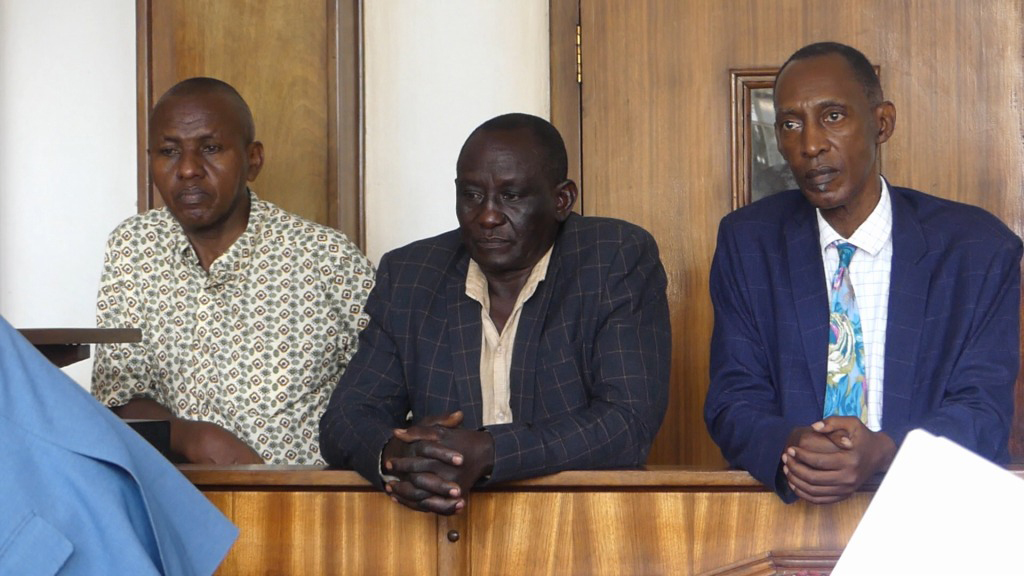
That is what led to the current courtroom encounter.
Muwema was represented by his own firm, Muwema & Co. Advocates, and Nsejjere did not have legal representation because he was not officially notified about the case.
Muwema told the court that the dispute is firmly rooted in Uganda, since the supply agreement was meant to be performed here and had already been fought over once in a Ugandan court.
He relied on a past case, Auto Garage & Others v Motokov, to argue that he only needed to show an arguable claim at this early stage, not prove the whole case.
He also pointed to newer rules on electronic service, arguing that notifying Nsejjere by email, phone or courier would be enough to bring the case to his attention.
Government listed KPC as a historical building. Watoto Church challenged the decision and won
In his ruling, Justice Collins Acellam agreed with Muwema stressing that his job at this stage was narrow.
He said the court was not being asked to decide who is right in the legal fight. His role, he said, was to determine “whether the circumstances disclosed by Muwema satisfy the legal requirements for leave to serve Nsejjere outside Uganda.”
Justice Acellam ruled that the agreement involved a Ugandan company, that Muwema said he signed it here in a representative role, and that the same commercial fight had already passed through a Ugandan courtroom once before.
He listed several issues that remain wide open, including whether the Washington lawsuit is legally justified, whether Muwema can be held personally liable despite signing as a company representative, and whether an anti-suit injunction should ultimately be granted at all.
On the practical question of how Nsejjere should be told about the case, Justice Acellam approved three methods.
First, he said, the papers can now be delivered to him by courier at his stated home address in Redmond, Washington. Second, through a phone call to his number; and lastly, the papers can be emailed to him.
He said after serving the papers, Muwema’s team must file proof, such as delivery receipts, showing the notification actually went through.
In the end, Muwema secured only the right to formally notify Nsejjere of the Ugandan case. Justice Acellam said the costs of this particular application will be decided later, depending on how the main case eventually turns out.