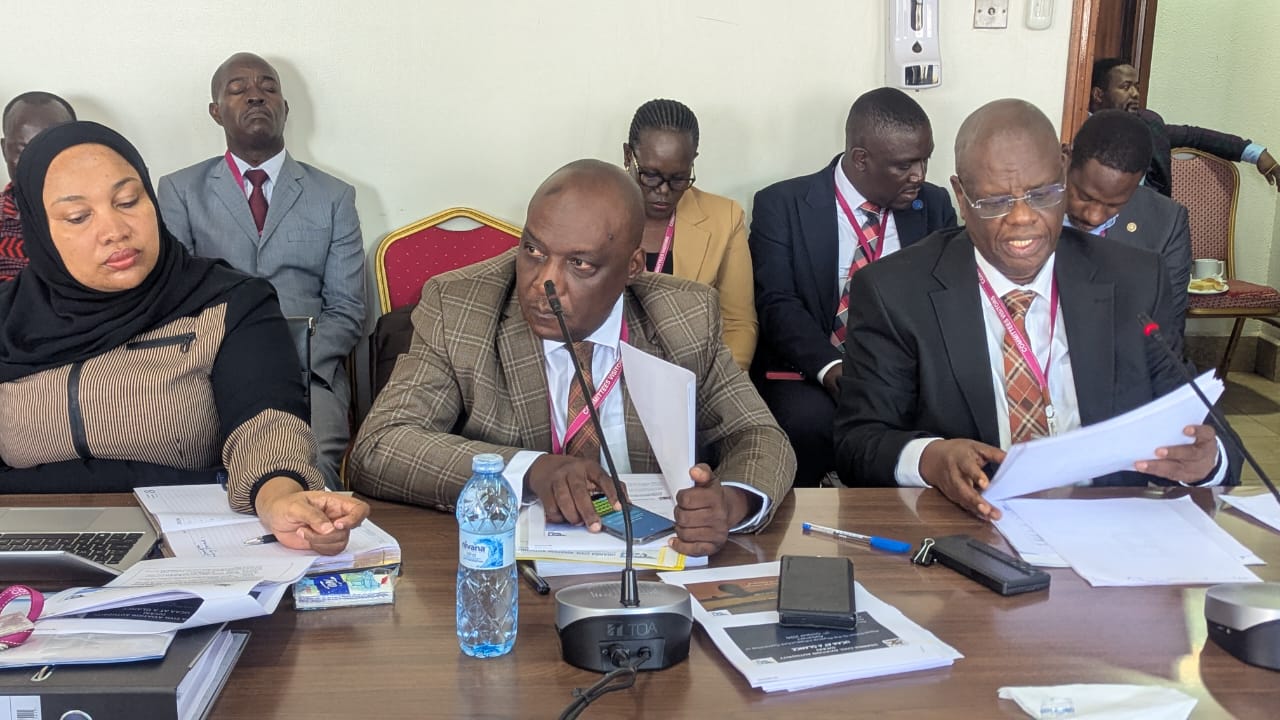

MPs on the Committee on Science, Technology and Innovation have raised concern over inadequate funding for research and innovation projects at the National Fisheries Resources Research Institute (NaFIRRI) in Kajjansi.
The committee made the concern during a courtesy visit to the institute, where MPs inspected its laboratories, fish feed production machinery and fish-rearing ponds.
The committee chairperson, Dr Samuel Acuti Opio, said the centre has important facilities and research programmes that could help improve the livelihoods of Ugandans, but their impact is being limited by inadequate funding.
“One of the biggest challenges this centre is facing is underfunding, which has demoralised the staff, as most of the new findings and innovations are left without being implemented,” Acuti said.
He said government needs to invest more in research institutions so that innovations developed by scientists can move beyond laboratories and benefit communities.
Acuti also called for the decentralisation of some research and innovation services so that communities can access them closer to where they live.
He said research should not remain concentrated at national institutions, but should be linked to communities at parish and village level where possible.
“The idea is to take these services closer to the people so that they can access the necessary knowledge and technologies,” he said.
During the visit, MPs were shown some of the research being undertaken at the institute, including work on fish production, fish feeds and other technologies aimed at reducing production costs for fish farmers.
The committee said it had established that some technologies developed by the centre have not been widely adopted by local communities, limiting their potential to improve household incomes and living standards.
MPs also raised concern over what they described as inconsistent funding for research and innovation. They said inadequate and unpredictable financing makes it difficult for researchers to develop their work, test new technologies and support their adoption by communities.
The committee said research institutions need sustained financing if Uganda is to turn scientific discoveries into practical solutions for farmers, businesses and other communities.
The acting director of NaFIRRI, Dr Samuel Bassa, told the MPs that land-related challenges are among the major issues affecting the institute’s research facilities in different parts of the country.
Bassa said the institute has 16 fisheries research centres across the country, which are intended to support research, train communities and promote better fisheries practices.
“We have 16 research fisheries resource centres across the country to train and empower our communities, but some are not fully in operation due to limited funding,” he said.
He told the committee that ensuring the centres are properly supported would enable researchers to reach more communities and strengthen the transfer of new technologies to fish farmers.
The MPs were also briefed on innovations aimed at reducing the cost of producing fish feed.
Cassius Aruto, a principal research officer at NaFIRRI, said researchers have developed alternative fish feed products using black soldier fly larvae, commonly referred to as maggots.
The larvae can be processed and used as a source of protein in fish feed, potentially reducing farmers’ dependence on more expensive conventional protein sources.
Aruto said conventional protein-based fish feed products can cost between Shs5,000 and Shs8,000 per kilogram, while the alternative product developed through the institute’s research can cost between Shs3,000 and Shs4,000 per kilogram.
The committee said such innovations demonstrate the potential of scientific research to address practical challenges faced by Ugandans, but stressed that research institutions need adequate resources to take innovations from development and testing to wider community use.
The MPs said Uganda needs to strengthen the connection between researchers and communities so that money invested in science and innovation produces visible benefits for ordinary citizens.
They also called for stronger support for research infrastructure and programmes across the country, saying decentralised services could make it easier for farmers and communities to access new technologies and technical knowledge.