Uganda’s investment outlook is strengthening as economic growth, rising foreign exchange reserves and the expected start of commercial oil production create new opportunities in agriculture, manufacturing, extractives, tourism and other sectors.
Economist Stella Otieno said Uganda had maintained strong economic growth while inflation remained relatively low, giving investors a more predictable economic environment.
Otieno was speaking during an Equity Bank Uganda trade and investment webinar held ahead of the bank’s third Trade Mission in Uganda, scheduled for September 13 to 16 in Kampala. The mission will bring together international, regional and local investors to explore business opportunities and partnerships.
According to Equity Group’s 2026 trade mission calendar, the Uganda mission will focus on driving innovation and industrial growth, with agriculture, extractives, manufacturing, services and tourism among the areas of interest.
“Growth has been above six per cent for the previous three years. Inflation has been stable and under four per cent within the target, and we also have stable policy rates,” Otieno said.
The Bank of Uganda has maintained the Central Bank Rate at 9.75 per cent, while its recent monetary policy assessments have described the economy as resilient, with growth supported by private-sector activity, public investment and oil and infrastructure developments.
Otieno said real economic growth in the 2025/26 financial year was about six per cent, while annual inflation stood at about four per cent in July, below the medium-term target of five per cent.
Another factor improving the investment environment is the country’s foreign exchange position. Otieno said Uganda’s reserves had increased from about $3.3 billion in January 2025 to $6.7 billion by June 2026.
Bank of Uganda data show that foreign exchange reserves had already risen to about $6 billion by April 2026, reflecting a significant improvement in the country’s external position.
For investors, stronger reserves provide greater protection against external shocks and can help support confidence in the local currency and the wider economy.
Otieno said the improved macroeconomic conditions should be considered alongside the major changes expected from commercial oil production.
She projected that economic growth could accelerate to between eight and 10 per cent in the 2026/27 financial year as oil production begins, potentially pushing growth into double digits.
The oil industry is expected to increase export earnings and government revenues while creating demand for goods and services from Ugandan and foreign businesses.
However, Otieno cautioned that investors would still need to pay attention to Uganda’s fiscal position and external financing needs.
She estimated the fiscal deficit at 7.1 per cent of GDP at the end of the 2025/26 financial year. The current account deficit was estimated at about 6.5 per cent of GDP, partly reflecting increased imports linked to oil and infrastructure investments.
The expectation is that increased exports, particularly once oil production starts, will help improve the country’s external position.
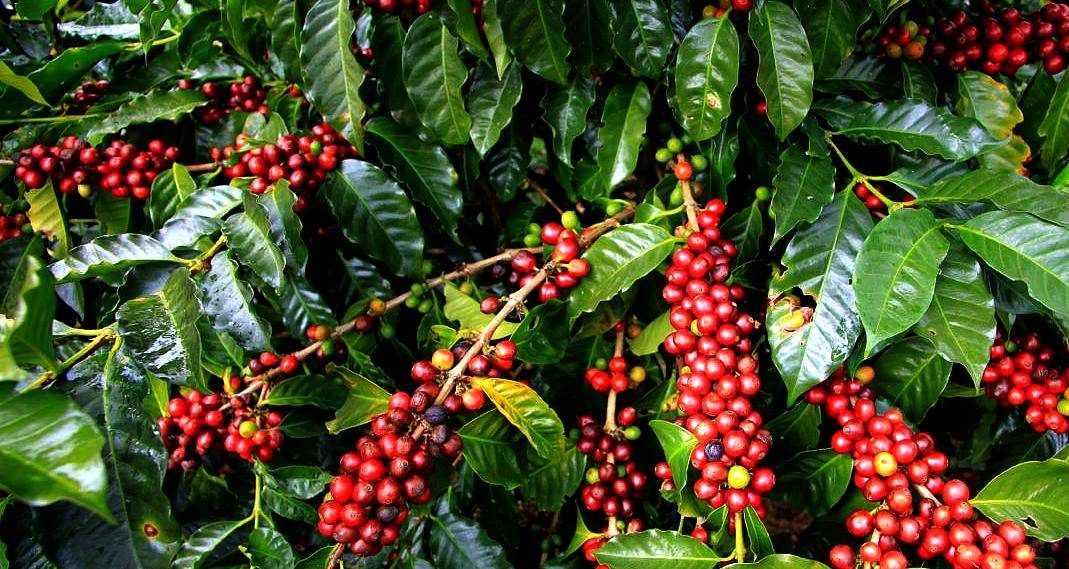
But oil is not the only area attracting investor interest. Agriculture, and coffee in particular, remains one of Uganda’s strongest export opportunities.
Uganda has recorded a sharp rise in coffee exports in recent years. Uganda Coffee Development Authority (UCDA) data show that coffee exports for the 12 months to August 2025 were worth about $2.2 billion, compared with $1.4 billion in the previous 12-month period.
Uganda has also strengthened its position as Africa’s leading coffee exporter. The ministry of Agriculture said in July that Uganda was the leading coffee exporter in Africa and the seventh largest in the world.
For investors, the opportunity is not limited to growing and exporting coffee beans. There is growing room for investment in processing, packaging, storage, transport, logistics and other forms of value addition.
This would allow Uganda to earn more from its agricultural products instead of relying mainly on the export of raw commodities.
Catherine Psomgen, Director of Public Sector and Social Investments at Equity Bank, said investors needed more than favourable economic indicators to succeed.
She said they needed reliable information, supportive policies, access to finance, credible local partners and financial institutions that understood their business plans.
“At Equity Bank, we see our role as extending beyond traditional banking,” Psomgen said.
She said the bank wanted to support investors by connecting them to finance, markets, information, technology and strategic partnerships.
Equity Group’s presence in several African countries, she added, could also help businesses using Uganda as a base to access markets in East and Central Africa.
Uganda Investment Authority Deputy Director for Investment Promotion Rita Nabateregga said the country was entering an important phase of industrialisation.
She said government was seeking to use Uganda’s natural resources to create jobs, increase local production and encourage businesses to process raw materials locally.
Agriculture and minerals, she said, could play an important role in moving Uganda from exporting raw materials to producing finished and semi-finished goods.
This creates opportunities across agro-processing, manufacturing, mining, energy, infrastructure, logistics, tourism, services and technology.