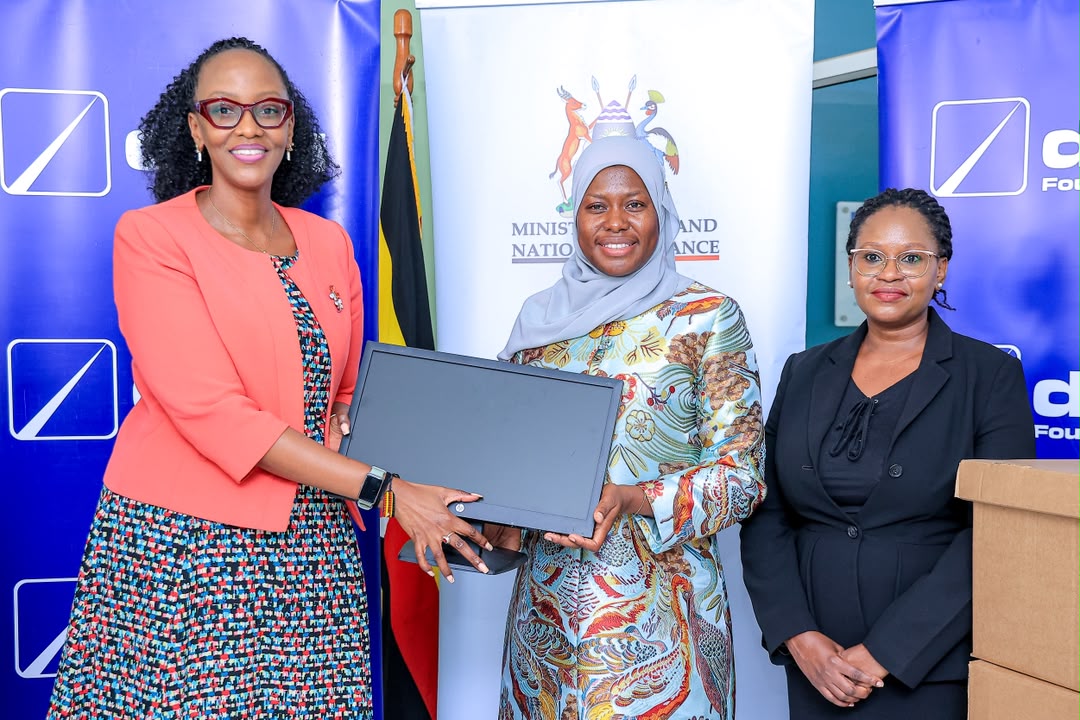
DFCU Bank, through its foundation, has donated 100 desktop computers to the Ministry of ICT and National Guidance in a move aimed at expanding digital access, strengthening digital skills and creating more opportunities for young people.
The computers were handed over at the National ICT Innovation Hub in Nakawa and will be distributed to selected schools across the country to improve access to technology and digital learning resources.
The donation marks another milestone in the partnership between the foundation and the Ministry of ICT and National Guidance, which was signed in November 2024 to support Uganda’s digital transformation agenda through digital literacy, entrepreneurship development, innovation and financial inclusion.
The bank’s Head of Corporate Affairs and Sustainability, Helena Mayanja, said access to technology has become essential for people to participate in today’s economy.
“We are grateful to the Ministry for its leadership and partnership in creating opportunities for more Ugandans to participate in the digital economy. Many of the opportunities that shape the future begin with access to knowledge, technology and skills. Through this donation, we are investing in that foundation and helping young people gain the tools they need to learn, innovate and build sustainable livelihoods. This partnership demonstrates the impact that can be achieved when the private sector and government work together around a common purpose,” Mayanja said.
The partnership has already benefited more than 200 innovators who have received financial literacy and business management training through programmes delivered at the National ICT Innovation Hub.
Selected entrepreneurs have also received mentorship in business planning, record keeping and investment readiness to help them build sustainable enterprises.
The initiative has further expanded access to the dfcu Foundation’s SOMA digital learning platform, which offers self-paced courses in financial literacy, governance, leadership and business management.
The foundation plans to extend the platform to regional innovation hubs, allowing entrepreneurs and innovators outside Kampala to benefit from the training.
DFCU Foundation executive director Mabel Ndawula said the initiative goes beyond providing computers by equipping Ugandans with the skills needed to participate in the digital economy.
“Digital inclusion is not only about access to technology. It is also about ensuring people have the skills and confidence to use it effectively. By combining digital literacy, entrepreneurship development and financial education, we are helping more Ugandans unlock economic opportunities and build resilient businesses. We look forward to growing this partnership and extending its reach to even more communities,” Ndawula said.
Receiving the computers, the Permanent Secretary at the Ministry of ICT, Dr Aminah Zawedde, said the donation demonstrates the progress being made under the partnership signed with the dfcu Foundation in 2024.
“Today, we are seeing a shared commitment translated into action. These 100 desktop computers will provide learners and educators with access to technology and digital resources that are essential for education, innovation and skills development. Government cannot achieve Uganda’s digital transformation ambitions alone. Partnerships such as this one are critical to ensuring that more Ugandans benefit from the opportunities being created by the digital economy,” Dr Zawedde said.
Dr Zawedde added that digital literacy is becoming increasingly important across all sectors of the economy, enabling farmers, entrepreneurs and communities to access market information, weather forecasts, digital financial services and other online tools that improve productivity and economic participation.
She also said the partnership contributes to Uganda’s Digital Transformation Roadmap by expanding digital infrastructure, strengthening digital skills, promoting innovation and advancing financial inclusion.