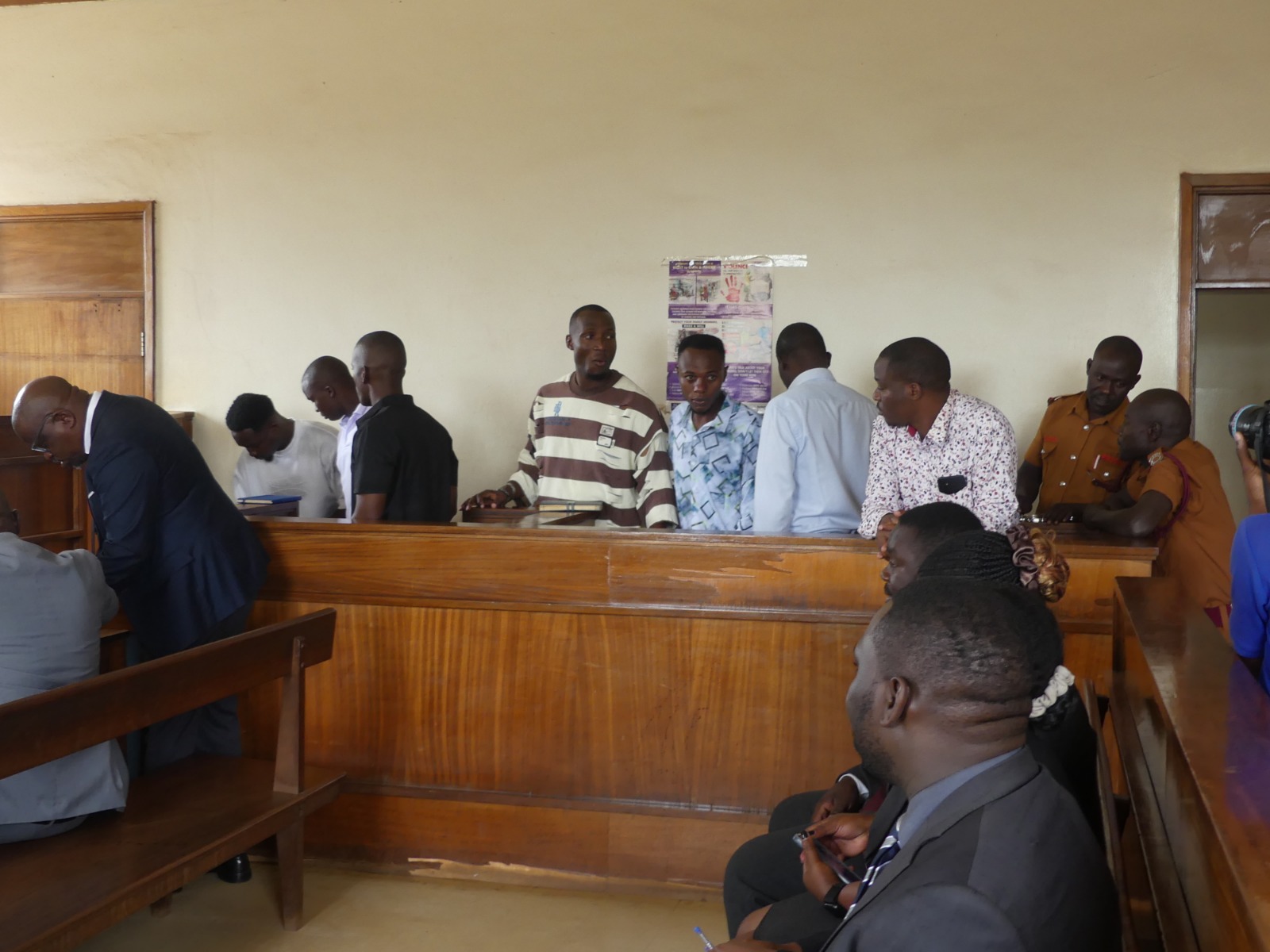

The High Court in Masaka has acknowledged that the vote recount that handed Local Government State Minister, Justine Nameere, the Masaka City Woman MP seat was carried out in breach of the electoral law.
However, the same court ruled that her victory still stands.
Justice Bernard Namanya yesterday dismissed the election petition filed by Rose Nalubowa of the National Unity Platform (NUP).
Nalubowa had been declared winner of the election, but a few hours later Nameere took the seat only after the court ordered a recount, which reversed the result.
The dispute began a day after voting.
On January 16, the Electoral Commission (EC) declared Nalubowa the winner with 25,443 votes. Nameere had 20,324, Nakabuye Juliet Kakande 6,343, and Nanyonga Sauya 6,196.
Nameere, not being satisfied, said results from 11 polling stations had been left out of the declaration.
On January 23, she asked the Chief Magistrate of Masaka, Albert Asiimwe, for a recount, which was ordered, provided they had not been tampered with.
The counting took place at the EC offices and ran until late on February 1, and nine polling stations were thrown out along the way. In the end, Nameere got 25,502 votes against Nalubowa’s 23,176, a margin of 2,326.
She was gazetted on February 6, leading Nalubowa to petition the High Court, insisting that the recount was illegal.
In court, Nalubowa lost several arguments. She said the recount ran beyond the four days the law allows.
But Justice Namanya saw it differently.
He said Nameere applied for the recount on Friday, January 23, the next two days were a weekend, and Monday, January 26, was a public holiday, so the four days ran from 27 to 30 January, the day the order was made.
He said finishing on February 1 did not matter because the law required the chief magistrate to fix the time for the recount, not complete it.
Nalubowa also failed to prove that the chief magistrate lost control of the process because eight of her witnesses said counting spread to four centres and went on while he was absent.
One of her key witnesses, Matovu Maurice, was not a reliable witness, Justice Namanya observed, because he conceded under cross-examination that one of the claims in his affidavit was false.
However the judge cut Nalubowa some slack saying the chief magistrate’s could not explain the irregularities in the recounting process.
“One box was found open. Another, from Bwala Primary School, was found without cast ballot papers for all candidates,” he said.
He noted that at Gayaza, Nalubowa’s 112 votes were unaccounted for.
Justice Namanya said these findings “reflect an actual record of what transpired at the recount centre,” adding that a recount is not a mechanical exercise in re-opening ballot boxes.
Where boxes are shown to have been opened, unsealed, missing, compromised, or otherwise exposed to tampering, continuing with the recount was in breach of the electoral law, he said.
He found that going ahead amounted to non-compliance with the electoral law.
He also held that the EC failed in its duty under section 71 of the Parliamentary Elections Act to keep election documents safe.
And he said the chief magistrate should not have declared Nameere the winner, since that job belongs to the returning officer.
So why did Nameere keep the seat?
Justice Namanya said the burden was on Nalubowa to prove her case. He said Nalubowa had shown the recount did not fully follow the law, but did not prove that the result certified after the recount failed to reflect the democratic choice of the electorate of Masaka City.
“In the absence of such evidence, the allegation that the certified court recount figures were erroneous remained unproved,” he said.
He said Nalubowa did not place the complete recount record before court. In court, she said she had written to the chief magistrate for it, but admitted the letter was never produced.
“The resulting evidential deficiency is fatal to her challenge to the vote recount figures certified by the chief magistrate,” he said.
Justice Namanya said proving that there was non-compliance with the electoral law is not sufficient to overturn an election.
He said Nalubowa ought to have shown, through a mathematical assessment, that affected votes exceeded the winner’s margin.
Nalubowa had stressed that the nine excluded stations had thousands of registered voters. Justice Namanya said the real measure was votes actually cast, which he read from the declaration of results forms and tally sheet.
These came to 1,353, made up of 743 for Nameere and 610 for Nalubowa.
“Even if all those excluded votes were added to Nalubowa Rose’s tally, her total would rise to 24,529 votes, leaving Nameere Justine ahead by 973 votes,” he said.
The exclusion therefore did not affect the election result substantially, Justice Namanya affirmed.