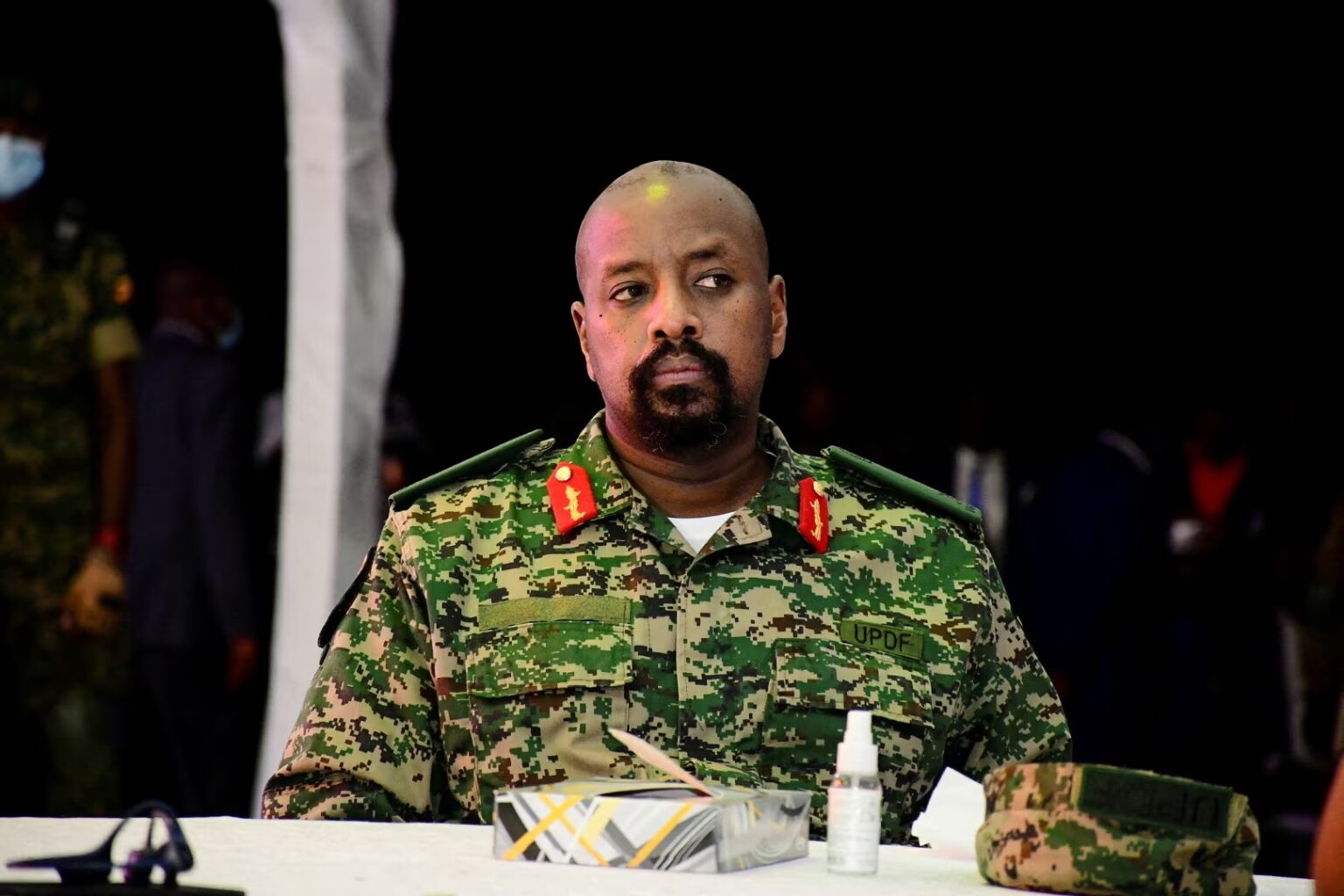
Many people in Uganda woke up on Monday to news that the home of Erias Lukwago, the respected lawyer and former lord mayor of Kampala, had been surrounded by military men.
Outside, two vans popularly known as Drones were on standby.
Lukwago’s wife, Zawedde Lubwama, later told journalists she tried to stop the men who came for him, but she was thrown to the ground. Her husband was bundled into one of the Drones and driven off to an unknown place.
Then, like it had been widely suspected, Gen Muhoozi Kainerugaba, the CDF, posted on X that he had “captured a FOOL and taken him to the basement.”
Although Muhoozi did not name Lukwago, everyone understood who he meant, given the earlier security operation in Wakaliga.
Today, June 16, the country has gone quiet.
A few bold ones like Robert Kyagulanyi, the NUP president, have taken to X to express their disgust at Muhoozi’s actions, but the majority, fearful of being the next victims, have either opted to speak about Lukwago’s ordeal in hushed tones or keep their mouths shut.
How it started
Lukwago’s troubles began long before Monday. He is one of the lawyers representing Dr Kizza Besigye, the former FDC president who was abducted in Nairobi in November 2024 and driven to Uganda to face treason charges.
Lukwago has spent months trying to hold Muhoozi accountable for things the general has said and allegedly done to Besigye. Last week, he filed papers on Besigye’s behalf accusing Muhoozi of running a campaign of threats against him on social media.
Over the weekend, Lukwago told journalists his legal team was struggling to find Muhoozi to serve him with the lawsuit. Then hell broke loose, and now Lukwago is suspected to be held in a “basement” somewhere “learning Swahili” like Muhgoozi tweeted.
A disturbing pattern
For anyone who has followed Muhoozi’s career, none of this is new.
In January 2025, after Kyagulanyi aka Bobi Wine criticised him, Muhoozi posted that if his father was not around to stop him, he would “cut off his head today.”
When the NUP president responded that he did not take the threat lightly, Muhoozi fired back, telling him to repay money he claimed government had given him “before I behead you.”
That same year, he boasted online that his men had captured Eddie Mutwe, Kyagulanyi’s head of security, “like a grasshopper” and tortured him in his basement, the same word he used about Lukwago.
In January this year, after Museveni was declared the winner of a seventh term in an election, Muhoozi wrote on X that government forces had “killed 22 NUP terrorists” since the vote, then added that he was praying the 23rd would be Kyagulanyi, whom he calls “Kabobi.”
Dr Chris Baryomunsi, as minister of Information, once described Muhoozi’s outbursts as “casual” comments, jokes not meant to be taken seriously. Muhoozi and his supporters turned on him.
It is not only opposition politicians who have felt the weight of Muhoozi’s authority. In March, he ordered the arrest of two of his most senior officers, Maj Gen Don Nabaasa and Brig Johnson Namanya, over alleged corruption.
Nabaasa once commanded the elite Special Forces Command, the very unit Muhoozi built his career around, taking over from Muhoozi himself back in 2017.
The two generals were held at the SFC detention facility in Kasenyi, the same kind of facility ordinary Ugandans whisper about when they talk about “the basement.”
Namanya was released five days later after what officials called a “friendly meeting” in which he was cleared of the allegations against him. Nabaasa, too, was recently released after charges were dropped under unclear circumstances.
If men who once stood beside Muhoozi in uniform, men who helped build the very command structure he now leads, can be picked up and held without public explanation, ordinary Ugandans are left asking: “Who exactly is safe?”
In a post on his X handle today, Winnie Kiiza, the former leader of the Opposition, captured the national mood better. She said she recognised this particular kind of silence.
“It is not peace,” she said. “It is pain people are carrying quietly, pressure building under the surface, the kind the English describe as the calm before the storm.”
Kiiza warned that something as small as the price of bread rising could one day set it off a “bigger explosion.”
It is hard to argue with her. The judiciary, whose job it is to question exactly this kind of conduct, has said nothing about Lukwago’s abduction. Religious leaders, who in past political crises have at least offered a prayer or a statement, have also gone quiet.
Even some of Muhoozi’s own loyal supporters appear shaken by his devious actions, especially the way he openly celebrates them.
Many of his admirers are simply afraid that what happened to Lukwago could happen to someone in their own family next.
So why the silence
Muhoozi commands the army, is the first son, and has shown, repeatedly, that he is willing to use that power against critics with little warning and no court order. Few ordinary citizens want to test how far Muhoozi’s power extends.
The second reason is self-preservation. Many ordinary Ugandans have watched lawyers, journalists and even soldiers being detained. They fear criticizing Muhoozi’s actions because they fear they could be next.
The third is the fear of the “basement” itself. The photos of a blindfolded Lukwago begging mercy left many Ugandans in shock. So people ask: If they can subject a prominent politician and a former lord mayor to such torture, what about me?
In the wake of his actions, some Ugandans are now asking whether Muhoozi answers to anyone at all. Muhoozi has himself said that only President Museveni can summon him, but the president’s silence and his failure to read the riot act to Muhoozi could be an indication that he, too, gave up.
So who will call Gen Muhoozi to order? Some Ugandans are asking, quietly.