Private school owners have urged the government to replace the suspension of school tours with stronger transport safety measures, arguing that educational trips are an essential part of Uganda’s curriculum and are not responsible for the country’s rising number of road crashes.
The appeal follows the Ministry of Education and Sports’ decision to suspend all school tours after a series of fatal road accidents involving schools earlier this month.
Last week, a bus belonging to King David Junior School in Ndejje, Kampala, overturned at Chekwatit in Kapchorwa, killing at least 23 pupils and one adult at the scene.
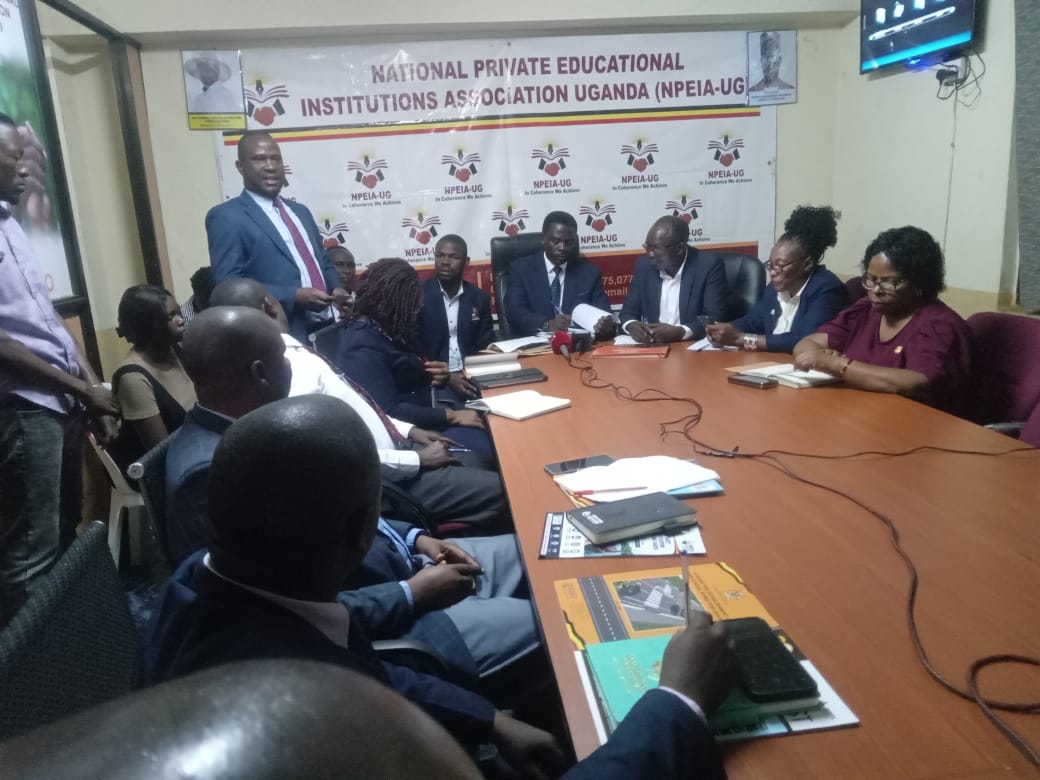
Addressing journalists in Kampala, the chairperson of the National Private Educational Institutions Association of Uganda (NPEIA), Hasadu Kirabira, said the recent tragedies should prompt comprehensive road safety reforms rather than a blanket ban on educational tours.
“The size of the tragedy is enormous for our sector, and it is testing the safety of our learners at all levels,” Kirabira said.
“While mourning is necessary, mourning alone is not enough. Uganda can no longer afford to normalise the repeated loss of our school children and our people on the roads. The time to take decisive action is now.”
Kirabira said road accidents occur in many different circumstances and cannot be blamed solely on school excursions.
“Accidents are caused by many factors. I cannot imagine that school tours alone are one of the factors contributing to these crashes. We need to address this challenge from a much broader perspective,” he said.
He noted that Uganda Police traffic reports show road crashes have been increasing for several years, long before the latest school accidents.
According to Kirabira, police statistics indicate that road crashes increased from 20,394 cases in 2022 to more than 26,000 cases in 2025, while road deaths also rose from about 4,500 to more than 5,300 over the same period.
“This does not suggest that accidents started today. They have been increasing over the years, which means we should address the wider road safety problem rather than isolating school tours,” he said.
Kirabira also questioned the argument that suspending school tours would automatically improve learner safety.
He said many schools do not own buses and instead hire public transport, raising concerns about the safety standards of commercial vehicles.
He argued that educational tours remain an important part of learning because they expose learners to practical experiences that cannot be gained in the classroom.
“Education tours enrich learning, strengthen practical skills, nurture innovation, promote environmental awareness, develop leadership, encourage patriotism and prepare learners for the world of work,” he said.
Kirabira explained that geography students undertake fieldwork in wetlands, quarries, lakes and plantations as part of their examinations, while entrepreneurship students visit factories and industries to understand business operations.
He added that learners also visit historical and cultural sites such as Bulange, museums and the Kazinga Channel to broaden their understanding of Uganda’s history, environment and economy.
“How do you halt such an important aspect of the curriculum? You cannot run a modern education system without exposing learners to practical experiences beyond the classroom,” he said.
Kirabira said Uganda’s private education sector has grown significantly over the years, accounting for about 70 per cent of education institutions, and that improvements in security and road infrastructure have made educational travel more accessible.
NPEIA said it will submit a set of recommendations to the Ministry of Education and Sports, the Ministry of Works and Transport, development partners, civil society organisations and insurance companies.
Among its proposals is the immediate establishment of a comprehensive national school transport safety framework based on prevention, accountability and child protection.