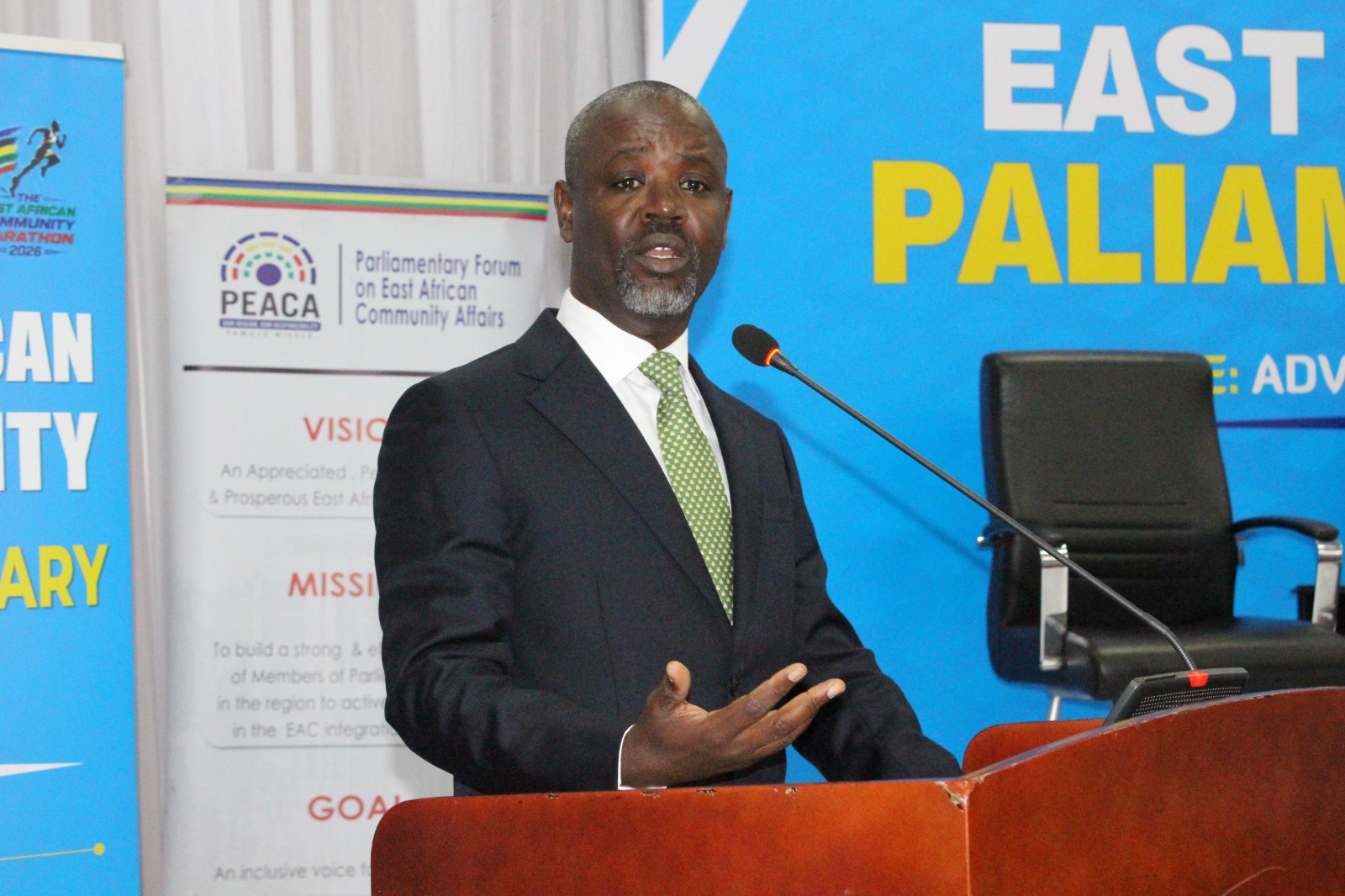
Deputy Speaker Thomas Tayebwa has praised President Museveni and leaders of East African partner states for the progress of the East African Crude Oil Pipeline (EACOP), saying the project demonstrates the benefits of regional integration.
Speaking at a discussion on East African integration, Tayebwa said cooperation among member states played a crucial role in advancing the pipeline project, which he said would generate economic benefits for the entire region.
He said Parliament would ensure that reports from the East African Community receive adequate time for debate in the House and are also considered during committee work.
According to Tayebwa, stronger cooperation among countries including Uganda, Kenya, Tanzania and South Sudan has been vital in advancing the region’s political integration agenda.
However, he noted that several trade barriers continue to slow the pace of integration and called on member states to remove obstacles that limit the free movement of goods, services and people across borders.
Former minister Chris Rwakasisi said achieving meaningful regional integration requires the involvement of all stakeholders, including academia, entrepreneurs, the business community, civil society organisations and professional bodies.
Rwakasisi said one of the reasons the original East African Community collapsed was the failure by member states to put collective interests ahead of individual national interests.
He stressed that countries in the region must move together if they are to achieve lasting political integration.
Former Prime Minister Ruhakana Rugunda expressed concern that many people across the region still know very little about the East African Community.
He said there is an urgent need to popularise the regional bloc and increase public awareness so that citizens understand the importance and benefits of integration.
Rugunda also commended President Museveni, former Kenyan President Daniel arap Moi and former Tanzanian President Ali Hassan Mwinyi for their role in reviving the East African Community after its collapse in 1977.
He noted that the regional bloc had broken down because of political disagreements among member states during the rule of Idi Amin.