The construction of Uganda’s new parliament chambers has entered its final phase after the completion of major steelworks, paving the way for roofing and finishing works on the landmark project.
The new chambers, being constructed by Roko Construction, are expected to be completed by the end of next year.
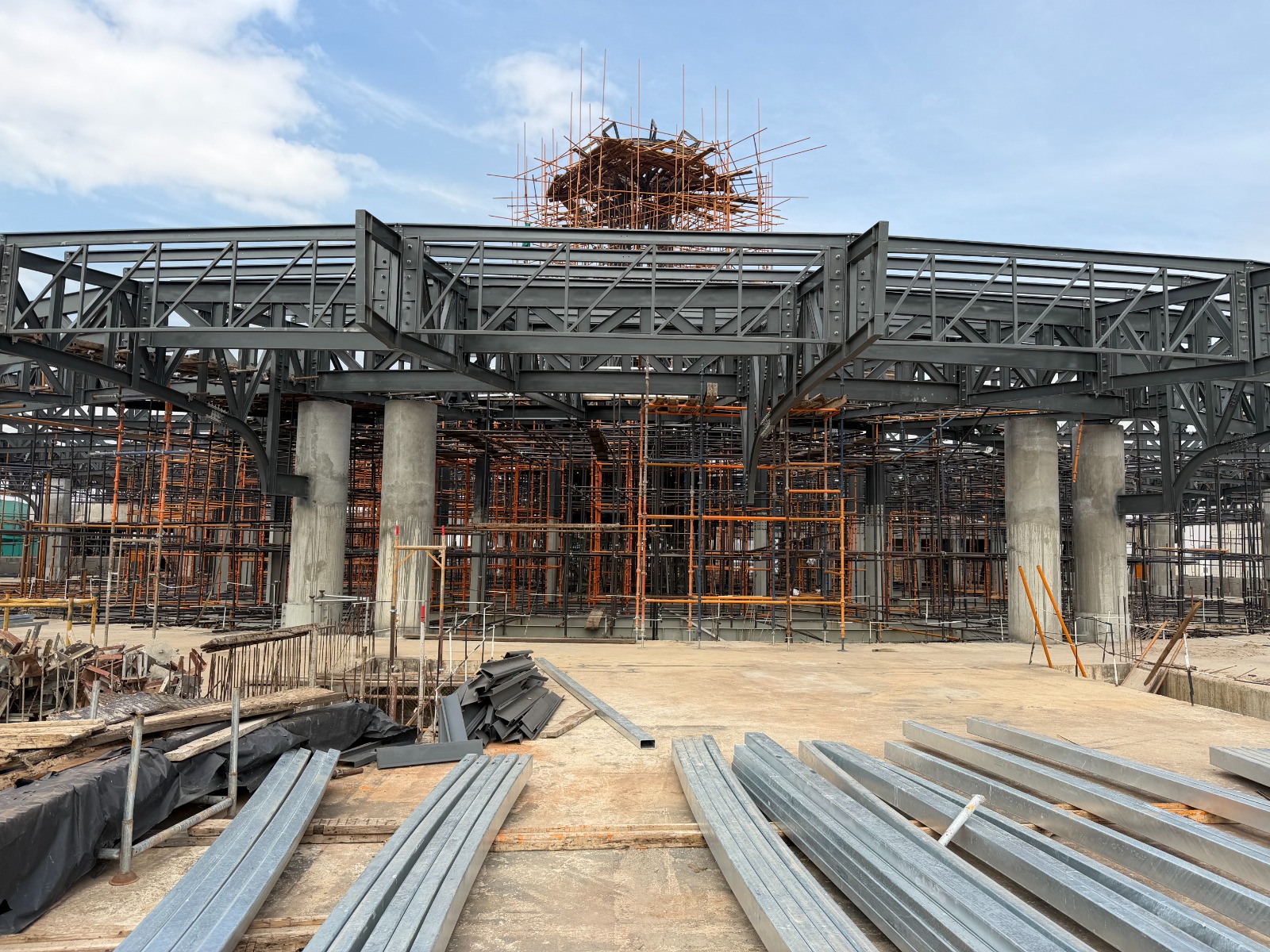
A key milestone has been reached with the installation of about 3,000 tonnes of specialised bent steel frames that form the building’s structural backbone.
The steelworks, considered the most technically demanding component of the project, were undertaken by Irish engineering firm Kelly Steel under a subcontract arrangement.
Officials from the Irish Embassy in Kampala this week toured the construction site to assess progress on the project.
In a post on X, the embassy praised the collaboration between Kelly Steel and Roko Construction.
“We visited the new Parliament building, which is taking shape beautifully. Impressive to see the unique expertise and craftsmanship from Kelly Steel and Roko Construction, both owned by members of the Irish diaspora. Three thousand tonnes of bent steel frames from Kelly Steel have helped shape this landmark building,” the embassy said.
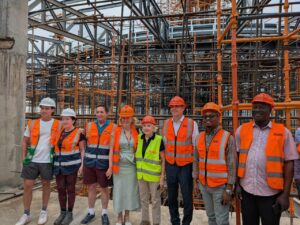
Kelly Steel, led by John O’Kelly, has built an international reputation for complex structural steel fabrication and architectural steelwork.
The company has contributed to major projects including the Butterfly Pavilion in Dubai and the Abu Dhabi National Exhibitions Centre skyscraper in Abu Dhabi.
Project officials say the completed steel framework will make the new chambers one of the most distinctive architectural structures in Uganda.
Construction of the new Parliament chambers began several years ago as part of efforts to expand parliamentary facilities and address space constraints in the existing building, which was designed during the colonial era.
The project was originally scheduled for completion three years ago but suffered delays after the government ordered significant design changes following the 2021 suicide bomb attacks near Parliament and the CPS in Kampala.
The revised plans included enhanced security features such as bomb-resistant glass and other specialised systems.
Approval processes for the modifications further delayed the project.
Mark Koehler, chairman of Roko Construction, said the contractor remains committed to delivering the project by the end of next year.
“We are going to have another architectural marvel in Kampala by the end of next year. It will be a state-of-the-art, beautiful and high-quality facility,” Koehler said.
He added that roofing works are now underway as contractors move towards the final interior and exterior finishes.
The new parliament chambers are being constructed as an eight-storey block on the northern side of the parliamentary complex along Parliamentary Avenue.
The facility is designed to accommodate up to 500 Members of Parliament, a significant increase from the existing chamber, which seats about 90 legislators.
Other facilities will include an archive centre, press gallery, members’ lounge, library, dining hall, committee rooms and offices for the speaker and deputy speaker.
Once completed, the new chambers are expected to improve Parliament’s capacity and modernise its working environment while easing congestion in the current legislative building.