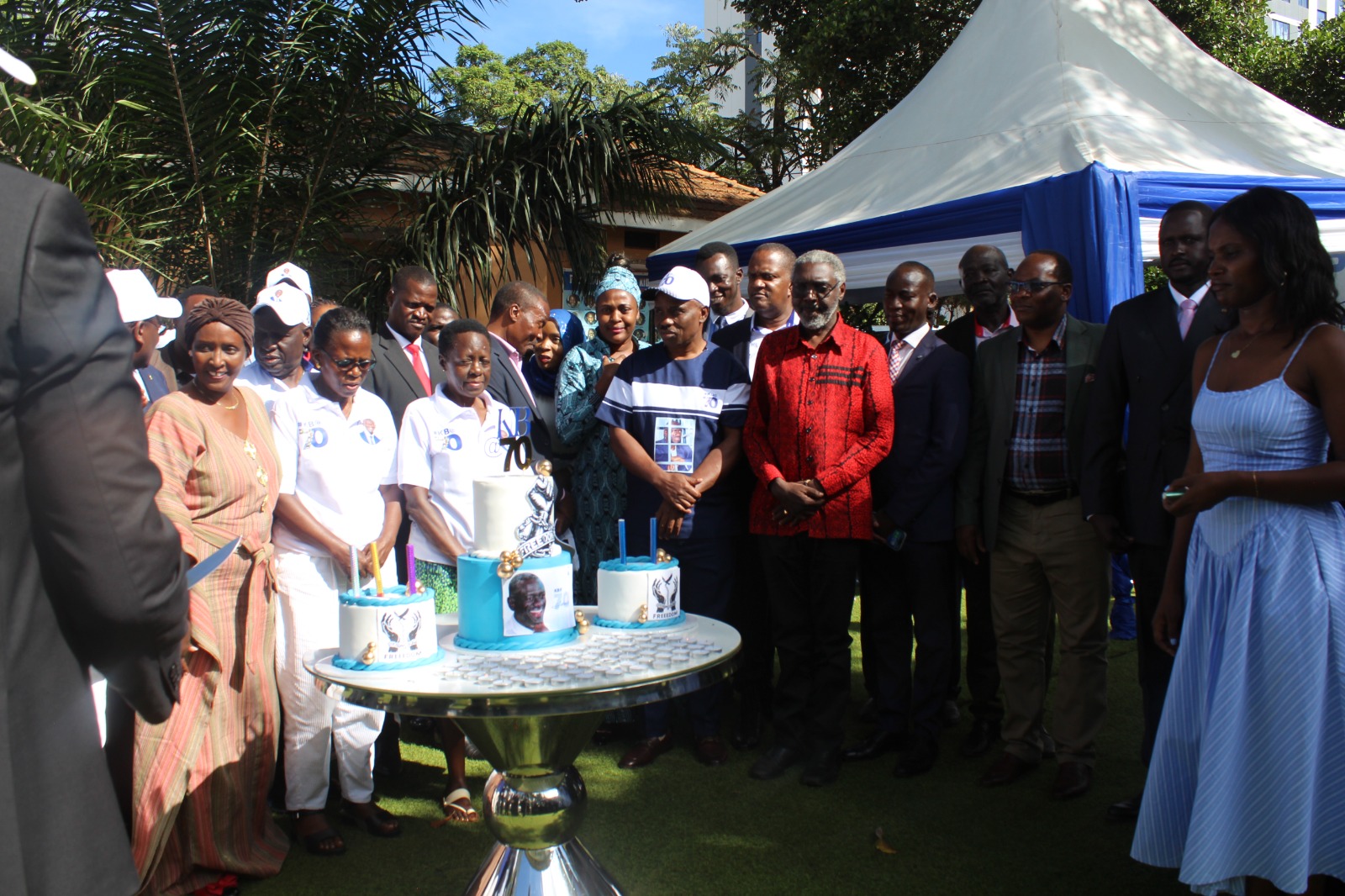
Opposition leaders used the 70th birthday of veteran politician Dr Kizza Besigye to call for a strategic reset in their push for political change in Uganda, signalling renewed efforts to unify and redefine their approach against the ruling establishment.
The event, held on Katonga Road in Kampala, brought together politicians from across the opposition spectrum, including representatives from the National Unity Platform (NUP), Forum for Democratic Change (FDC), Uganda People’s Congress (UPC), Alliance for National Transformation (ANT), and the Conservative Party.
Speakers used the occasion not only to celebrate Besigye’s legacy but also to reflect on what they described as fragmentation and missed opportunities within the opposition.
John Ken Lukyamuzi, president of the Conservative Party, urged opposition groups to confront internal weaknesses and rethink their political strategy.
He argued that the opposition lacks direction despite what he called numerous opportunities to challenge President Museveni, whom he accused of entrenching authoritarian rule.
“We must overcome our differences and build a united front capable of delivering meaningful change,” he said, warning that continued divisions risk rendering the opposition politically irrelevant.
The calls for unity were echoed by Mathias Mpuuga, from the Democratic Front (DF), who stressed the need for structured dialogue among opposition actors.
He noted that many disagreements are personal rather than ideological, and argued that reconciliation is essential for building a credible alternative.
Mpuuga framed Besigye’s life as a lesson in resilience, saying periods of political pressure have exposed both the strengths and weaknesses within the opposition movement.
Similarly, Gen Mugisha Muntu from ANT praised Besigye’s long-standing commitment to political reform, recalling his decision to abandon a medical career to join the National Resistance Army (NRA) bush war in 1981. He suggested that such personal sacrifice underscores the depth of Besigye’s convictions.
Other speakers broadened the discussion to systemic challenges in Uganda’s politics. Lina Zedriga of the acting president of NUP criticised what she described as increasing militarisation and monetisation of political processes, while emphasising the need for collaboration rather than competition among opposition groups.
Former minister, Asuman Kiyingi called on the government to address structural governance issues, warning against the emergence of what he termed dynastic politics.
Meanwhile, Erias Lukwago, acting president of the People’s Front for Freedom (PFF) described Besigye as a symbol of resistance and constitutionalism.
He highlighted Besigye’s continued legal and political struggles, portraying them as emblematic of broader tensions within Uganda’s democratic framework.
The references to historical figures such as Julius Nyerere and Nelson Mandela reflected an attempt to situate Uganda’s opposition within a wider African tradition of liberation movements.