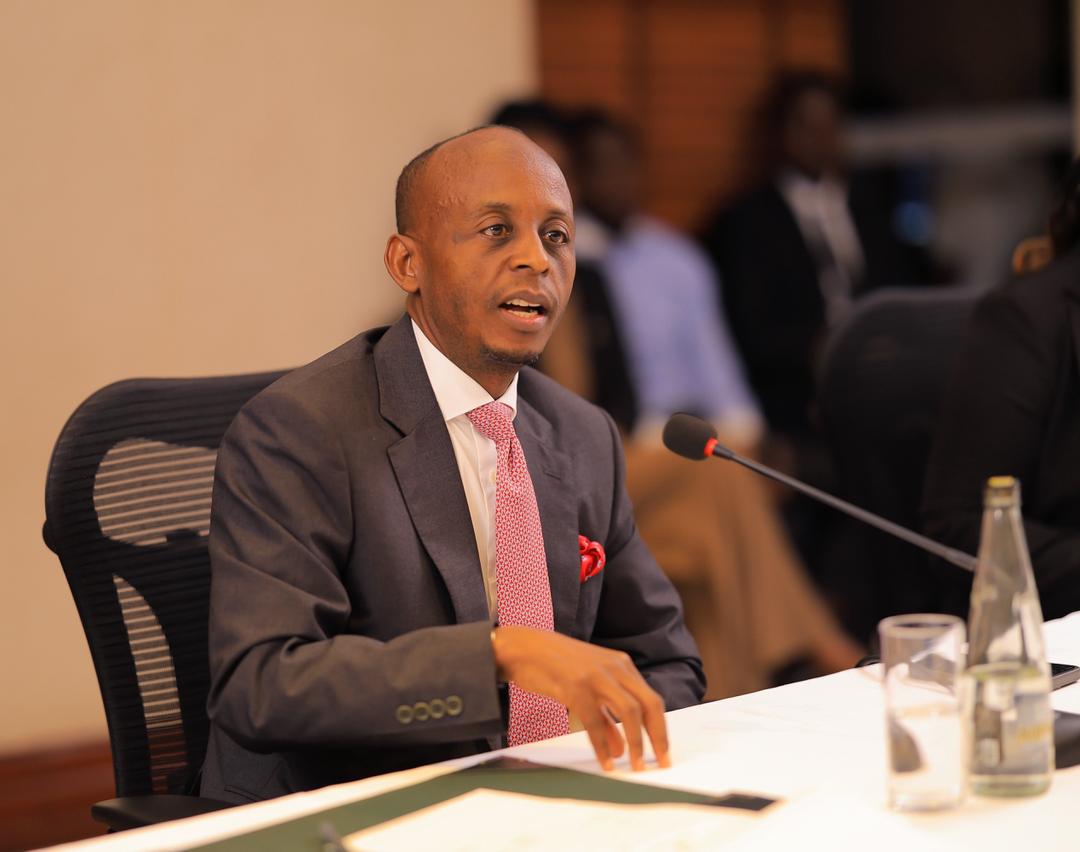
Dr. Oscar Kambona, a founding partner at Kampala Associated Advocates (KAA), has warned that Uganda must strike a careful balance between aggressive tax collection and protecting citizens’ constitutional rights.
Speaking during a lively online interview hosted by lawyer Elison Karuhanga on the JSC Conversations, Kambona talked about the growing powers of the taxman, the relationship between taxation and the Constitution, and the need for stronger institutions in Uganda’s legal profession.
Kambona, who recently completed a PhD in taxation law at Makerere University, said taxation is essential for any state to function but warned that the authority to collect taxes must always remain subject to constitutional safeguards.
“Taxation is a necessary evil,” he said.
He argued that while tax authorities require strong powers to enforce compliance, those powers should not override constitutional protections such as the right to property, privacy and due process.
According to Kambona, disputes between taxpayers and the revenue authority often arise because the state wields far greater power than individuals.
“The taxman is one of the most powerful actors in the legal system,” he said, noting that the law allows tax authorities to investigate, assess and enforce payment using several administrative tools.
But he cautioned that such powers must operate within clear legal limits.
“If you give the taxman unlimited power, then you undermine the Constitution,” he said.
Kambona explained that under our legal framework, taxes must always be imposed through legislation passed by Parliament. This principle ensures democratic accountability and protects citizens from arbitrary taxation.
He stressed that courts therefore play a crucial role in reviewing disputes between taxpayers and authorities such as the Uganda Revenue Authority.
“The judiciary becomes the referee between the citizen and the state,” he said.
During the conversation, Kambona also addressed the evolution of Uganda’s tax system, arguing that the country has made significant progress in building legal and administrative frameworks for taxation.
However, he said enforcement must always be balanced with fairness to maintain public trust.
Turning to the legal profession, Kambona said fragmentation among law firms has limited the sector’s ability to compete globally.
He urged lawyers to build stronger partnerships and institutions rather than working in isolation or as individuals.
“Consolidate and build scale,” he said, arguing that larger and more specialised firms can deliver higher quality legal services and compete internationally.
Kambona is widely regarded as one of Uganda’s leading taxation lawyers and has spent more than two decades advising corporations and government institutions on complex tax disputes and policy issues.
He has also played a role in the development of tax legislation in Uganda and previously served as a lecturer in revenue law at the Law Development Centre (LDC).
In the interview, he said the future of taxation in Uganda will depend on strengthening institutions, improving compliance and ensuring that tax collection remains anchored in the rule of law.