A long-running legal battle between Amos Murisa and Uganda Revenue Authority (URA) has taken a dramatic turn after the Supreme Court ruled that a missing signature on a judgment by Justice Alfonse Owiny-Dollo means the case has to be retried.
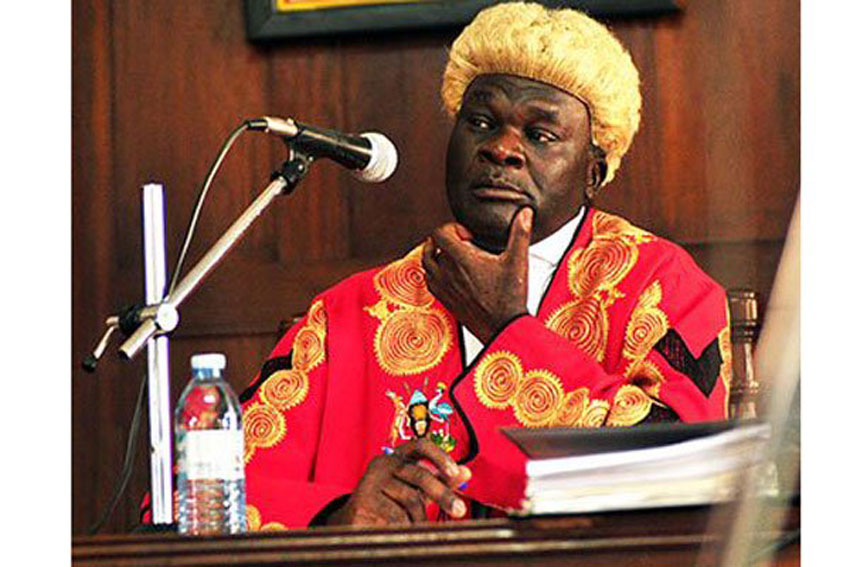
At that time, Owiny-Dollo, then a deputy chief justice, was one of the judges who heard the appeal at the Court of Appeal, and because of that omission, the Supreme Court ruled this week that the decision of the Court of Appeal was legally defective and could not stand.
This is how it started.
Murisa worked as a cashier at URA’s customs office in Entebbe from the early 2000s, but legal troubles began in 2006 when investigators suspected he was helping individuals evade customs taxes. They also accused him of making false customs entries.
At the time, Murisa denied the accusations.
He was first tried in 2006 under the East African Community Customs Management Act, and later in the same year, new charges of causing financial loss and of abuse of office were slapped on him.
In June 2013, the High Court ruled that Murisa had “no case to answer” on the charges of causing financial loss and abuse of office, and in April 2015, he was acquitted of the customs offences after finding that the prosecution had not produced enough evidence to prove the charges.
After being cleared, Murisa decided to sue URA for wrongful prosecution. He argued that the tax body had wrongly pushed for his arrest and prosecution even though there was no proper evidence against him.
Murisa told the court that the prosecution had destroyed his reputation, caused him financial loss, and subjected him to embarrassment.
Justice Oumo-Oguli, who heard the case, agreed with Murisa and found that URA had no reasonable cause to prosecute him and that the criminal case had been brought maliciously.
He awarded him Shs 244 million in special damages and general damages, in addition to interest and legal costs.
URA was unhappy with that decision and appealed to the Court of Appeal, arguing that investigators had reasonable grounds to suspect Murisa of wrongdoing.
The authority’s lawyers said the prosecution was justified based on the information that investigators had at the time. They asked the Court of Appeal to cancel the High Court decision.
The Court of Appeal agreed with URA after reviewing the evidence and ruled that investigators had reasonable and probable cause to prosecute Murisa.
Because of that finding, the Court of Appeal overturned Justice Oumo-Oguli’s decision and dismissed Murisa’s claim for malicious prosecution.
MP Nathan Itungo unfairly fired security guard Ejong. Court says Ejong must be paid Shs 4.3 million
Dissatisfied, Murisa took the matter to the Supreme Court.
Murisa’s lawyer, Gerald Nuwagira, argued that the Court of Appeal had made several legal errors when it dismissed the case. He said the court wrongly concluded that there had been reasonable grounds to prosecute Murisa.
He also argued that the Court of Appeal had misunderstood important evidence relating to the customs transactions.
URA’s lawyers, led by Diana Prida Praff and Tony Kalungi, defended the decision of the Court of Appeal. They asked the Supreme Court to uphold the ruling that had dismissed Murisa’s case.
However, before the Supreme Court could decide whether Murisa had been maliciously prosecuted, the justices discovered a different legal problem in the earlier judgment.
The justices noticed that the Court of Appeal ruling had been signed by only two judges, even though three judges had heard the case.
The missing signature belonged to Owiny-Dollo, who went on to serve as chief justice before retiring in January this year.
The Supreme Court said the Constitution requires a quorum of three judges for the Court of Appeal to make a valid decision. Because only two judges signed the judgment, the justices said the decision was legally defective.
The court explained that the Court of Appeal had been constituted by fewer than the required number of judges when the judgment was delivered.
Because of that defect, the Supreme Court cancelled the judgment.
“The judgment of the Court of Appeal in the present case is a nullity and is set aside,” the court ruled.
Instead of deciding whether URA was liable for malicious prosecution, the Supreme Court ordered that the case should be heard again by the Court of Appeal.
The justices said the matter should be handled urgently because it has already taken many years in the courts.




Related posts:
- Supreme Court affirms its illegal to try civilians in army courts, says all trials must cease
- Supreme Court ruling: Museveni says ‘foreign-oriented judges’ don’t govern Uganda
- High Court overturns fines imposed on Nile Breweries in tax dispute with URA
- Court grants Senkeeto, architect of Katosi road scam, bail due to “back pain”