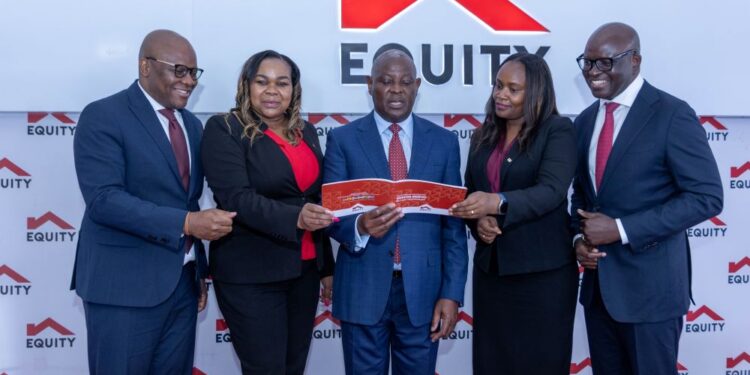

Equity Group Holdings reduced its bad loans, spent less to earn each shilling and delivered a 27.2% return to its owners in the nine months to September.
Realeasing its financial results of the third quarter of the year this week, the group said its ratio of non-performing loans fell to 9.3% from 12.1% a year earlier. These are loans that borrowers have stopped repaying on time.
Equity says it set aside enough money to cover 71% of them. The cost of risk, which measures how much a bank sets aside for loans that may go bad, improved to 1.5% from 1.9%.
“The progress reflects disciplined underwriting, stronger analytics and the benefits of a diversified portfolio,” the group said.
The bank also became cheaper to run, according to the results. Its cost-to-income ratio, the amount spent to earn each shilling of income, improved to 47.9% from 50.6%.
Equity credited productivity gains, shared services and customers moving to digital channels. About 89.5% of its transactions are now digital, and 98.3% take place outside branches.
Those savings fed into strong returns. Return on average equity, the profit made on the owners’ money, was 27.2%. Return on average assets was 4.6%, which shows how much profit comes from everything the bank owns.
Dr James Mwangi, the group managing director and chief executive, said the results showed a stronger group.
“Our strong Q3 2026 performance demonstrates the resilience of our diversified regional franchise,” he said.
In 2023, Equity Bank Uganda set aside Shs191.2 billion for bad loans and posted a loss of Shs36.6 billion. It then rebuilt its balance sheet, and returned to profit in 2024 and again in 2025.
Those returns also reach Ugandan shareholders, since Equity’s shares trade on the Uganda Securities Exchange.