Civil society organisations have launched a national strategy to phase out highly hazardous pesticides in Uganda and promote safer farming methods, warning that the chemicals pose risks to farmers, consumers and the environment.
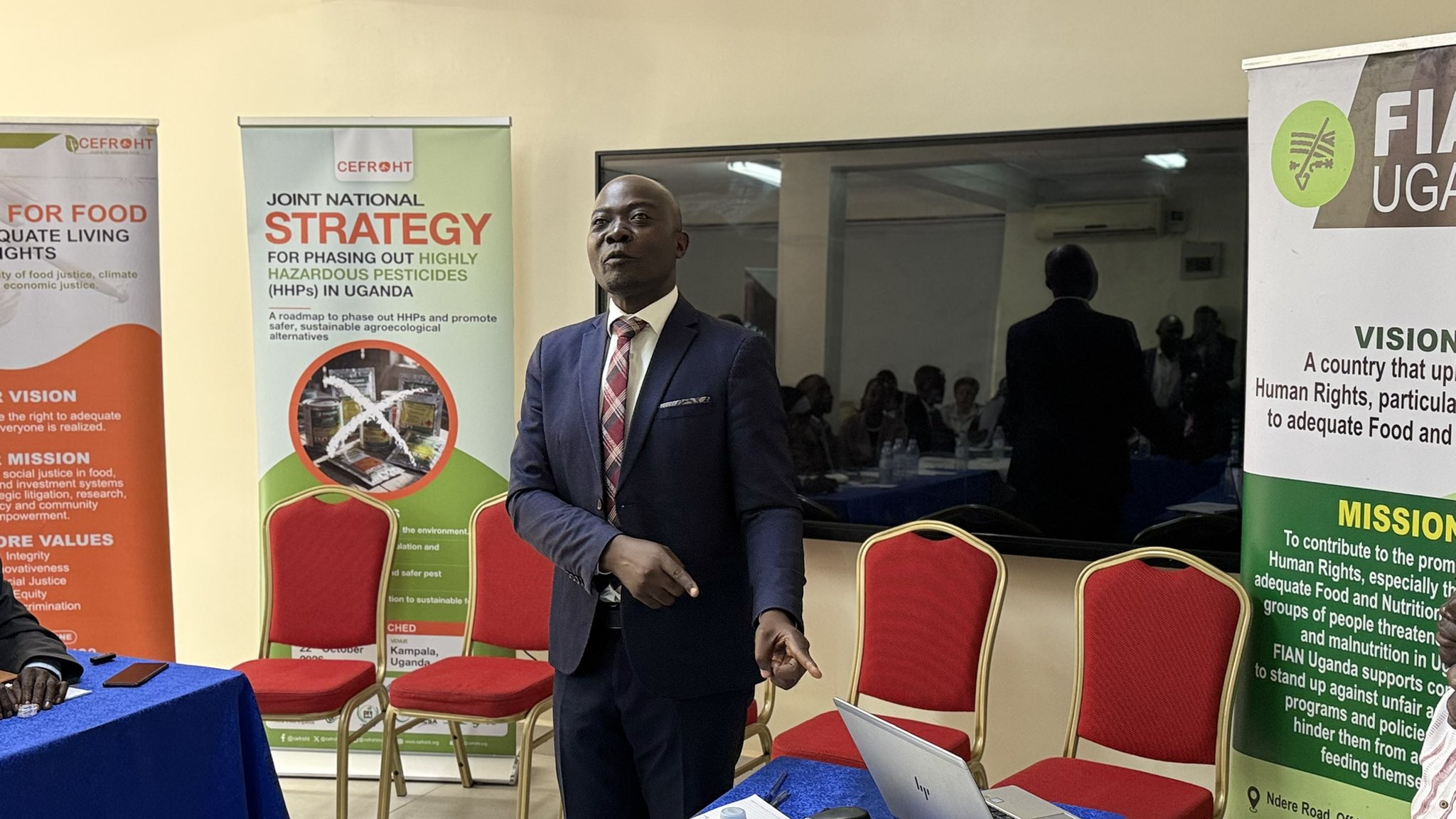
The Joint National Highly Hazardous Pesticides Strategy was launched at Piato Restaurant in Kampala, during a national dialogue held to mark World Food Day 2026.
The strategy proposes stronger pesticide regulations, improved monitoring of agricultural chemicals and better tracking of products throughout the food supply chain. It also promotes agroecology, which uses sustainable farming practices to protect soil, biodiversity and human health.
The organisations say Uganda must accelerate efforts to remove dangerous chemicals from the market while helping farmers adopt affordable and environmentally friendly alternatives.
According to the strategy, Uganda’s pesticide use increased from 2,990 tonnes in 2010 to 6,010 tonnes in 2022.
The document further states that, by the end of 2023, 55 of the 115 pesticide active ingredients registered in Uganda and 459 of the 669 registered brands met the criteria for highly hazardous pesticides. Of the 55 active ingredients, 65.5% were not approved for use in the European Union.
Highly hazardous pesticides are chemicals that can cause serious poisoning, cancer, reproductive problems and hormone disruption. Some also persist in soil and water, harming wildlife, including bees and fish.
Dr David Kabanda, executive director of the Centre for Food and Adequate Living Rights (CEFROHT), said Ugandans should not be exposed to chemicals that are banned in the countries where they are produced.
“Every Ugandan has a right to adequate food and a healthy environment, and that right must be protected in law and in practice,” he said.
The organisations welcomed the Ministry of Agriculture, Animal Industry and Fisheries’ review of 18 pesticide active ingredients, which resulted in some chemicals being phased out and others placed under restrictions.
However, they said the government must ensure that withdrawn products are removed from agricultural shops and farms and that restrictions are enforced.
The strategy also cites research linking pesticide exposure to serious health problems. It refers to a study of organophosphate poisoning in Uganda between 2017 and 2022 that recorded 1,599 deaths.
In Mbale, 80.9% of farmers who used pesticides reported acute symptoms, including skin irritation and headaches, according to research cited in the document. The organisations also expressed concern that many farmers lack adequate training in safe pesticide handling.
They warned that pesticide residues in food could threaten consumers and affect Uganda’s agricultural exports. They called for stronger inspections and enforcement to prevent banned, counterfeit and substandard chemicals from reaching the market.
The groups argue that agroecology offers a practical alternative. The approach includes composting, using indigenous seeds, improving soil fertility and applying locally available pest-control methods.
Jane Nansubuga, a farmer champion who runs the Nansubuga-CEFROHT Agroecology Learning Centre in Mukono, said she no longer buys synthetic chemical pesticides.
She makes her own pest-control mixtures using locally available materials, including cow urine, milk and red pepper, and shares the methods with other farmers.

The organisations said farmers need training, research and government support to adopt such practices without compromising food production.
They also urged Parliament to strengthen oversight of pesticide trade and increase funding for monitoring and enforcement.
The Ministry of Agriculture was asked to update the national agrochemical register, raise public awareness and finalise a national agroecology strategy.
The groups further called for progress on the proposed Food and Agriculture Regulatory Authority Bill, 2026, and the National Organic Bill, arguing that laws should support sustainable farming alternatives alongside chemical regulation.
The strategy was endorsed by organisations including CEFROHT, Participatory Ecological Land Use Management (PELUM), the Eastern and Southern Africa Small-scale Farmers’ Forum Uganda, Global Consumer Centre, Food Safety Coalition Uganda, Food Rights Alliance and the Southern and Eastern Africa Trade Information and Negotiations Institute.
They said coordinated action by government, farmers, civil society and the private sector would be necessary to protect public health, improve food safety and support a transition to sustainable agriculture.