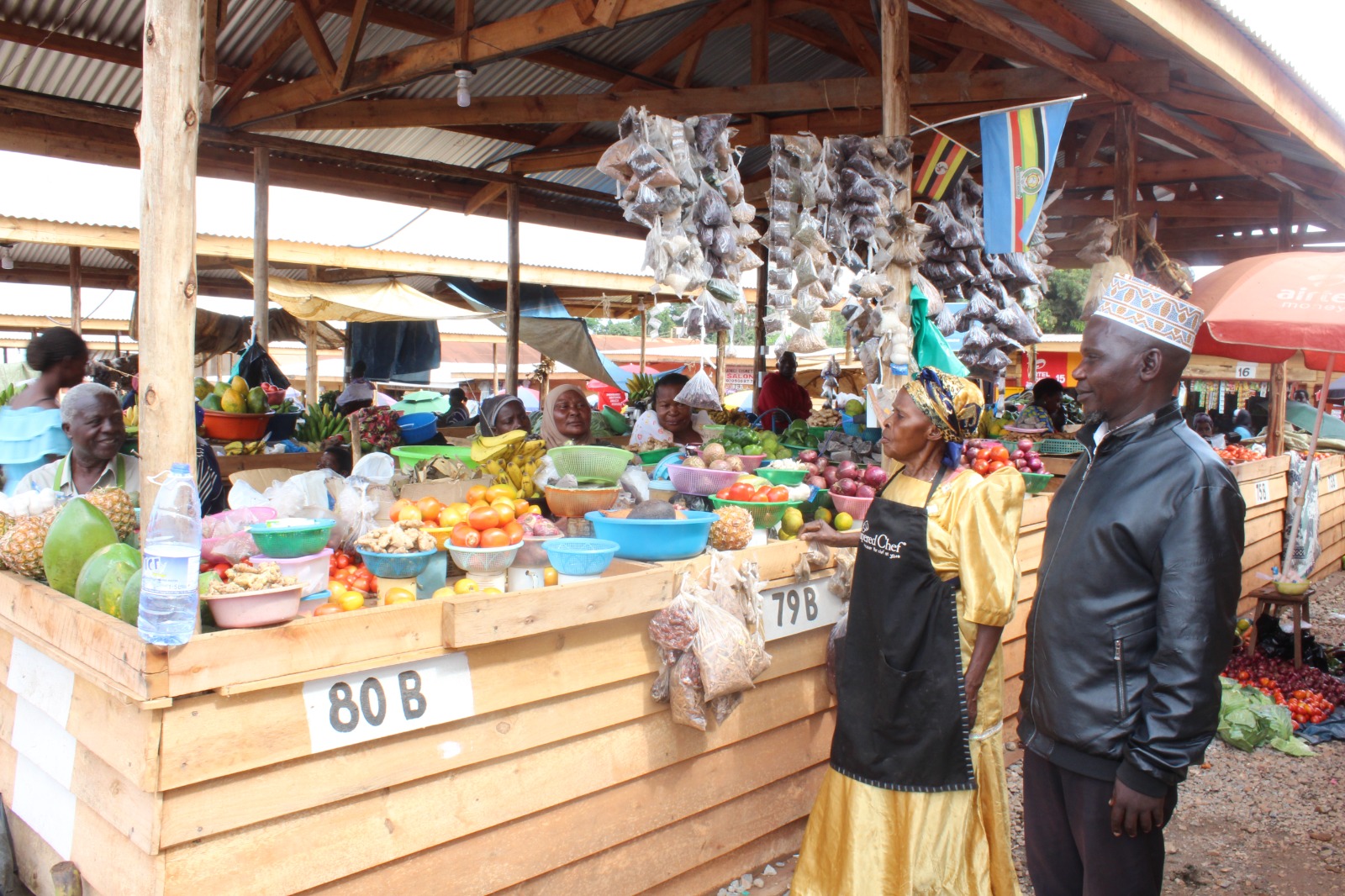
Vendors at the Mpigi Central Market temporary relocation site have asked the district authorities and their political leaders to provide security lights to protect their merchandise from theft.
The vendors say the market has no reliable lighting, leaving them worried about the safety of goods they sell to both wholesale and retail customers.
Mohammed Kazibwe, the vice-chairman of the market committee, told Bbeg Media at the temporary relocation market in Mpigi Town Council that solar security lights had been installed at the site before vendors moved in, but were later removed.
“When we came here, we found solar lights which could give us security. However, when the contractor left, these lights were also taken,” Kazibwe said.
He said the situation had become worse because the market does not have a stable and reliable electricity supply.
Kazibwe appealed to Mawokota North MP Amelia Kyambadde and Mpigi District Woman MP Teddy Nambooze to intervene and help the vendors obtain adequate security lighting.
He said many vendors are low-income earners who borrowed money to establish businesses at the market and could not afford to lose their stock through theft.
The vendors also raised concerns about flooding during the rainy season, water shortages and the growing population at the market.
Kazibwe said the number of vendors had grown to about 794, making the available water supply inadequate.
He warned that inadequate water could make it difficult for vendors to maintain proper hygiene and could increase the risk of disease outbreaks, especially among businesses dealing in food.
Vincent Kiwanuka, another vendor, complained about the condition of the market stalls, saying some sections have poor roofing that allows rainwater to leak into the stalls.
He also asked the Mpigi District authorities to install speed humps on the nearby road to improve safety for schoolchildren, customers and vendors accessing the market.
Florence Nakaddu and Sarah Nassali raised concerns about access to the Parish Development Model, saying they had not benefited from the programme despite being registered.
Nassali said town officials had not visited some vendors at their workplaces to assess them for support.
“Although I was registered, I never benefited. I decided to use loan capital, but because we have few customers, I ended up making losses in my vegetable business,” she said.
Other vendors complained about street traders who had initially been brought into the temporary market but later returned to the streets.
The vendors said some traders had returned to roadside selling because of limited access to the market for some types of goods, including food.
They asked the district authorities to enforce the local trade regulations while also ensuring that traders have adequate space and facilities to operate.
Responding to the concerns, Mpigi district boss Peter Kawuki said he would engage the contractor, Hebron Investments Limited, the district contracts committee and the district engineer over the missing security lights.
Kawuki said the district was also aware of the water shortage and would consider increasing the number of water tanks at the market.
“On water shortages, I am still overwhelmed because initially everything had been planned for. However, I understand that the number of vendors has grown, including those who were on the streets. We shall add additional water tanks,” Kawuki said.
He also disclosed that fire hydrants had not been provided at the temporary market, despite their importance in responding to emergencies.
Kawuki said the contractor would be required to address the issue and ensure that the market has the necessary facilities to respond to fire emergencies.
The vendors were relocated to the temporary market about four months ago to pave the way for works on the Mpigi Central Market.
The temporary market accommodates traders dealing in vegetables, food, chicken and beef products, charcoal, restaurants, salons, fish, retail goods and motorcycle repairs, among other businesses.