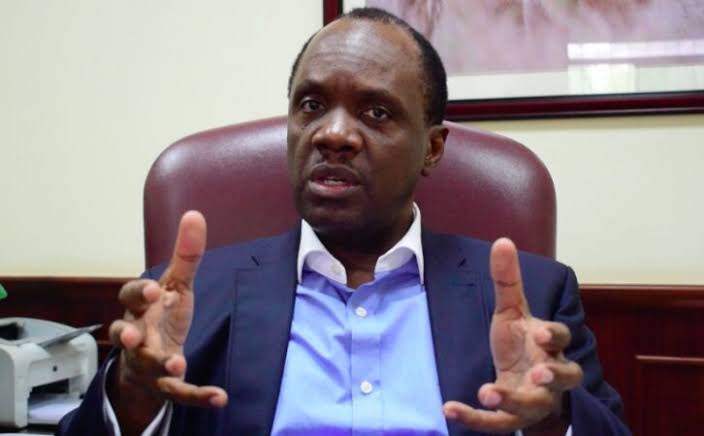
Prominent businessman and motivational speaker Patrick Bitature has been ordered by the court to pay Finicon Uganda, an architectural firm, more than Shs 955 million for work the firm did on two of his properties nearly 14 years ago.
If you factor in the 9% per annum interest awarded by Justice Stephen Mubiru starting from May 2014, the amount Bitature now owes Finicon has grown to nearly Shs 2 billion.
The business partnership between Bitature and Finicon started in 2012 when the businessman wanted to build a high-end boutique hotel on Summit View Road atop Kololo Hill in Kampala.
The project was expected to cost between Shs 18 billion and Shs 22 billion. On July 6, 2012, Bitature signed a contract with Finicon, and according to the terms, the architectural firm was entitled to 5% of the total project cost.
Just over a month later, on August 24, 2012, Bitature signed a second contract with Finicon, this time for the remodelling of his personal residence at Plot 9 Malcolm X Road in Kololo. That contract also carried a 5% consultancy fee.
Finicon says it got to work on both projects. It carried out feasibility studies, produced schematic and production drawings, secured approval from the National Environmental Management Authority (NEMA) for the hotel project, and pushed both projects through Kampala Capital City Authority (KCCA) for development permission.
It also organised a competitive tendering process, inviting contractors such as CATIC, Seyani Brothers and Roko to bid.
Then, without any formal notice, the projects stalled. Finicon says it completed about 76% of the contracted work across both projects, entitling it to a combined fee of roughly Shs 1 billion.
Bitature only paid Shs 87 million, forcing Finicon to sue him for the balance in December 2018.
In court, Finicon, which was represented by Blair & Co Advocates, argued that the contracts were clear and not ambiguous at all, and that Bitature only raised the ambiguity argument as an afterthought, since he had gone ahead and made a partial payment without ever complaining that the fee terms were unclear.
The firm argued that the Shs 87 million Bitature paid could not have been intended as full and final settlement of the debt.
Bitature, represented by ENSafrica Advocates, argued that the fee clauses in both contracts were too vague to be enforced, since neither project ever reached the stage where the final bills of quantities were produced and agreed.
His lawyers also introduced new arguments that Finicon lacked the standing to sue because the contracts had actually been signed by an architect named Angiletti and not by Finicon itself, and that Finicon’s directors were not registered architects at the time and had therefore committed fraud.
Businesswoman who supplied faulty brick-making machine to SFC loses Shs 146m
Justice Mubiru rejected most of these arguments outright, ruling that lack of privity and fraud had never been raised in Bitature’s original written defence.
He said fresh legal arguments cannot simply be sprung on the other side once a case is already at trial.
On the question of whether Finicon’s directors were properly licensed, Justice Mubiru examined the evidence closely and found that the actual architectural work had been carried out by a registered, licensed employee of Finicon, and that this satisfied the law.
He noted that the regulatory board’s own chairperson had confirmed that “architectural firms have the right to hire architects.”
On the central question of whether the contracts were too vague to enforce, Justice Mubiru disagreed with Bitature’s lawyers.
He said that courts should not go looking for ambiguity where none exists.
“My role is not to search for ambiguity or invoke rules designed to resolve ambiguities unless the ordinary meaning of the words genuinely gives rise to uncertainty,” he said.
He said both contracts contained a workable formula for calculating fees, even though the final construction costs had never been fully settled.
Justice Mubiru also tore through Bitature’s testimony that both projects never moved past the earliest planning stage.
He noted that Bitature himself admitted receiving KCCA-approved drawings and thanking Finicon for them by email, which directly contradicted his claim that nothing beyond inception had happened.
“Patrick Bitature signed the KCCA application. He accepted and acknowledged the drawings via his personal assistants,” he ruled.
Justice Mubiru said there was a direct factual conflict between the oral testimony of Bitature and the documents on record.
He ultimately found that Finicon had completed roughly 76% of the agreed work on both projects and was entitled to be paid for it.
However, Justice Mubiru rejected Finicon’s claims for general damages for reputational harm and for punitive damages, ruling that the law does not allow punitive damages in ordinary breach of contract cases.
But on the core claim, he ruled firmly in Finicon’s favour and ordered Bitature to pay Finicon Shs 955 million as the outstanding contractual sum at an interest of 9 % per year from May 20, 2014 until the debt is finally cleared.
Due to the fact that the interest has been accumulating for more than twelve years, the principal plus interest that Bitature must pay now stands at roughly Shs 2 billion at the time of writing.
Piling legal troubles
Yet this is not Bitature’s only fight in court.
The founder of Simba Group, who also happens to be one of Uganda’s best-known businessmen with interests spanning telecoms, hotels, energy and property, is also locked in a long-running and much larger battle with South African private equity firm Vantage Mezzanine Fund II over a $10 million loan that has reportedly grown to more than $26 million with interest and penalties.
Bitature has also had another legal battle with Absa Bank over a $13million loan his firm, Electro-Maxx, took.