Court upholds Shs570.6m URA tax bill against Regal Paints
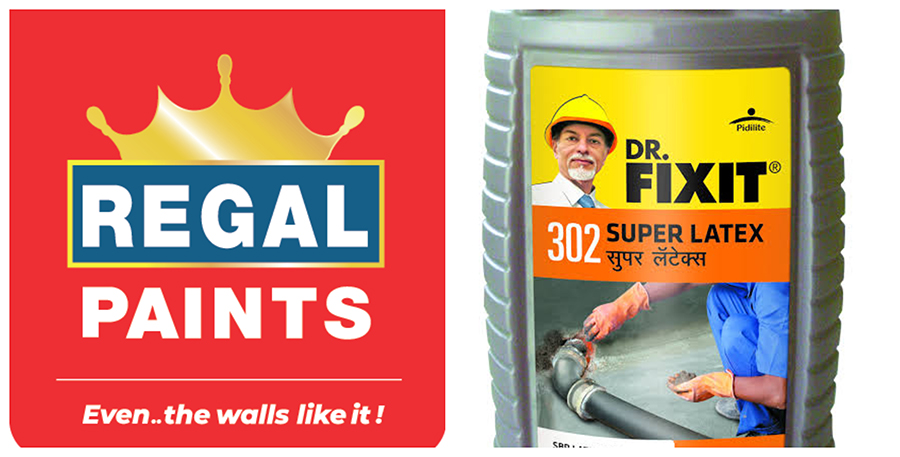
Regal Paints has been ordered to pay Shs 570.6 million in taxes to the Uganda Revenue Authority (URA) arising from the importation of its Dr Fixit waterproofing products.
Regal Paints manufactures paints, varnishes, printing ink and similar coatings. It imports raw materials for its decorative paints and is a subsidiary of Crown Paints Kenya Limited.
The dispute began when URA carried out an audit of Regal Paints covering imports made between January 2017 and December 2019.
After the audit, URA concluded that Regal Paints had “misclassified several of its imports” and reclassified the goods under what it considered to be the correct Harmonised System (HS) Codes.
The reclassification resulted in additional tax assessments totalling Shs3.7 billion.
Regal Paints objected to the assessments, but URA rejected the objection. The paint company then went to the Tax Appeals Tribunal (TAT) seeking a review of URA’s decision.
The Tribunal largely agreed with Regal Paints and allowed its application, but it upheld one part of the tax assessment relating to Dr Fixit products. That part amounted to Shs 570.6 million.
Regal Paints was dissatisfied with TAT’s decision and appealed to the High Court.
Its case was that its Dr Fixit products had been wrongly classified by URA and that the products should attract zero import duty rather than the 25 per cent duty demanded by the tax authority.
At the heart of the dispute was the correct HS Code to be used for the Dr Fixit products. Regal Paints argued that the products were waterproofing materials and prepared additives used with cement, mortar and concrete.
Its lawyers from Birungyi, Barata & Associates, told the High Court that Dr Fixit products were used to prevent water leakage and seepage in places such as basements, roof slabs, water tanks, bathrooms and balconies.
The company’s lawyers argued that Dr Fixit could make concrete more cohesive, reduce concrete shrinkage and prevent cracks in plaster and concrete.
They further argued that although Dr Fixit was not itself concrete, cement or mortar, its latex, liquid and powder forms were additives used to harden, protect, strengthen or bond those materials.
The lawyers also pointed out that Regal Paints imported different Dr Fixit products for different purposes and that the products had different chemical compositions.
But URA’s internal lawyers argued that the products should be classified according to what they actually did when used. They said the main purpose of Dr Fixit products was to provide waterproofing solutions for buildings and structures.
URA therefore classified them under HS Code 3214, covering products including “glaziers’ putty, grafting putty, resin cements, caulking compounds and other mastics”. That classification, URA said, attracted an import duty rate of 25%.
Regal Paints, on the other hand, wanted some of the products classified under HS Code 3824.40, which attracted a zero per cent import duty.
The company also relied on what it described as a legitimate expectation created by URA itself.
In October 2020, Regal Paints wrote to URA’s Assistant Commissioner for Trade, asking for guidance on the correct HS Codes and Customs Procedure Codes for its Dr Fixit products.
The company provided information and samples, after which URA wrote letters dated October 14 and December 17, 2020, giving guidance on the classification.
Regal Paints said it relied on that guidance when classifying its imports. Its lawyers argued that URA should not later change its position and punish the company with additional tax after the company had followed the authority’s own instructions.
The tax authority told the court that the samples supplied by Regal Paints when it sought the classification ruling were not in their ready-for-market form. Instead, according to URA, the samples were different from the products later imported.
URA argued that the earlier guidance therefore could not create a legitimate expectation that the company would always enjoy the same tax treatment.
A Ugandan female conned “lover” Shs 106m in gold deal. She has been ordered to pay Shs166m
Justice Patricia Mutesi agreed with URA, explaining that HS Codes are used to classify goods crossing international borders so that the correct customs duty can be assessed.
She said the classification system focuses on the actual nature, function and use of imported goods.
Justice Mutesi said the classification must be guided by the product’s composition, function and use in context.
She said the functionality principle meant goods were classified according to the actual function they performed at the time of importation.
She said that the Dr Fixit products were surface-applied waterproofing products rather than chemical binders mixed into concrete to change its internal structure.
Justice Mutesi noted, for example, that one product, 640 Raincoat 2 in 1, was used on roofs and exterior walls to resist water seepage and reinforce fibre while another, 2113 Fastlex, was a waterproofing liquid applied to concrete, cement or masonry surfaces, including swimming pools, bathrooms and toilets.
She said these products fitted better under HS Code 3214.
“Nothing about any of these Dr. Fixit products … suggests that they chemically modify the concrete matrix and functionally serve as prepared chemical binders,” she ruled.
She also rejected Regal Paints’ argument that it had a legitimate expectation based on URA’s earlier guidance saying the doctrine applies where an unambiguous representation by a competent public authority causes a person to reasonably rely on it.
Justice Mutesi noted that the samples provided by Regal Paints were not in their ready-for-market packaging. Some had reportedly been placed in tins labelled with markers.
Justice Mutesi said the information available to URA at the time was therefore different from the information available when the actual products were assessed.
She warned that there was “a real danger” in failing to provide ready-for-market products when seeking a classification decision.
In the end, she said that the tax tribunal had reached the correct decision in ordering Regal Paints to pay Shs 570.6 million in taxes.
She dismissed the appeal by Regal Paints and awarded costs to URA.