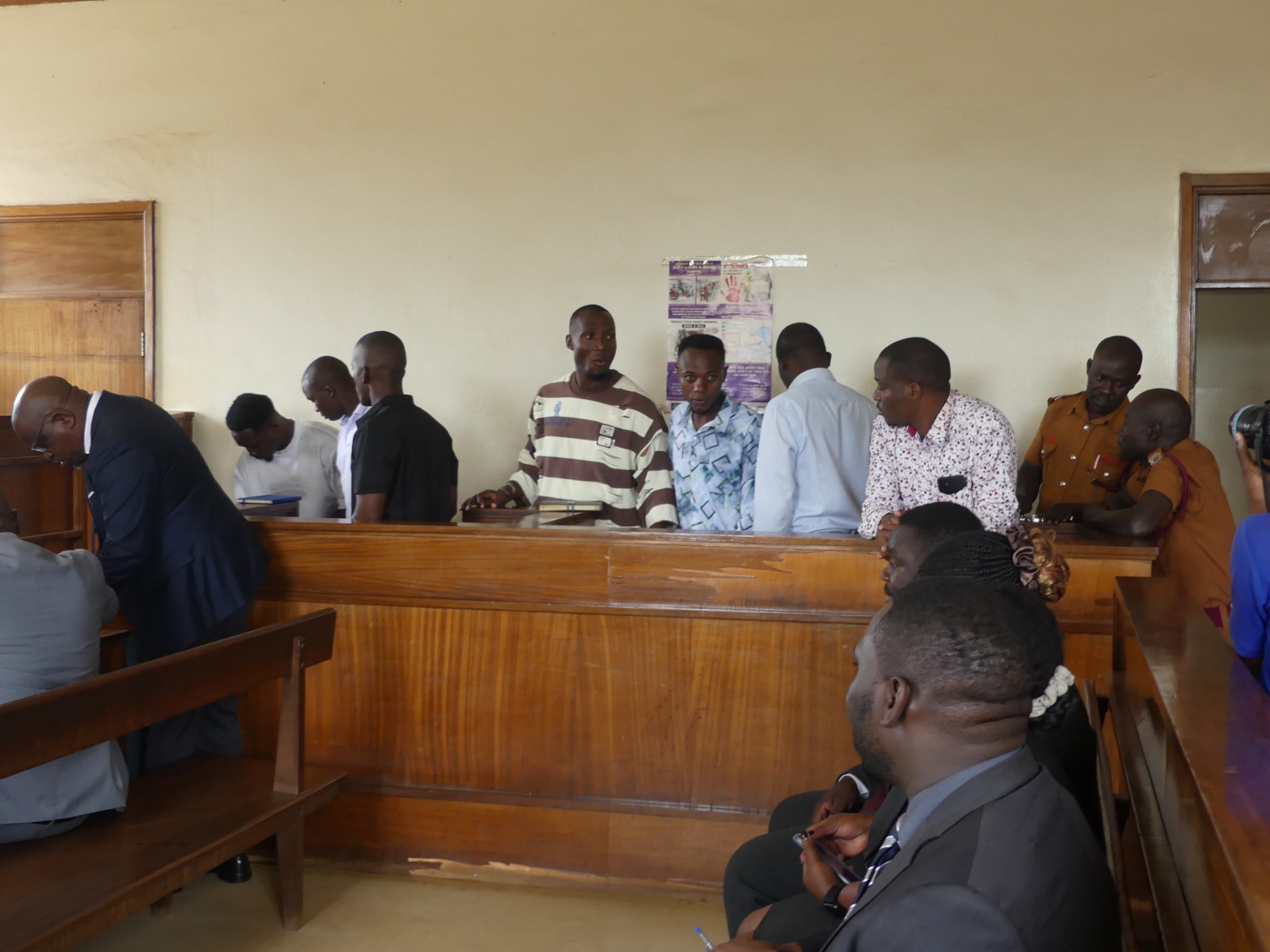
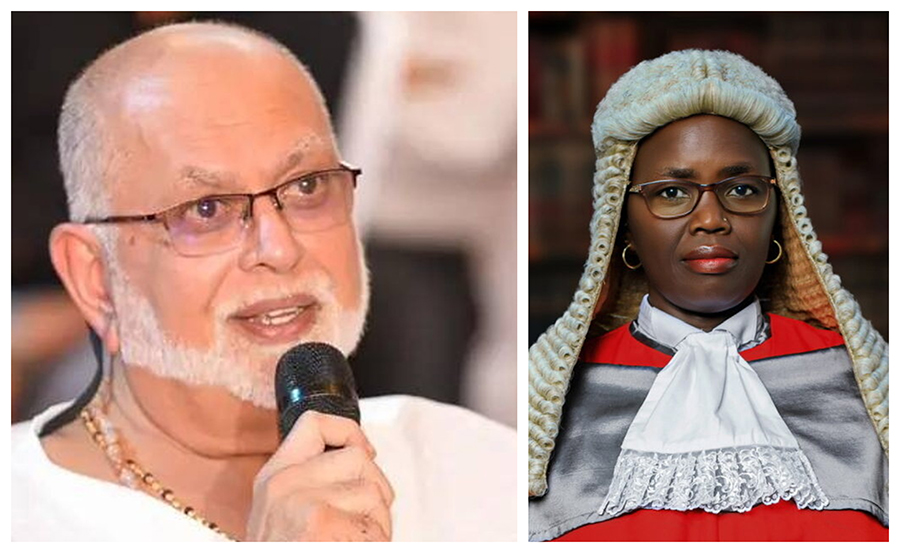
The Principal Judge, Jane Frances Abodo, has overturned the conviction of Sheethal Kumar, a former manager at Tagore Apartments and Tagore Living, for theft and cancelled a compensation order of Shs 37 million that had been imposed on him by a lower court.
The apartments, located along Mawanda Road in Kamwokya, are owned by prominent businessman Sudhir Ruparelia.
Justice Abodo ruled that the prosecution had failed to prove beyond reasonable doubt that Kumar stole money belonging to the Ruparelia Group.
Last year, Kumar was given a three-year prison sentence by the Buganda Road Chief Magistrates Court and ordered to pay Shs 37 million as compensation for money he failed to account for.
In 2025, Ruparelia Group accused Kumar of failing to account for money that had been paid by some guests living on Tagore Apartments and Tagore Living.
Nupur Methur, a manager within the Ruparelia Group, said the group’s audit team had failed to obtain a satisfactory explanation from Kumar about why some long-standing customers had not paid.
Methur testified that when she questioned guests who were still staying at the apartments, some told her they had already paid Kumar.
She obtained copies of receipts from tenants including Rodney Ssali, Andrew Ichile and Simon Casey. Another guest, identified as Bongo, allegedly said he had paid but had not received a receipt.
She said she forwarded the information to Rupesh Jadhav, the group’s head of audit.
Jadhav told court that the amount initially identified as outstanding was Shs 92 million. He said the figure later changed to Shs 95 million and eventually rose to Shs 125 million after another guest, Chihasa Christian, was allowed to stay without paying Shs 29 million before allegedly leaving.
Hillary Rwigrema Ndeze, the external forensic auditor who was hired by the Ruparelia Group, told court that Shs 95 million had not been credited to the company.
The investigating officer, Detective Geoffrey Ogwal, said the allegation recorded on the police file was theft of Shs 125 million.
Ogwal said when he interviewed Kumar, he allegedly admitted that he had made a mistake and asked management to give him time to repay the money in instalments.
Court rejects Movit’s bid for early victory in land dispute with Uganda Prisons
However, Justice Abodo found serious problems with the prosecution evidence, saying the witnessess had all given different figures.
She said neither the audit report nor the police investigation supported the Shs 125 million figure for which Kumar had been charged and convicted.
She also questioned the inclusion of Shs 29 million allegedly owed by Chihasa Christian, saying the company had sent a demand letter to her and had taken steps to recover the money as a debt.
Justice Abodo said the same amount could not at the same time be treated as money stolen by Kumar when Ruparelia Group was pursuing a third party for payment.
She said the head of audit had conceded during cross-examination that if all the customers paid their outstanding bills, the company would have no claim against Kumar.
Justice Abodo argued that this showed that the prosecution had established that money was owed to the company and that some guests claimed to have paid Kumar, but had not proved that money received by Kumar was actually stolen.
Kumar, in his defence, denied taking company money and told the court that guests were sometimes allowed to stay on credit and leave before paying.
He said the audit team was responsible for following up outstanding payments and that he had forwarded information about unpaid bills to the auditors.
Rodney Ssali, one of the tenants who was called by Ruparelia Group to pin Kumar, said he paid him Shs 14 million for his first month’s rent and security deposit and later paid Shs 7 million a month in cash. In total, he said, he gave Kumar Shs 21 million.
However, Ssali also said he received receipts for the payments. He told court that he was not aware that the receipts were allegedly forged.
Justice Abodo said this evidence did not prove that Kumar had fraudulently taken the money, adding that the audit reports, presented by Ruparelia Group, were summaries and that the original records on which they were based had not been presented to the court.
“Non-deposit can only realistically be proved from bank records and a cash book”, she said, adding that neither of these were tabled.
Another problem was the Shs 37 million that had allegedly been diverted by Kumar. Justice Abodo discovered that Shs 2.9 million of this amount related to two guests who arrived after Kumar had already been taken into custody.
She said Kumar could not have collected money from guests who arrived after he had ceased working at the premises.
Kumar’s lawyers from Kumbuga & Co Advocates challenged the conviction, arguing that the prosecution evidence contained contradictions and inconsistencies.
They also challenged the three-year sentence, arguing that it was unlawful because the trial magistrate had not sent the sentence to the High Court for confirmation.
Justice Abodo agreed with Kumar’s lawyers, saying the prosecution had failed to prove the essential elements of theft beyond reasonable doubt.
She also found that the senior magistrate, Edgar Karakire, who first handled the case, had imposed a three-year sentence without obtaining the required High Court confirmation.
Justice Abodo said the sentence was therefore irregular and ordered Kumar’s immediate release unless he was otherwise lawfully held.
“The evidence does not prove that [Kumar] fraudulently took Shs125 million or any part of it,” she said.
She, however, stressed that the decision did not prevent the Ruparelia Group from pursuing a civil claim for any money that may lawfully be due to it.