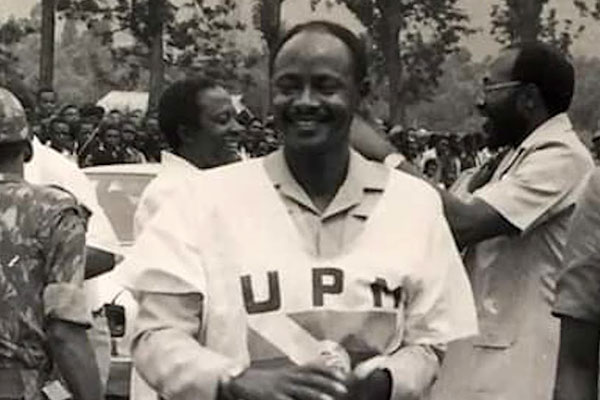
A letter dated December 10 1980, and authored by a member of the Uganda Patriotic Movement (UPM), is making rounds on social media. Signed off by one Jacob Asiimwe, the letter warns of UPM (and its leader, Yoweri Museveni) resorting to “alternative means” of settling the political questions of the day, should the general elections, then two days away, be rigged in favour of Uganda People’s Congress (UPC).
It cites different cases of rigging the author says were already taking place at the time – among others violence by security forces, voter bribery, defacing of campaign posters, and arrests of supporters of other candidates (except those of UPC).
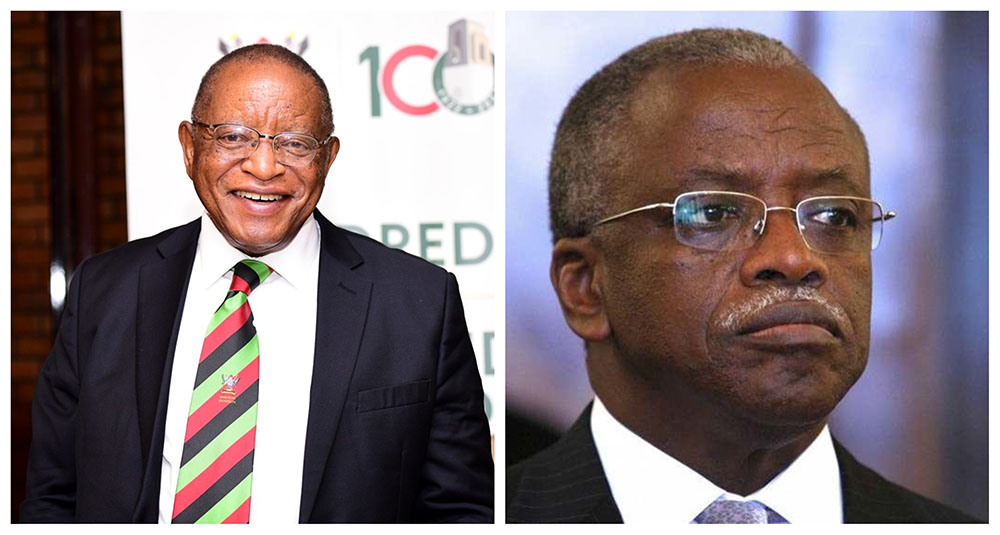
Four political parties participated in the December 1980 elections. Museveni’s UPM and Apollo Milton Obote’s UPC were joined by the Democratic Party (DP) led by Dr. Paul Kawanga Ssemogerere and the Conservative Party (CP) headed by Jehoash Mayanja-Nkangi.
I still have doubts about the authenticity of this letter. Perhaps we could, for a start, pose and ask. Who was Jacob Asiimwe in the UPM hierarchy in 1980? Did UPM actually author a letter openly putting on paper something treasonous?
But, if the letter is authentic and is from that troubled era of our country’s history, I will say this:
Today, December 2025 could as well be December 1980.
Time stopped moving for 45 years.
For 45 years, as a country, we have been walking away from the troubles of December 1980.
Starting with five years of a brutal civil war meant to end all election irregularities, we were told, we fought all injustices, all forms of misrule, all human rights abuses, all corruption. After five years of fighting, we set up a government. The long walk from the dark shadows of December 1980 had began, and would go on for decades, now 40 years and still walking.
We set up a judicial commission of inquiry into human rights violations from October 9 1962 to January 25 1986. We established an enviable local government system, elected by the people. We set up a constitutional review commission.
We restored the dignity of Parliament, or so we were told, starting with the National Resistance Council; elected the Constituent Assembly which drafted, debated, passed and promulgated a new constitution, in 1995. Dubbed the most progressive in the world, the constitution was made by the people through their elected representatives. We had restored popular democracy.
The Constitution had all the safeguards against abuse of power, we were told. No going back to the past, we were told, again and again.
We elected a president through universal adult suffrage, in what we were told were the freest and fairest elections, ever.
We elected a Parliament, the 6th since independence, and perhaps the most vibrant to-date.
March, the year 2001, came. And with it, another round of elections – presidential, parliamentary and local government councils. With elections came the first real test for the constitution and all the talk about how bad December 1980 was.
Some sayings began to sound hollow at this point. But walking we continued. Though we seemed to make a sharp u-turn, back towards December 1980. Reports of election rigging, arrests and torture of opposition supporters, shooting into campaign crowds, driving into supporters of opposing candidates, deployment of the security forces during elections.
The Supreme Court ruled that there was rigging, but not substantial enough to warrant nullification of the results.
The main challenger to the incumbent ran into exile citing personal safety concerns. In fact, he had become weary, years earlier, of what he called false walking or walking in the opposite direction. This, he said, forced him to try and wrestle the top seat from the incumbent to redirect the walking.
The incumbent will never leave that office, he told his colleagues who laughed at him in return. They thought he was crazy. How can he not leave, they chorused. With a strong constitution, a strong Parliament, an impartial judiciary and a more enlightened populace? How can he not leave?
We continued walking, meanwhile. And so did the reports of rigging and violence, into 2006. The main opposition candidate, now back from exile, was nominated while in jail on rape and treason charges both of which could not stand the scrutiny of the law. Again, Court ruled that there were irregularities, but, again, not significant enough to warrant nullification of the election results. But the bench was almost evenly divided this time.
Elections in 2011, 2016 and 2021 were no different. Characterized by rigging, violence, maiming, death.
Here we are, in December 2025, still walking, seemingly, away from December 1980.
As for the once most progressive constitution, all the safeguards that made it so are long gone. In September 2005 came the removal of presidential term limits. December 2017, the presidential age caps, another page in the constitution, was removed. Some say torn and plucked out. We nolonger talk about its progressiveness. No. We now defend its flexibility.
The letter from December 1980, if it’s authentic, has a message for us. That, as a country, the walk, away from December 1980, has been long, rugged and round. The farther we have walked from December 1980 the nearer we have come back to December 1980.
Forty long years later (or is it 45?), we are back to December 1980.
And yet we are still walking. Pray we don’t cross into the “forbidden” 1970s. Or, haven’t we?