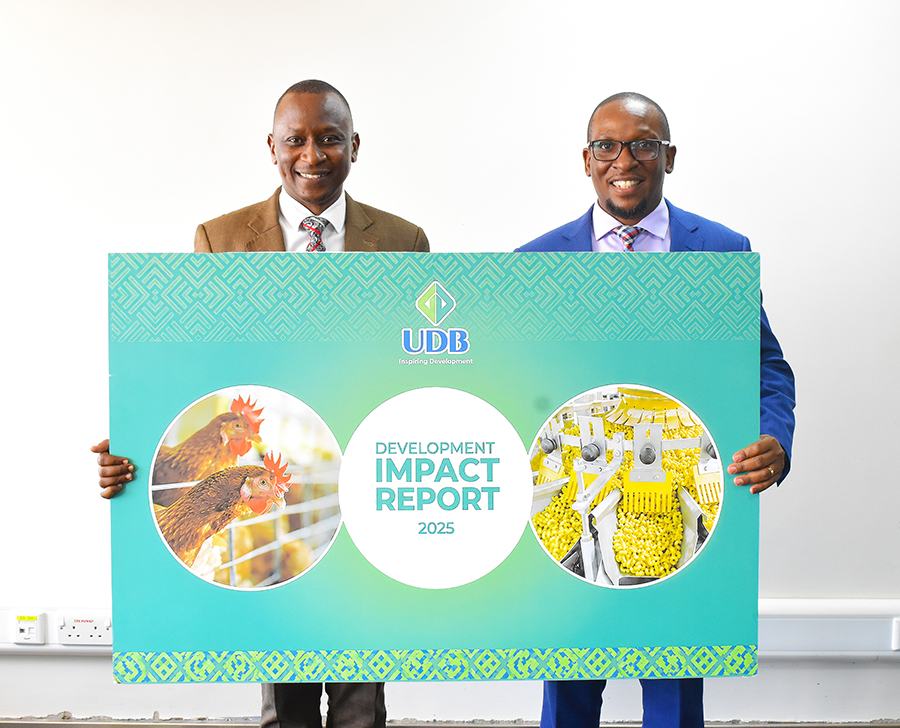
Businesses supported by the Uganda Development Bank (UDB) created and sustained 69,202 jobs in 2025, a 24.6% increase from the 55,553 jobs recorded in 2024, according to a new report.
The bank’s 2025 Development Impact Report, launched in Kampala on Wednesday, also shows that the enterprises increased their output, profitability, tax contribution and foreign exchange earnings during the year.
The report assessed 525 enterprises that had received financing from UDB for at least six months. The survey had a 91% response rate.
The enterprises generated about Shs6.26 trillion in gross revenue in 2025, up 3.4% from Shs6.05 trillion recorded in 2024.
Their combined net profit after tax also increased by 9.1% from Shs1.06 trillion in 2024 to Shs1.16 trillion in 2025.
The businesses further contributed Shs387 billion in taxes to the government, up 22.5% from Shs316 billion the previous year. The main sources of this tax contribution were corporate income tax and Pay As You Earn.
Foreign exchange earnings recorded the biggest increase among the key indicators assessed by the bank.
UDB-supported enterprises generated Shs1.84 trillion in foreign exchange earnings in 2025, compared with Shs1.11 trillion in 2024, representing a 66.5% increase.
The industrial sector accounted for the largest share of these earnings, generating about Shs1.48 trillion, or 80 per cent of the total. The services sector contributed about Shs220 billion.
UDB said the increase in foreign exchange earnings was partly driven by increased production capacity, improved access to markets and growth in export-oriented businesses, including tourism.
The report also highlights the role of UDB-backed businesses in employment and inclusive growth.
Of the 69,202 jobs created and sustained, 39% were held by women, while 73% were held by young people aged 35 and below. People with disabilities accounted for 0.3% of the jobs.
The quality of employment also improved, with 41 per cent of the jobs classified as permanent. This represented a 39% increase from 2024.
The assessment found that 62 per cent of the enterprises surveyed were making contributions to the National Social Security Fund for their employees.
UDB also reported an increase in the participation of women and young people in business ownership.
Among the 525 enterprises assessed, women accounted for 34% of shareholders and held 27% of the shares. Young people accounted for 28 per cent of shareholders.
The bank said some businesses that started as small enterprises had grown into medium-sized businesses. Some enterprises that had previously benefited from UDB’s special programmes had also moved into the bank’s mainstream lending portfolio.
The industrial sector generated the largest share of the output recorded by the supported enterprises, followed by the services sector.
According to the report, growth across UDB’s portfolio was supported by increased production capacity, improved access to markets, investment in productive equipment, better use of land and access to working capital.
UDB also assessed the environmental and climate-related measures being taken by the businesses it finances.
About 30% of the projects assessed had taken deliberate steps to address climate-related challenges. These included using more efficient machinery, reusing and recycling waste, treating wastewater and planting trees.
However, the assessment also found that some enterprises remain exposed to climate risks, highlighting the need for businesses and financiers to give greater attention to climate resilience.
UDB managing director Dr Patricia Ojangole said the bank measures its success by the development outcomes achieved through the financing it provides.
“As a national development bank, we measure our performance not only by the financing we provide, but by the development outcomes that financing enables,” she said.
Ojangole said the bank uses public resources to provide affordable, patient and sustainable capital to private businesses and must therefore demonstrate how that financing contributes to Uganda’s development.
She said job creation remains particularly important because Uganda needs to accelerate inclusive economic growth.
“The numbers tell an important story about the role of development finance in creating and sustaining livelihoods,” Ojangole said.
She added that the bank was increasingly focusing not only on the number of jobs created, but also on the quality of those jobs, participation by women and young people, social security and the wider economic value generated by the businesses it supports.