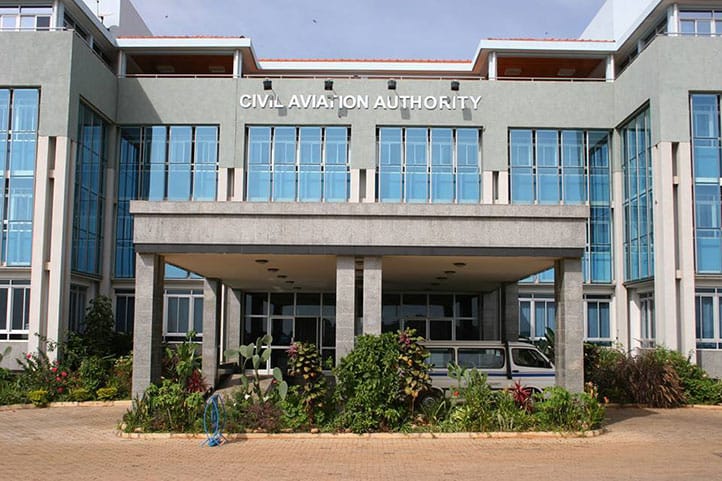
The Industrial Court has awarded Shs 25.9 million in general damages to Arnold Olweny Bonaventure, a former security guard at the Uganda Civil Aviation Authority (UCAA), after finding that his dismissal was unlawful and unfair.
The court ruled that UCAA failed to accord Olweny a fair hearing and could not properly justify the reasons for terminating his employment following a high-profile rhino horn smuggling incident at Entebbe International Airport.
The dispute arose in August 2017, when Olweny was working as a security assistant at the airport. According to court records, Olweny became suspicious of a bag that had been brought into the airport by a loader and later taken over by a passenger.
He reported the matter to his supervisor and alerted officials from the Uganda Wildlife Authority. The alert led to a joint operation that uncovered 12 rhino horns concealed in a passenger’s luggage and resulted in the arrest of the suspect.
Despite his role in exposing the smuggling attempt, Olweny was later arrested, interrogated, and accused of facilitating the crime. On August 31, 2017, UCAA suspended him on half pay pending investigations.
However, the Director of Public Prosecutions later reviewed the evidence, including CCTV footage, and formally cleared Olweny, describing him as a whistleblower rather than a suspect.
Even after the criminal case collapsed, UCAA’s internal disciplinary committee proceeded with disciplinary action. Olweny objected to the process, arguing that some members of the committee were biased and that he had not been properly informed of the charges against him.
On January 16, 2018, UCAA terminated his employment. His appeal to the managing director was rejected barely weeks later.
Feeling aggrieved, Olweny reported the matter to the labour officer, who found that the termination was unlawful and ordered UCAA to pay severance, notice pay, gratuity, and accumulated leave. However, claims for general damages, exemplary damages, and costs were referred to court for determination.
Before the Industrial Court, Olweny, represented by lawyer Sadat Bbale, argued that his dismissal breached the Employment Act and UCAA’s own disciplinary procedures. Bbale told the court that the termination caused Olweny “mental distress, humiliation, anxiety, and reputational damage,” especially given that he had been wrongly linked to wildlife crime despite acting in the public interest.
Olweny asked the court to award him between Shs300 million and Shs500 million in general damages, arguing that he had been deprived of employment for several years and had suffered serious emotional harm. He also asked the courtreading Former to order UCAA to clear a Shs 30 million salary loan he had taken from Absa Bank, and to award exemplary damages to punish the authority for what he described as high-handed conduct.
UCAA, represented by Joseph Okwalinga from its legal department, opposed the claim. The authority argued that Olweny had been lawfully dismissed for misconduct related to the smuggling incident and that due process had been followed.
UCAA denied breaching the Employment Act and maintained that Olweny was not entitled to any additional damages beyond what the labour officer had already awarded.
However, the court noted that UCAA did not meaningfully challenge the findings of the labour officer and did not present evidence showing that Olweny was properly notified of the disciplinary charges or accorded a fair hearing.
Former Uganda Airlines CEO Muleya awarded Shs 455 million for unlawful dismissal
In his ruling, Justice Anthony Wabwire Musana and the panel found that UCAA had failed to show that Olweny had been given written notice of the allegations, sufficient time to prepare a defence, or a proper opportunity to respond, as required under the Employment Act.
“Where an employee is being considered for dismissal for misconduct, the employer must clearly set out the reasons and accord the employee a fair hearing,” Justice Musana said.
On substantive fairness, the court agreed with the labour officer that UCAA’s reliance on investigation reports and CCTV footage was inconsistent and unreliable, especially given that the DPP had cleared Olweny of any wrongdoing. The court concluded that the termination was both unlawful and unfair within the meaning of the law.
While the court accepted that Olweny suffered emotional distress and reputational harm, it declined to award the hundreds of millions he had sought. The judges reasoned that general damages should not far exceed an employee’s earnings and should serve as compensation, not enrichment.
At the time of termination, Olweny earned Shs2.16 million per month, translating into an annual salary of Shs 25.9 million. The court found that awarding the equivalent of one year’s salary was reasonable compensation for the harm suffered.
“We think the sum of Shs25,957,800 representing one year’s pay would serve adequately as general damages,” Musana ruled.
It also awarded Olweny the costs of the case, citing UCAA’s failure to actively pursue the proceedings.
The court rejected the claim for payment of the Absa Bank salary loan, noting that Olweny had not provided loan documents to show that the liability was directly tied to his employment.
It also declined to award exemplary damages, holding that although UCAA acted unfairly, its conduct was not so outrageous as to shock the conscience of the court.