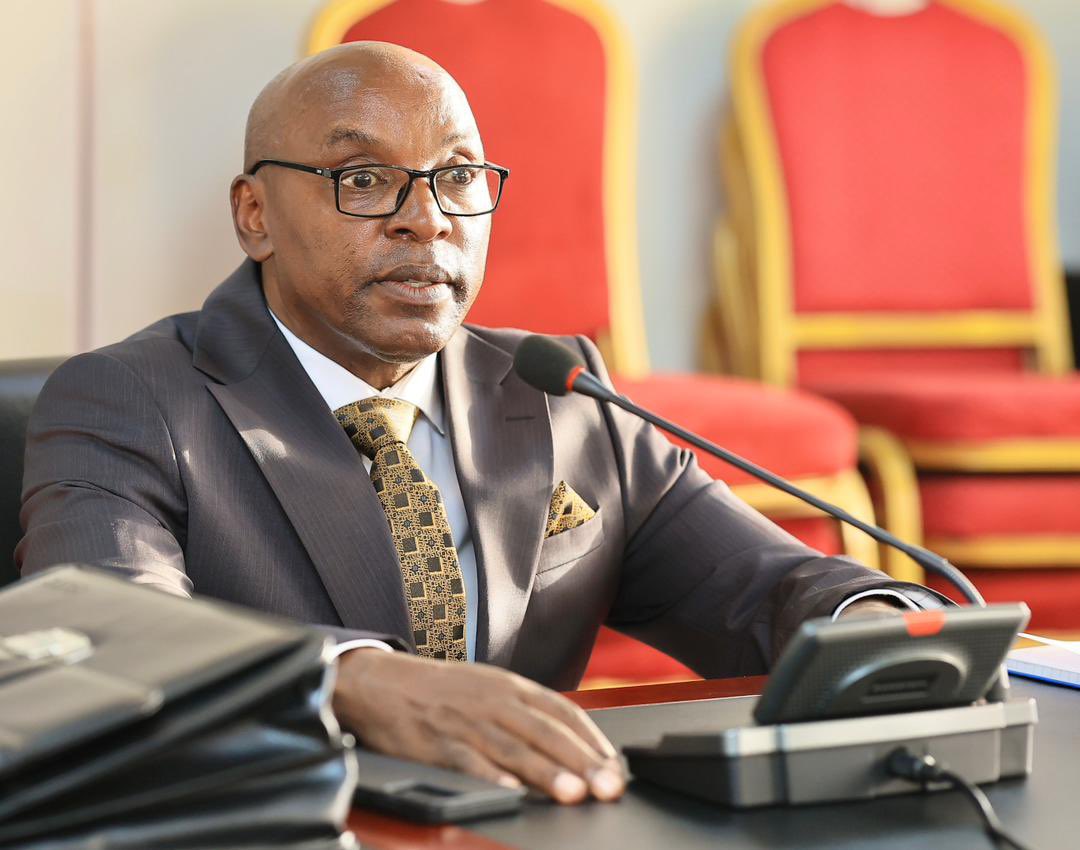
The appointment of Flavian Zeija as chief justice marks the culmination of his long, carefully managed rise through the judiciary and could open a new chapter for a crucial state organ that has increasingly come under public pressure to assert its independence and relevance.
Zeija’s appointment follows the retirement of Alfonse Owiny-Dollo on January 18.
If approved by Parliament today, Zeija will take charge of a judiciary increasingly seen by many Ugandans as the final arena for resolving political, land, and human rights disputes.
Unlike some of his predecessors, like Dollo, Zeija is not known for dramatic courtroom language or confrontational judgments.
His rise has been meteoric. In a space of 10 years, Zeija has risen from a High Court judge to a chief justice, the fastest in recent judicial history. It took his predecessor, Owiny-Dollo, 12 years to achieve the same feat.
At 56 years of age (making 57 next month) he is also the youngest to assume the position since President Museveni came to power in 1986. Benjamin Odoki was 58 when he became CJ in 2001 while Bart Katureebe was 65 years in 2015 when he replaced Odoki. Owiny-Dollo was 64 years in 2020 when he was named head of the judiciary.
Zeija began his career in 1998 as a legal assistant at Kwesigabo, Bamwine, Walubiri & Company Advocates, a law firm based in Kampala. He also worked at Tropical Africa Bank as manager of legal and recovery, between 2002 and 2003.
He also worked at FINCA Uganda Limited as legal counsel. At the time he was appointed to the High Court in 2016, Zeija was the managing partner at Zeija, Mukasa & Company Advocates. In 2019, he was appointed Principal Judge, and last year, in February, he was appointed Deputy Chief Justice, replacing Richard Buteera.
A review of Zeija’s rulings shows a judge deeply committed to legal text and procedure. In Kalemera H Kimera v Kabaka Muwenda Mutebi II, an inheritance dispute decided in 2020, Zeija dismissed a claim by a grandchild seeking a share of the Kabaka’s estate.
In his ruling, he held that “a grandchild who is not expressly named in the will cannot contest the inheritance of a grandparent’s estate”. The decision was praised for its clarity but criticised by some for failing to interrogate broader questions of equity within customary family structures.
Land cases have also featured prominently in Zeija’s judicial record. In a high-profile dispute over more than 130 acres of land in Ssisa, Wakiso, he upheld the conversion of the land from mailo to freehold tenure.
“From the evidence on the court record,” he wrote, “the conversion was rightly done in line with the laws governing land conveyancing. Therefore, the current tenure of the suit land is freehold.”
While legally grounded, the ruling drew criticism from some people who argued that courts should do more to protect occupants in a country where land conflicts are often explosive.
In The Registered Trustees of Kampala Kindergarten Association v Labarnum Courts Ltd, decided in 2023, Zeija ordered the eviction of encroachers and issued a permanent injunction restraining further trespass. He also awarded costs to the successful party, reinforcing his reputation as a judge who delivers firm and enforceable orders.
As principal judge, he drew national attention in 2023 when he directed Commercial Division judge Stephen Mubiru to clear a massive backlog of cases. In his letter, Zeija noted that “170 pending judgments and rulings constitute the biggest number of judgments and rulings pending before a single judge at the High Court level”.
He ordered that no new files be assigned until the backlog was cleared. The Uganda Law Society (ULS) criticised the directive as overreach, raising concerns about judicial independence, but some saw it as evidence of Zeija’s intolerance for inefficiency.
Publicly, Zeija has consistently emphasised obedience to court orders and respect for the rule of law. Addressing government administrators last year, he warned that “willful disobedience of an order of court is punishable as contempt of court”.
Yet the central question now is what kind of Chief Justice Zeija will be.
Some argue that his cautious approach and reluctance to confront executive power suggest that he may not be in a position to counter interference by the executive branch.
What is clear, though, is that Zeija is unlikely to be as dramatic as his immediate predecessor. If his past administrative record is a guide, Zeija is expected to prioritise efficiency, order, and reform.
From what we have gleaned from his record, Zeija’s judicial career has been shaped by process, precedent, and a firm belief in the authority of the law.