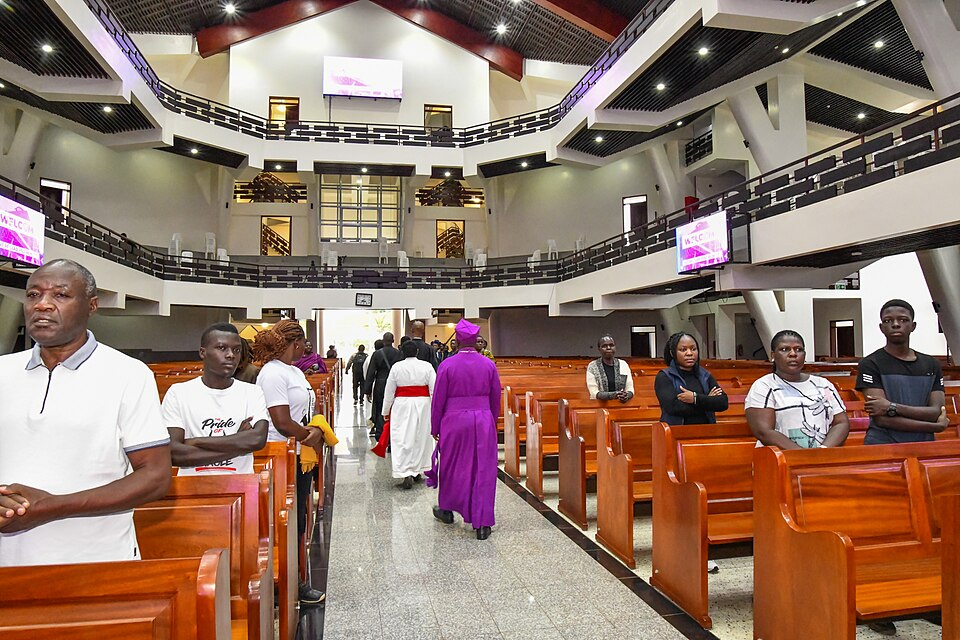
The Industrial Court has ordered All Saints Cathedral to compensate cleaners and security guards it fired during the Covid-19 pandemic, but failed to pay them the redundancy benefits promised under its own Human Resource Manual.
The court, however, dismissed claims that the workers had been unfairly dismissed and rejected demands for overtime, general damages, severance pay, send-off packages, and several other benefits.
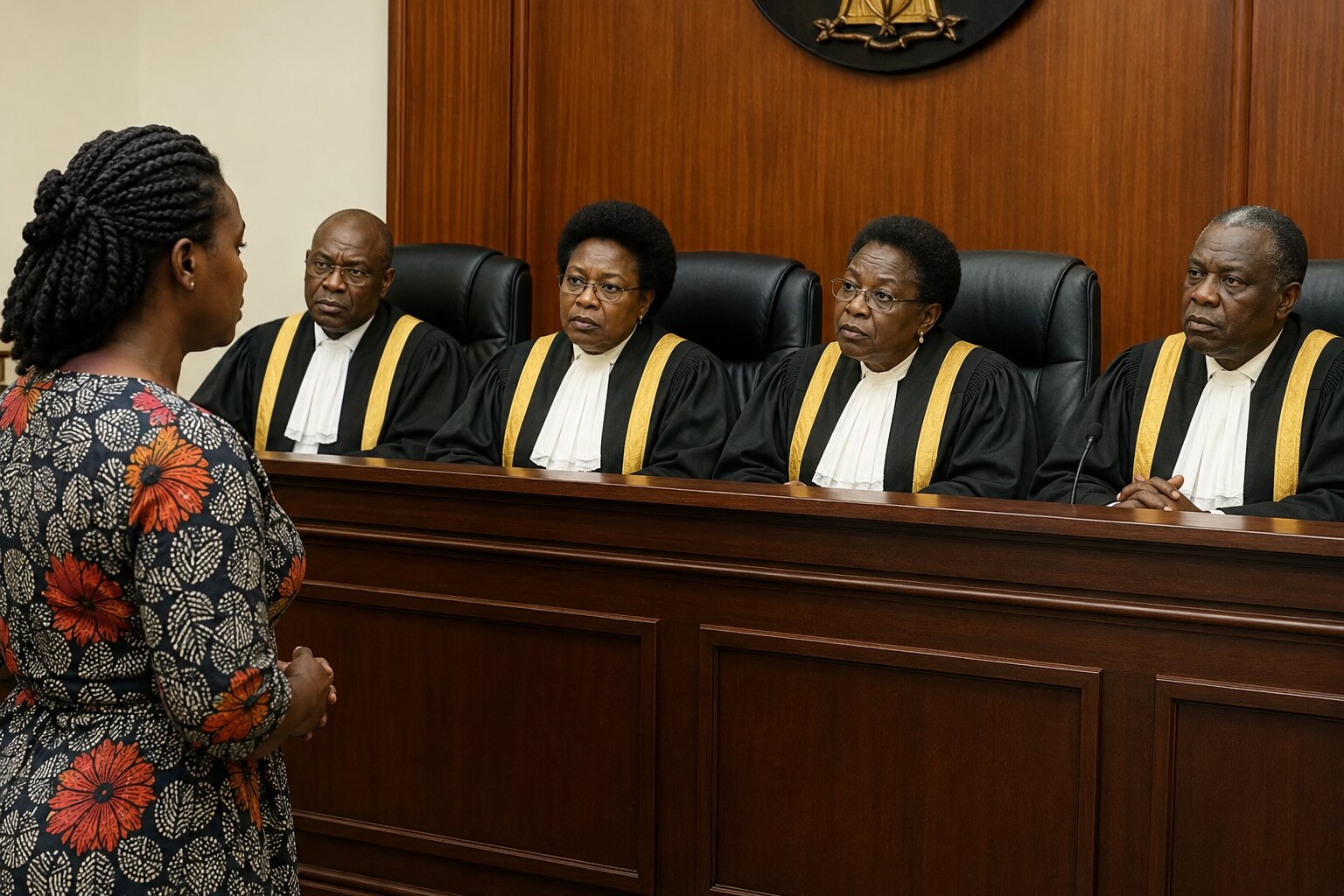
In a ruling delivered by Justice Linda Lillian Tumusiime Mugisha, the court ruled that the cathedral was entitled to outsource its cleaning and security services but had to honour the employment benefits it had promised workers whose contracts were still running.
The case was filed by Geoffrey Ndyabahika and 10 other former workers against the Registered Trustees of the Church of Uganda after they lost their jobs at All Saints Cathedral during the Covid-19 pandemic.
The workers told the court that they had been employed in the cathedral’s security and cleaning departments before management decided to outsource the services to private companies.
They said they were informed that their employment would end because the cathedral had decided to stop directly managing those departments.
According to the workers, the exercise amounted to redundancy, but the cathedral failed to pay all the benefits provided for under its Human Resource Manual.
They asked the court to declare their termination unlawful and sought compensation of hundreds of millions of shillings. Their claims included redundancy benefits, overtime, annual leave, gratuity, send-off packages, repatriation allowance, severance pay, general damages, interest, and costs.
The cathedral denied wrongdoing, arguing that not every claimant had been dismissed because several employment contracts had simply expired and were never renewed.
It maintained that workers whose contracts were still running received lawful notice before termination and that terminal benefits, including gratuity and send-off packages, had already been paid.
The cathedral also rejected claims for overtime, saying employees had never followed the procedures laid down in the Human Resource Manual for claiming overtime payments.
It further argued that outsourcing did not automatically amount to unlawful termination and asked the court to dismiss the entire case.
The workers were represented by Jonan Nuwaninda Rwambuka, while the cathedral was represented by Naboth Muhiirwe of Agaba Muhairwe & Co. Advocates.
The workers relied mainly on evidence from Geoffrey Ndyabahika, an assistant security guard, who told the court that although their contracts did not clearly specify working hours, management required security staff to work extremely long shifts.
He said they regularly worked 12-hour shifts for six days every week without overtime pay.
According to him, workers filled out overtime claim forms and submitted them to supervisors, but the money was never paid.
He testified that although the Human Resource Manual of the cathedral limited payable overtime to 35 hours every month, security staff often worked about 96 overtime hours.
During the Covid lockdown, he said, shifts became even longer, stretching to 16 hours a day while employees also performed additional duties.
Ndyabahika said management later informed them that security and cleaning services would be outsourced and that their jobs would end because of redundancy.
He argued that under the cathedral’s Human Resource Manual, they were entitled to three months’ salary instead of notice, but management failed to pay them.
During cross-examination, however, Ndyabahika admitted that some of the claimants’ contracts had already expired and accepted that employers are generally not required to renew fixed-term contracts.
He also acknowledged receiving some terminal benefits, although he maintained they were incomplete.
The cathedral’s human resource manager, Christine Namayanja, testified that management decided to outsource cleaning and security because of the severe financial difficulties caused by the Covid-19 lockdown.
According to her, employees were informed about the decision during a meeting held on November 20, 2020.
She said all lawful benefits had been paid and that some affected workers were helped to secure employment with the companies that took over the outsourced services.
During cross-examination, Namayanja admitted that some employees continued working throughout the lockdown but insisted she never received properly approved overtime claims.
She also acknowledged receiving letters from workers demanding additional benefits. She nevertheless maintained that management regarded most cases as expiry of fixed-term contracts rather than redundancy.
The cathedral’s second witness, Davis Emmanuel Byabamazima, told the court that outsourcing was introduced to reduce operating costs during the pandemic.
He said he personally authorised payment of salaries, gratuity and other terminal benefits.
However, during cross-examination, he admitted that he did not supervise employees’ daily working hours and could not personally confirm the overtime they claimed to have worked.
The lawyer for the affected workers, Jonan Nuwaninda Rwambuka, argued that once the cathedral admitted outsourcing the services, it had effectively declared the workers redundant.
He submitted that clause 13.6.2 of the Human Resource Manual entitled employees declared redundant to three months’ salary instead of notice, in addition to other terminal benefits.
But the cathedral’s lawyer, Naboth Muhiirwe, argued that several claimants were not entitled to redundancy compensation because their contracts had already expired before outsourcing took effect.
He submitted that an employer has no legal obligation to renew an expired contract and said that employees whose contracts were still running received lawful notice and that the Cathedral had complied with the Employment Act.
The court first considered whether the workers had in fact lost their jobs because of redundancy. Justice Tumisiime-Mugisha stressed that employers are free to reorganise their operations.
“The court cannot restrict the [cathedral’s] managerial prerogative, including its discretion to outsource any of its services, which may result in declaring redundancies, unless it is established that the prerogative was exercised in breach of substantive and procedural justice,” she said.
Then she carefully examined the letters issued to employees by the cathedral, and one of them noted that it had reviewed manpower operations and decided to outsource security and cleaning services.
She said this clearly showed that security and cleaning staff lost their jobs because the cathedral no longer intended to employ them directly.
Justice Tumusiime-Mugisha nevertheless agreed with the cathedral that some workers could not benefit from redundancy because their fixed-term contracts had already expired.
However, she established that Geoffrey Ndyabahika, Florence Nabuzaale, Faustin Oriongan, Issau Adeyngachwiny and Nathan Ekadu still had running contracts when outsourcing took effect.
These workers, she said, genuinely lost their jobs because of redundancy.
She said that the cathedral’s own Human Resource Manual required employees declared redundant to receive three months’ salary instead of notice.
“Upon termination from service due to redundancy, the employee(s) affected shall be paid three months’ salary in lieu, in addition to any other terminal benefits,” she said, quoting directly from the manual.
She discovered that Ndyabahika and Nabuzaale had each received only one month’s salary instead of notice and were therefore entitled to an additional two months’ salary.
Faustin Oriongan, Issau Adeyngachwiny, and Nathan Ekadu were awarded three months’ salary instead of notice. The court was careful to distinguish between lawful termination and failure to pay benefits.
The terminated workers also complained that their send-off packages were inadequate.
After examining the cathedral’s payroll records and applying the formula contained in the Human Resource Manual, she disagreed with them.
“We are satisfied that the computations were made and paid in accordance with the provisions of section 7.13 of the Respondent’s HR Manual,” she said.
Although the court accepted that some employees may have worked long hours, it found that they had failed to prove exactly when they worked overtime and how many extra hours they worked. The court also rejected claims for annual leave stretching back to 1999.
However, Justice Tumusiime-Mugisha ruled that the five employees who lost their jobs because of redundancy should each receive one month’s salary instead of untaken leave for 2020.
She said the cathedral had failed to prove it had paid gratuity to all eligible employees and ordered gratuity to be paid to all claimants in accordance with their contracts.
Only Issau Adeyngachwiny qualified for repatriation allowance because he had served continuously for 14 years and met the legal requirements.
In its final orders, Justice Tumusiime-Mugisha declared that all the claimants had been lawfully terminated by All Saints Cathedral.
She ordered the cathedral to pay Geoffrey Ndyabahika and Florence Nabuzaale an additional two months’ salary each in redundancy compensation, while Faustin Oriongan, Issau Adeyngachwiny and Nathan Ekadu were awarded three months’ salary each instead of notice.
The same five workers were also awarded one month’s salary each instead of untaken leave.
All the claimants were awarded gratuity in accordance with their employment contracts, while Adeyngachwiny alone received repatriation allowance.