Stakeholders in Uganda’s manufacturing sector have called for stronger collaboration, innovative financing solutions and increased investment in value addition to drive growth and improve the competitiveness of locally made products in regional markets.
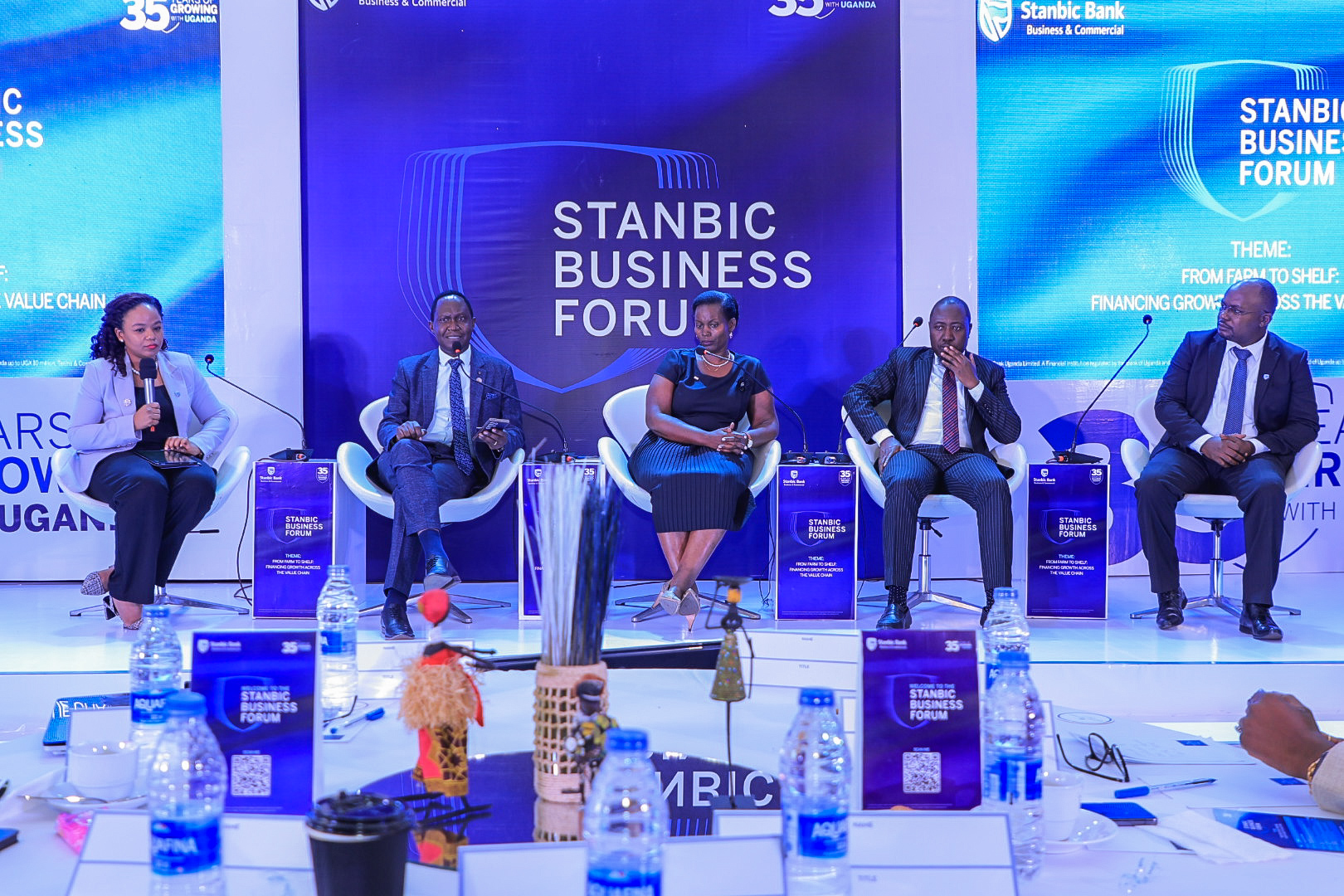
The call was made during Stanbic Bank Uganda’s inaugural Business Forum held in Kampala under the theme, “From Farm to Shelf: Financing Growth Across the Value Chain.”
The forum brought together players from the manufacturing, agribusiness, logistics and policy sectors to discuss practical solutions to challenges affecting the growth of the industry.
Despite being one of Uganda’s key economic sectors, manufacturing continues to face several obstacles that limit productivity and expansion. Industry players cited high production costs, limited access to affordable financing, dependence on imported inputs and weak value chain linkages as some of the major challenges.
Speaking at the forum, Stanbic Bank Uganda’s Executive Head of Business and Commercial Banking, Tunde Thorpe, said the country has strong foundations for manufacturing growth, including a vibrant agricultural sector, increasing domestic demand and access to regional markets.
“Yet businesses continue to face challenges ranging from high production costs and limited access to suitable financing to dependence on imported inputs and weak linkages across the value chain,” Thorpe said.
He noted that manufacturing contributes between 15 and 16.5 per cent of Uganda’s Gross Domestic Product, while the wider industrial sector accounts for about a quarter of the country’s economic output.
According to Thorpe, the sector supports more than one million direct jobs and contributes nearly 30 per cent of national tax revenue.
“These figures remind us that manufacturing is not just another sector. It is central to Uganda’s growth, resilience and competitiveness,” he said.
Participants agreed that unlocking the sector’s full potential will require stronger collaboration between farmers, processors, manufacturers, distributors and retailers. They said better integration across the value chain would improve efficiency and increase value addition, particularly in agro-processing and consumer goods manufacturing.
Patrick Joram Mugisha, Commissioner for Business Development and Quality Assurance at the Ministry of Trade, Industry and Cooperatives, stressed the importance of value addition and industrial development in strengthening Uganda’s economy and creating jobs.
He said expanding local processing capacity and strengthening domestic manufacturing would improve Uganda’s competitiveness in regional and international markets.
Agnes Mbabazi, Managing Director of Agrifarm Uganda Ltd, welcomed the forum and said it had created an important platform for stakeholders to discuss solutions to common industry challenges.
She noted that access to affordable and appropriately structured financing remains critical for businesses seeking to expand operations, invest in technology and increase value addition.
Allan Ssenyondwa, Director of Policy and Advocacy at the Uganda Manufacturers Association (UMA), called for innovative financing models, stronger public-private partnerships and supportive government policies to help manufacturers overcome growth constraints.
Stanbic Bank Uganda’s Head of Agribusiness, Emmanuel Negombye, highlighted the role of digital innovation, logistics and cross-border trade in strengthening agricultural and manufacturing value chains.
Negombye pointed to the bank’s OneFarm platform as a key initiative connecting farmers, manufacturers and exporters while improving market access and efficiency.
“The OneFarm platform is helping strengthen linkages between producers and markets by bringing farmers, manufacturers and exporters into one ecosystem,” he said.
He added that Stanbic continues to support businesses through risk mitigation and insurance solutions that protect factories, employees and goods in transit, helping companies operate sustainably and build resilience.
In his closing remarks, Stanbic Bank Uganda Executive Director Paul Muganwa said the forum was designed to move discussions beyond identifying challenges and focus on practical solutions that can strengthen local production.
He cited Roofings Group as an example of a Ugandan company that has successfully expanded from a local manufacturer into a major regional industrial player.
“We have seen what is possible when manufacturers scale with ambition and the right support. Roofings Group’s journey demonstrates the importance of access to the right financing partner, strategic investment and market opportunities,” Muganwa said.
He added that as Stanbic Bank marks 35 years of operations in Uganda, the institution remains committed to supporting the country’s industrialisation agenda.
“We see ourselves not simply as a lender, but as a partner for growth, supporting businesses with financing, market insights and the connections needed to move from production to processing, from processing to distribution, and from local success to regional scale,” he said.