By Asiimwe Jonard
“The person who eats the grain before the harvest will always be a slave to the one who owns the granary.”
This African proverb reflects the economic history of the continent. For decades, Africa has exported its wealth in raw form, only to import finished goods at higher prices. Uganda now stands at a turning point between continuing this pattern and building an industrial economy.
For years, the country exported unprocessed minerals and agricultural produce while importing finished products. This created a cycle often described as “poverty amidst plenty”. Uganda had resources, but limited transformation into higher-value goods.
A major policy shift came in 2015 when President Yoweri Museveni banned the export of unprocessed minerals such as iron ore, gold, and uranium. The decision was controversial at the time, but it aimed to promote value addition within the country.
The reasoning was straightforward. Exporting raw materials means exporting jobs, tax revenue, and industrial knowledge. By processing resources locally, Uganda could retain more value and strengthen its economy.
Economists have long argued that countries relying on raw material exports tend to experience declining trade advantages compared with those exporting manufactured goods. Uganda’s policy sought to reverse this trend by encouraging domestic processing.
More than a decade later, this strategy is beginning to show results.
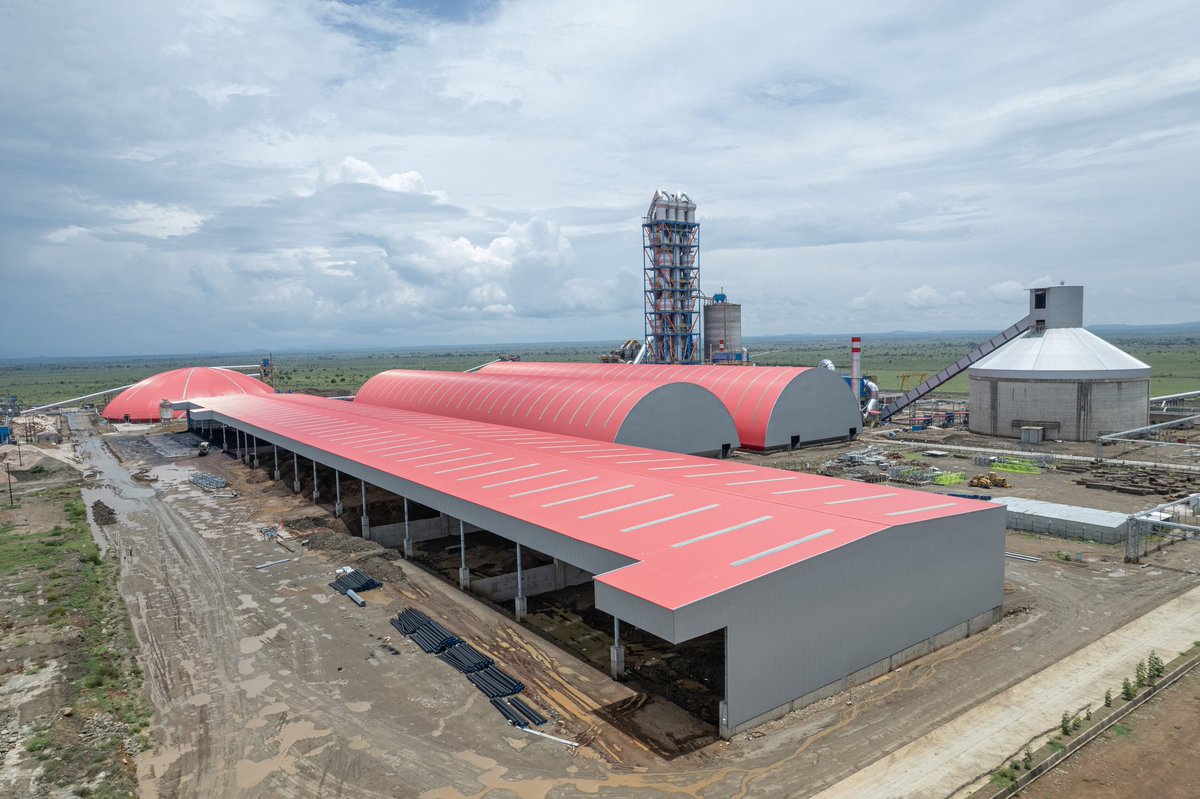
On April 24, 2026, the President commissioned the Yaobiai clinker and cement factory in Moroto. The plant, valued at $300 million, has a production capacity of 12,000 tonnes of clinker per day, or about 4.3 million tonnes annually.
Clinker is a key ingredient in cement production. It is produced by heating limestone, clay, iron ore, and gypsum at very high temperatures. For years, Uganda imported clinker from countries such as Egypt, Turkey, and the United Arab Emirates.
This dependency costs the country between $250 million and $300 million annually in foreign exchange. It also exposed the construction sector to global price fluctuations and supply disruptions.
Local production of clinker is expected to reduce cement manufacturing costs by between $30 and $50 per tonne. This could lower the cost of construction projects, including roads, housing, and public infrastructure.
The plant also has implications for Uganda’s balance of payments. By reducing imports, the country can conserve foreign exchange and improve economic stability.
Beyond domestic use, Uganda is positioning itself as a regional supplier of clinker and cement. Demand for cement in East Africa is projected to exceed 100 million tonnes annually by 2030, driven by urbanisation and infrastructure development.
With its location in Moroto, the plant is well placed to serve markets in South Sudan, eastern Democratic Republic of Congo, Rwanda, and Kenya. This creates an opportunity for Uganda to shift from being an importer to an exporter of cement products.
The development reflects a broader shift from an extractive to a productive economy. Industrialisation involves applying science and technology to transform raw materials into finished goods.
Government policy supports this direction. The National Development Plan III identifies industrialisation and value addition as key drivers of growth. The Mining and Minerals Act of 2022 also requires investors to process minerals locally.
These policies aim to ensure that natural resources contribute more directly to economic development. They also align with regional frameworks such as the African Continental Free Trade Area, which provides access to a larger market.
Industrialisation also requires investment in skills. Modern factories rely on engineers, technicians, and scientists to operate complex systems. This highlights the importance of science and technology education.
The Moroto plant demonstrates this need. It uses advanced equipment and processes that require specialised knowledge. It also offers opportunities for training and job creation.
However, industrial growth must be inclusive. Communities in Karamoja should benefit through employment, local business opportunities, and improved services. This can help address long-standing inequalities in the region.
Environmental protection is also important. Cement production can generate dust and emissions, so measures such as pollution control and sustainable mining practices are necessary.
The commissioning of the Yaobiai plant marks progress in Uganda’s industrial journey. It shows how policy decisions can shape economic outcomes over time.
At the same time, it signals the beginning of a new phase. Sustained industrial growth will require continued investment, innovation, and strong governance.
Uganda’s experience suggests that value addition can play a central role in economic transformation. By processing its resources locally, the country can create jobs, increase revenue, and build industrial capacity.
The challenge now is to maintain momentum. Industrialisation is a long-term process that depends on consistent policy implementation and collaboration between the government and the private sector.
The Moroto plant offers a glimpse of what is possible. It represents an effort to turn natural resources into broader economic benefits.
If sustained, this approach could help Uganda move from exporting raw materials to producing higher-value goods. That shift would mark a significant step towards a more resilient and diversified economy.
The author is an engineer and is the NRM Vice Chairperson (Western Region). He is the CEO of Jonard Conglomerate Investments Ltd.