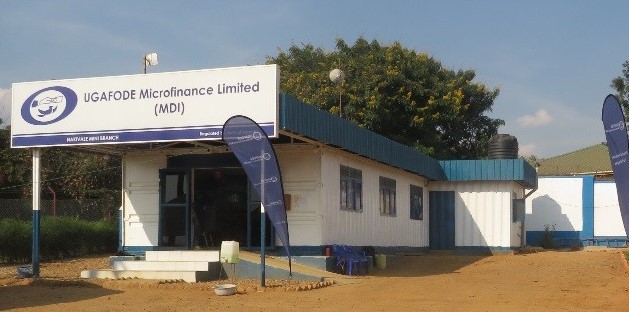
The Industrial Court has ordered Ugafode Microfinance to pay Shs 18 million to its former employee, Peter Clever Katende, after ruling that the financial institution unfairly dismissed him.
In his ruling, Justice Anthony Wabwire Musana dismissed an appeal filed by Ugafode and confirmed that Katende had been unfairly terminated.
The dispute started after Katende, who worked as a Database Administrator at Ugafode, was accused of negligence following a problem in the company’s core banking system.
Ugafode claimed that after the banking system was reinstalled on January 26, 2022, Katende failed to restore important security features meant to monitor activity on the database.
The company said this left the system vulnerable and allowed fraudulent transactions to occur.
Because of these allegations, Katende was summoned to a disciplinary hearing at the company’s headquarters on April 27, 2022.
The disciplinary committee concluded that he had committed “serious neglect” and recommended that he be dismissed immediately. Katende appealed internally to the company’s chief executive officer, but the decision was upheld.
He was then sacked on April 29, 2022, but because he felt he had been dismissed unfairly, he filed a complaint with the labour officer at Kampala Capital City Authority (KCCA).
After mediation failed, the KCCA labour officer ruled in July 2023 that Ugafode had unfairly and unlawfully terminated him. The officer ordered the company to pay him Shs 42 million as compensation.
Ugafode was unhappy with the decision and appealed to the Industrial Court, a division of the High Court that handles labour disputes.
Ugafode’s lawyer, Faith Namaja, argued that the KCCA labour officer had made several legal errors.
One of the main arguments centred on a forensic report that the company relied on to show that Katende had failed to secure the banking system.
Namaja told the court the report had been properly authenticated and should have been accepted by KCCA as credible evidence.
But Katende’s lawyer, Saad Seninde, strongly disputed this claim.
He argued that the report was unreliable because the author was never clearly identified and did not appear in court to explain the findings.
Seninde said witnesses who testified about the report admitted they had not prepared it and did not know the qualifications of the person who wrote it.
Uganda Baati wins Shs1.66bn case as court faults Stanbic Bank over bounced cheques
The Industrial Court agreed with Katende.
Justice Musana said the authenticity of the report was doubtful because the author was not clearly identified and there were inconsistencies in the signatures.
“In our estimation, the evidence demonstrates that the forensic report was not authenticated during the hearing before the labour officer,” he said.
He added that documentary evidence can only be relied upon if its origin and reliability are properly established.
The court also examined whether Ugafode had proven that Katende actually committed the misconduct that led to his dismissal.
According to Justice Musana, the evidence presented by the company did not sufficiently prove that Katende was responsible for the security failure.
The court noted that the banking system had been handled by several people during the reinstallation process, including external vendors and the head of ICT.
Katende had also argued that he lacked sufficient system privileges to carry out some of the tasks he was accused of neglecting, which was found to be true by the court.
Justice Musana criticised Ugafode for failing to provide the full forensic report during the disciplinary process, despite Katende requesting it.
“It is well settled that where the termination of an employee is based on an investigation, principles of natural justice dictate that the employee must be given the report before the disciplinary hearing,” he said.
After reviewing all the evidence, Justice Musana concluded that Ugafode had not proved that Katende fundamentally breached his employment contract.
“In our judgment, a fundamental breach of the employment contract was not established,” the court ruled.
However, the court reconsidered the amount of compensation. Katende had initially asked for Shs350 million in damages, and the KCCA labour office had awarded him Shs 42 million.
But the Industrial Court reduced this to Shs18 million after considering several factors.
It noted that Katende had worked for the company for just over two years and was earning Shs 6 million per month when he was dismissed.
“We think that an award of Shs 18,000,000 representing three months’ salary would suffice in general damages,” Justice Musana ruled.
The court also declined to award aggravated or exemplary damages, saying there was no evidence that Ugafode acted maliciously or in an oppressive manner.