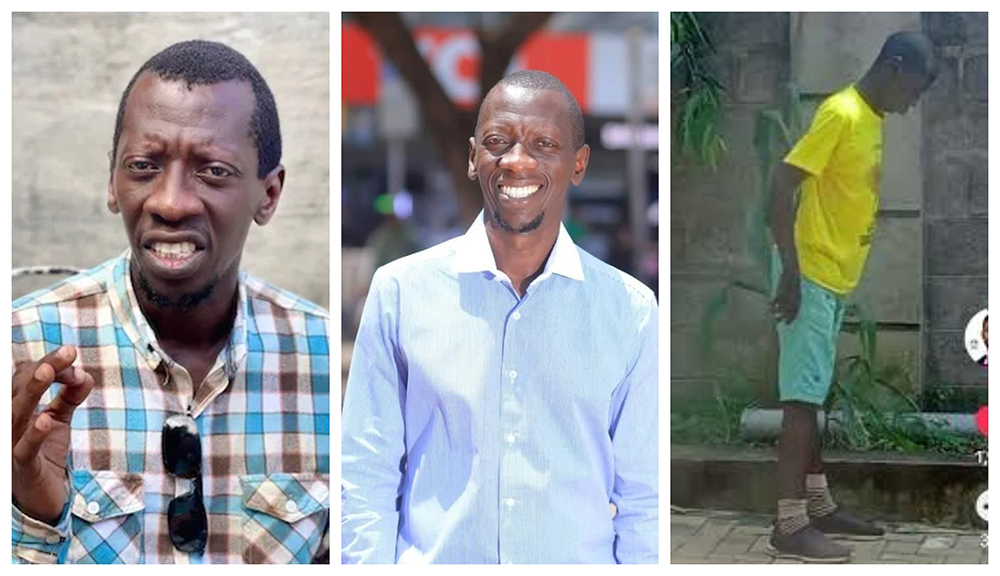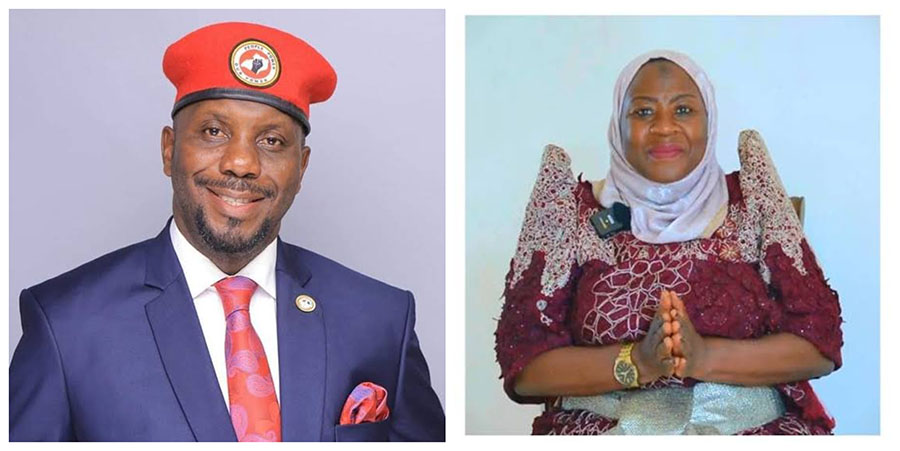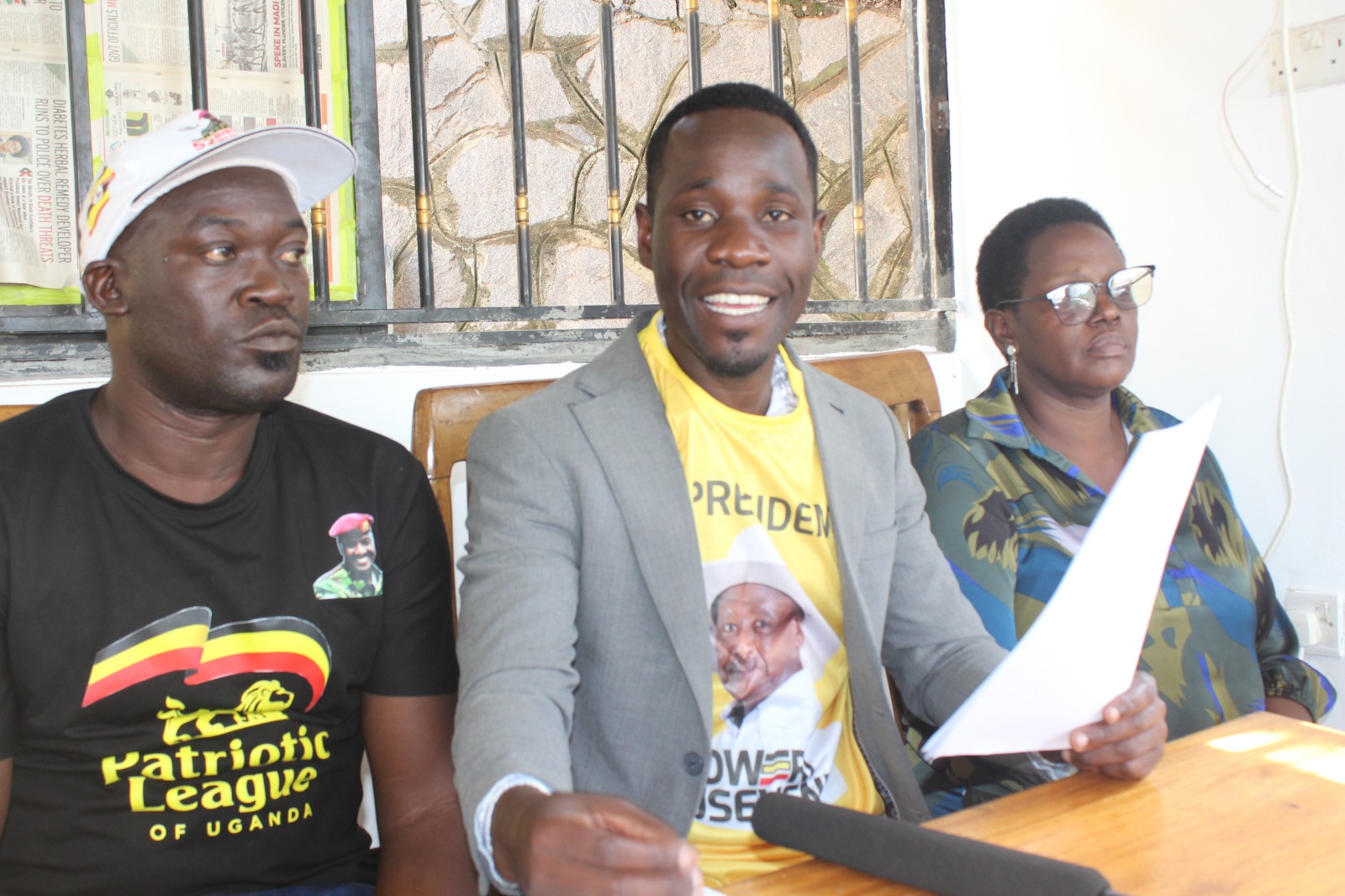
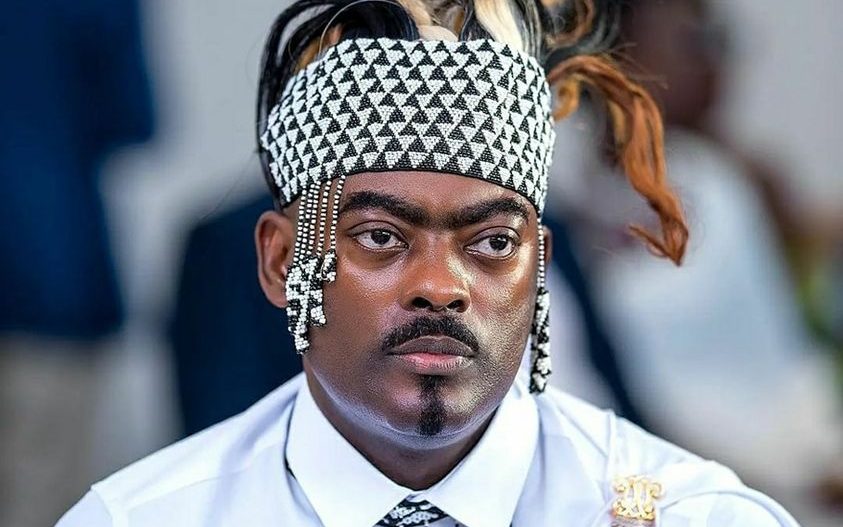
For more than two decades, Fred Mukasa Mbidde, the vice president of the Democratic Party, has been a familiar face on our political stage.
Even in a crowd of 1,000 people, Mbidde is unmistakable. He has enhanced eye-brows, dresses smartly, speaks eloquently, is confident, and is battle-hardened. He rose through student politics as a guild president at Makerere University in the early 2000s, replacing Asuman Basalirwa.
Mbidde has addressed numerous political rallies across the country.
He has spent money, mobilised musicians, printed posters in different colours, and even reinvented campaign tools that are now standard in our elections.
Yet somehow, one thing has remained stubbornly constant. Voters have repeatedly rejected him.
Six times, in six parliamentary contests across different districts in Uganda, Mbidde has tried and failed to enter parliament. Each defeat has added to a growing narrative around a man who some say could be ‘politically cursed.’
The losses
Mbidde’s parliamentary journey began in 2006 in Makindye West, Kampala. He was young, energetic, and already well known in Democratic Party circles. But he lost to Hussein Kyanjo of JEEMA, a cool-headed, eloquent politician.
At this point, one can say Mbidde was still politically immature, learning the ropes. But barely a year later, in August 2007, he was back on the ballot, this time hundreds of kilometres away in Kalungu East, in greater Masaka.
That by-election followed the dramatic exit of Mukiibi Serunjogi, whose 2006 victory had been nullified by the court for lacking minimum academic qualifications. Mbidde lost to the NRM’s Lule Mawiya.
So in the space of one year, he had contested parliamentary elections in two different districts, Kampala and Masaka (Kalungu was still part of Masaka), and lost both.
In 2011, Mbidde returned to Kalungu East, hoping that this time, voters were familiar with him. Instead, he came third. Vincent Bamulangaki Ssempijja, then running as an independent, won with 9,285 votes. Mawiya followed with 8,655. Mbidde managed 6,305.
It was a painful result, not just because he lost, but because it showed Mbidde was not even the main challenger in a constituency he had now contested twice. He had slipped in rankings.
Despite these losses, Mbidde remained influential within the DP.
In June 2012, he found his way to the East African Legislative Assembly (EALA). His election, however, was not straightforward. It followed a controversial vote in parliament after the Forum for Democratic Change (FDC), the then leading opposition party, boycotted the process, protesting the unfair allocation of seats by the ruling NRM.
With FDC absent, space opened up. Mbidde, then vice president of DP, benefited from a political arrangement that saw the ruling party accommodate DP. It has to be said that without NRM’s numerical strength and willingness to share, Mbidde would never have entered EALA. His ten-year term ended in June 2022.
In 2016, he tried again in Kalungu East. It was his third attempt in the constituency and his fourth parliamentary race overall. Once again, voters placed him third, behind Ssempijja, who this time was the NRM flag bearer, and Mawiya.
He changed location.
In 2021, he stood in Nyendo Mukungwe, a newly created constituency in Masaka City. But the political environment had changed. The National Unity Platform (NUP), led by Robert Kyagulanyi aka Bobi Wine, was surging, especially in Buganda. DP was struggling to stay relevant. Mbidde was facing Mathias Mpuuga, a seasoned political mobiliser who held the NUP ticket.
The result was brutal. Mpuuga polled 26,810 votes against Mbidde’s 3,513. A difference of 23,297 votes
During that campaign, Mbidde made one of the most controversial decisions of his career. Standing on a DP ticket, he printed posters featuring Bobi Wine’s image. The move angered DP leaders and confused voters. In the same campaign, Mbidde publicly urged voters to support Bobi Wine for president instead of DP’s own candidate, Norbert Mao.
This, some say, was the height of Mbidde’s political opportunism and showed he was willing to shift positions when it suited him.
His latest defeat came in 2026, in Buwekula, Mubende district. Once again, Mbidde had shifted base. Once again, he lost, this time to the NRM’s Pascal Mbabazi, the incumbent.
Kampala: Is Erias Lukwago still ‘untouchable’ or he is now ‘vulnerable’?
During the 2026 campaign, Mbidde openly declared his support for President Museveni, citing the 2022 memorandum of understanding between NRM and DP. He ran with two sets of posters, one green for DP, another yellow for NRM.
Contradictions
Mbidde’s political story is full of contradictions. For years, he was a fierce critic of President Museveni, starting from his days as Guild President at Makerere.
Then, when DP entered a cooperation agreement with NRM, his tone softened. In 2017, during NRM Liberation Day celebrations in Masindi, Museveni himself described Mbidde as a “good DP man,” a line that opponents quickly turned against him.
When Kyagulanyi emerged as a powerful political force around the same time, Mbidde and other DP bloc members moved swiftly to associate with him. Critics accused them of trying to tap into what they called Kyagulanyi’s masanyalaze (power).
This pattern, critics say, has cost Mbidde dearly. Voters struggle to place him politically. Is he opposition or NRM? In Ugandan politics, where loyalty and political clarity matter, such ambiguity can be fatal.
Money has never been Mbidde’s problem. In fact, he is known for spending heavily during campaigns. For those who may not know, Mbidde was the first local politician to use a personalised campaign truck fitted with a public address system and a stage, similar to those used in marketing campaigns.
That was in 2006. At the time, it was revolutionary. Today, every politician of note uses such trucks.
In Kalungu East in 2011, he ferried top musicians, including Jose Chameleone, to draw crowds. The rallies were lively and massive, but the votes were dismal.
Some say Mbidde has simply been unlucky. From Kyanjo to Mawiya to Ssempijja to Mpuuga, Mbidde has faced formidable opponents in his races.
Others say voters have consistently shunned him because they do not trust him. He frequently shifts political alliances and has a habit of ‘chasing’ political waves without building deep roots in the areas he stands. For instance, in Buwekula, he set up a small farm just two years ago and was not a regular there.
Even his election to EALA in June 2012 is often cited as a fluke. It was a product of political bargaining between DP and NRM after FDC boycotted. Had it been a competitive election, chances are that he would have lost.
Where do we end?
There is no doubt that Mbidde remains one of the most prominent political players in Uganda.
On social media platforms like X and on TV shows, he is popular for using ambiguous and sometimes non-existent English terminologies to put across his point (He once described Simeo Nsubuga’s political life as thus: “political antequam nascantur morientum.”)
Yet when it comes to his bid to join Parliament, he is a ‘nearly man.’
A ‘nearly man’, according to Google, is someone who “narrowly fails to achieve the high level of success, status, or victory that was expected of him.”
That’s Fred Mukasa Mbidde for the time being.