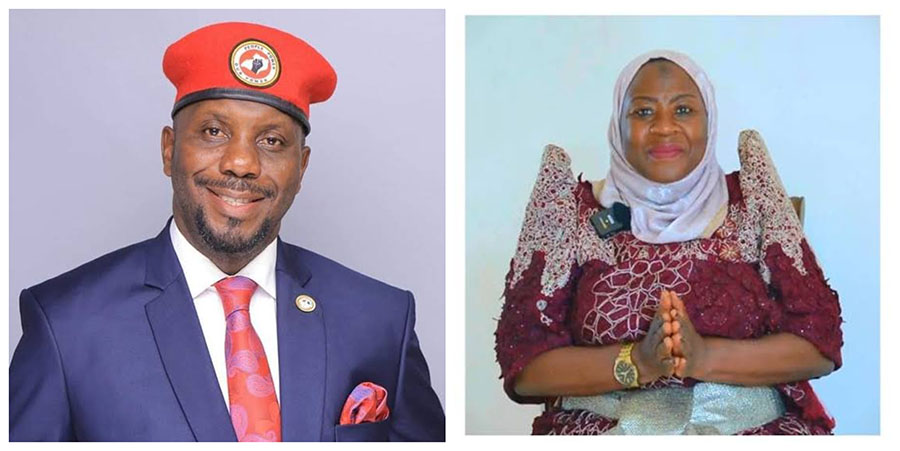

Three days from now (January 22, 2026), voters in Kampala will make one of their most consequential decisions in years: whether to hand Erias Lukwago a fourth term or entrust the city to the National Unity Platform’s (NUP) Ronald Balimwezo.
Many have dubbed it the “lawyer” versus the “engineer.” Does the city still need Lukwago’s legal brain, or is it time to choose an engineer who could conjure solutions to Kampala’s infrastructure challenges, such as poor drainage and persistent floods?
Whichever way you see it, Kampala’s political soul seems to be at stake. For Lukwago, a long-time fixture in Kampala politics, the contest is both a referendum on his legacy and a crucible for his future.
For the NUP, the lord mayor’s seat represents a chance to reclaim political pride after a bruising parliamentary and presidential cycle in which the NRM won some of the parliamentary seats in Kampala, albeit controversially.
Over more than a decade, Lukwago has dominated Kampala’s mayoral politics. He was first elected in 2011 with a comfortable 229,325 votes. His closest rival, NRM’s Peter Ssematimba, got 119,015 votes.
He reclaimed the seat easily in 2016, sweeping aside NRM’s Daniel Kazibwe aka Ragga D, who did not get out of the starting blocks. In 2021, Lukwago again brushed aside challengers, winning 194,592 votes while NUP’s Nabilah Naggayi Sempala trailed with about 60,082, a margin of more than 130,000 votes.
However, this time, political winds in the city are shifting in ways that few predicted.
The 2026 mayoral contest pits two formidable personalities against one another. Lukwago, now leader of the People’s Front for Freedom (PFF), is a seasoned campaigner with deep roots in city politics.
Balimwezo, an engineer and former Nakawa East MP, carries NUP’s banner with a message of change and delivery, a message that resonates in parts of Kampala frustrated by the poor service delivery.
For many city dwellers, the stakes are personal. Abdu Musoke, a 32-year-old boda-boda rider in Wandegeya, says he respects Lukwago’s work but believes it is time for new leadership.
“We have seen him fight for us, but many young people want a fresh start. Roads are still broken, places flood, that is why some of us want change,” Musoke said.
Yet in other parts of the city, Lukwago’s supporters argue that change without experience could put hard-won gains at risk.
Michael Mutambuze, a 45-year-old trader along Luwum Street in Kampala, said Lukwago has been the bedrock of Kampala’s resistance to political patronage and exploitation.
“He stood up for us when landlords were increasing rent unfairly. He saved some markets from being grabbed. That matters to me more,” he said.
Indeed, some of Lukwago’s defenders point to his record of intervening in the management of key markets and preserving public assets, and his commitment to infrastructural goals like upgraded roads, expanded health facilities, and improved street lighting.
In the city malls, markets, and on the streets, however, there is unease about Lukwago’s political prospects. He has served in the position for 15 years, and some voters, especially younger ones, feel it is time to reset the leadership dynamic in the city.
That dissatisfaction cuts across party lines. Josephine Mutesi, a 38-year-old teacher in Makindye, said she appreciates what Lukwago has done but is frustrated by the pace of visible change.
She said: “He [Lukwago] has passion for the city and the people, but for many of us, that passion must translate into everyday improvements. People want good roads and garbage collected on time. That is why I think we need Balimwezo because he is an engineer.”
Lukwago mentored Joseph Balikuddembe. He’s now Balimwezo’s chief backer
Lukwago’s campaign strategy, so far, has focused on amplifying his contributions: championing the urban poor, demanding accountability in city governance, and rallying against what he calls entrenched corruption. He was the first person to call out the dubious giveaway of the Nakivubo Channel to businessman Hamis Kiggundu.
But his critics argue that Lukwago’s long tenure has bred voter fatigue. In Nakawa and Kawempe South, some voters feel Lukwago’s stronghold has weakened after NUP lost some key parliamentary contests in Kampala.
In areas where NUP candidates lost, such as Nakawa East and Kawempe South, some party supporters see the lord mayor race on Thursday as redemption.
“We lost our MPs in areas that used to be NUP strongholds,” said Caroline Atim, a 29-year-old businesswoman who runs a boutique in Wandegeya.
“We feel robbed. Now we want at least one big win to show Kampala still belongs to NUP.”
Lukwago’s mistake?
In addition, Lukwago’s decision during the parliamentary campaigns to oppose some NUP candidates locally, including Zahara Luyirika in Makindye West and Ali Mulyanyama in Makindye East, has been cited by some as a mistake that could cost him dearly.

Those two candidates won their seats, and we have been told that they are already mobilising their supporters to vote massively for Balimwezo on Thursday.
Grace Namutebi, 26, a social worker who moved to Kampala in 2014 when Lukwago was mayor, said she wanted to see someone else in City Hall.
The politics of Kampala’s mayoral contest has been amplified by national dynamics. NUP badly needs the lord mayor position to restore its dominance and pride after losing some vital parliamentary constituencies in Kampala. A victory for Balimwezo on January 22 would signal that NUP is resilient and has the capacity to rebound after some hiccups.
At the same time, there are murmurs that some of the city’s tycoons, whom Lukwago has publicly accused of grabbing city property, are said to be mobilising secretly for Balimwezo.
Samuel Kato, a 52-year-old taxi driver in Kampala, said he feels the election will go down to the wire.
“This is the toughest contest we have seen in years. There is no clear favourite now. It could be decided by a handful of votes,” said Kato, who declined to reveal who he will vote for.
Beatrice Wamala, 34, a nurse at Eaton Medical Centre in Nakawa, all she wants is a functioning city.
“We want a Kampala that works. Whoever can give us that, we will choose,” she said.
For Lukwago, a win on January 22 would reaffirm a remarkable political resilience amidst the several storms he has endured. He survived the impeachment in his first term.
For Balimwezo and the NUP, victory would be a psychological and strategic boost, and could reshape the political dynamics of a city that has known one mayor for the last 15 years.
May the best person win!