
When Kansiime Selgio Muhangi joined the Uganda Revenue Authority (URA) in 1997 as an assistant revenue officer, he believed he was building a stable career in public service.
Over the next eleven years, he advanced through the ranks, eventually becoming Officer I in the Customs department.
But in December 2008, his career was abruptly cut short when URA dismissed him over accusations of mishandling counterfeit goods meant for destruction.
Indeed, the Industrial Court has ruled that Kansiime was treated unfairly. But despite establishing that URA denied him a fair hearing, the court awarded him only four weeks’ salary and a certificate of service.
For a man who has been fighting this case since 2014, the outcome illustrates the harsh reality many Ugandan workers face. They may be unfairly dismissed, but they walk away with almost nothing.
Kansiime’s troubles began in 2008 after URA received a complaint regarding the handling of 603 cartons of counterfeit Kanta hair dye.
The High Court had, in an earlier ruling, ordered the goods to be destroyed by the firm that imported them, Nanoomal Issardas Motiwalla. URA accused Kansiime of releasing the goods to the wrong party and later signing a certificate purporting to confirm that he had witnessed their destruction.
He insisted that he never witnessed any destruction and only acted on instructions. In his written defence, which the court reproduced, Kansiime said: “I need to state that neither did I escort the goods nor did I witness the destruction as this was the mandate of the Chemist. It is for this reason that I did not suspect any ounce of foul play.”
He further argued that he had “never had or glanced at a copy of the court order throughout the whole process of destruction” and that his role as a warehouse officer was limited to releasing the goods to the supervisor chemist for escorted destruction.
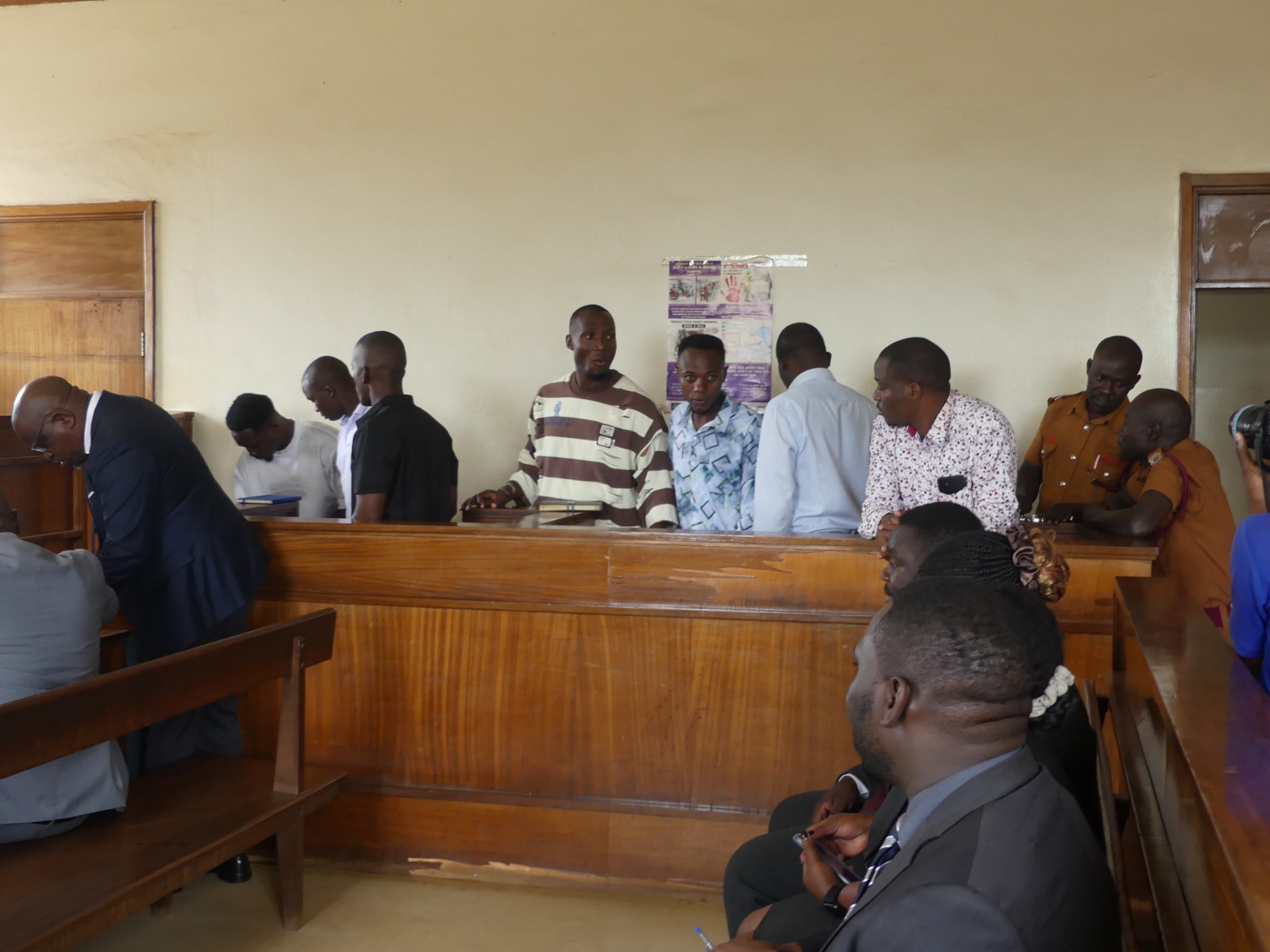
Even when the investigation began, he cooperated. He recorded statements, answered queries, and later received a summons to appear before the Management Disciplinary Committee. The court found that the first disciplinary hearing scheduled for October 31, 2008, was postponed after he explained he was unavailable.
URA then summoned him for another hearing set for November 20, 2008. Kansiime said he attended, signed the attendance book, and waited. But the meeting never took place.
According to the ruling, “the minutes and the rest of the respondent’s evidence do not acknowledge that the meeting of the 20th of November 2008 did not take place”.
The following day, on November 21, 2008, the disciplinary committee sat without him and decided his fate. URA argued in court that he failed to attend even after receiving telephone reminders. But the Industrial Court found no evidence that he was ever notified.
Court orders Shumuk to pay Shs 123 million to KCCA in overdue property rates
Justice Anthony Wabwire Musana, who heard the case, said he was not satisfied that Kansiime had been notified about the postponement of the disciplinary meeting.
He added that by 2008, URA could send written notifications by email or SMS, but did not provide any proof of doing so. He concluded that URA did not respect Kansiime’s right to a fair hearing.
Yet that is only half the story. While URA was faulted for violating due process, the court also found that Kansiime contributed to his own downfall by signing a destruction certificate that stated he had witnessed a destruction that never happened.
“Because the claimant [Kansiime] had appended his hand to the certificate of destruction, which indicated that he had witnessed the destruction of 603 cartons of counterfeit Kanta dye, whereas not, URA met the threshold for believing he had committed misconduct,” Justice Musana ruled.
Musana said this meant that although URA handled the process wrongly, the reasons for dismissal were valid.
He explained that awarding Kansiime more than the statutory minimum would amount to “rewarding misconduct”.
Kansiime had asked for Shs 28 million in unpaid benefits, three months’ notice pay, and general damages. But the court rejected all of it.
Instead, it ordered that he receive only four weeks’ net pay, amounting to Shs 2.5 million, and directed URA to give him a certificate of service within 21 days.
Musana noted that the certificate of service should help improve a terminated or dismissed employee’s employability and allow him to move on.
For Kansiime, the ruling is a bittersweet end to a long battle. The court agreed that his dismissal was unfair. Yet after nearly 20 years of work and more than ten years fighting for justice, all he formally takes with him is a certificate confirming he once worked at URA. Case closed.