Four civil society organisations have filed a case with the East African Court of Justice challenging the Protection of Sovereignty Act, 2026, arguing that parts of the law are inconsistent with Uganda’s obligations under the treaty establishing the East African Community (EAC).
The organisations filed the case on July 21, 2026, against Uganda and the secretary general of the EAC.
They are: the Centre for Environmental Research and Agriculture Innovations (CERAI) and Youth for Green Communities (YGC), both from Uganda, Natural Justice from Kenya and the Organisation for Community Engagement (OCE) from Tanzania.
The organisations work on issues including environmental protection, human rights, climate justice and community development in Uganda and other African countries.
They argue that the Protection of Sovereignty Act could make it more difficult for civil society organisations in East Africa to work together, particularly where projects involve foreign funding, technical support or partnerships across national borders.
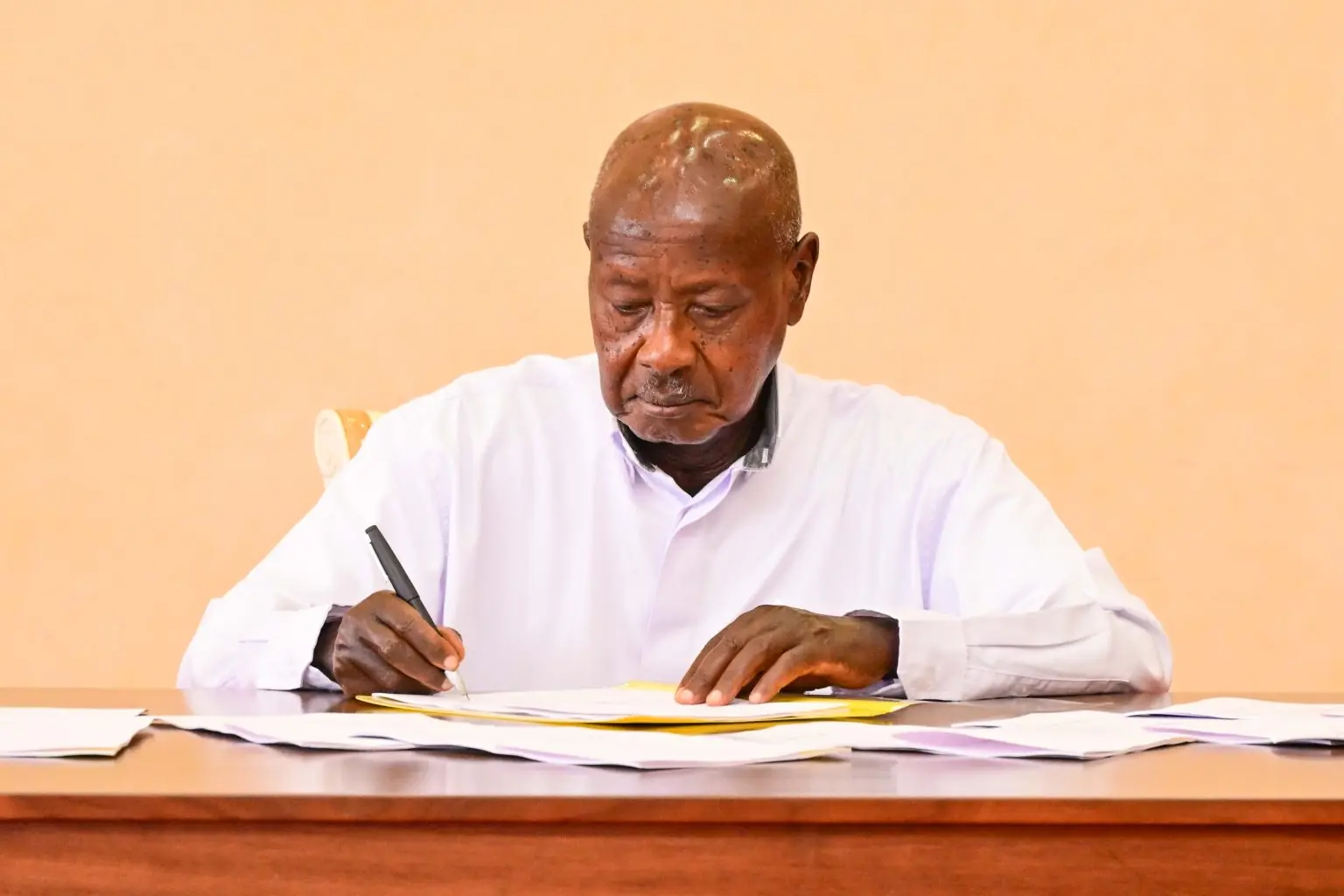
The case comes barely three months after Parliament passed the Protection of Sovereignty Act on May 5, 2026. President Museveni assented to the law on May 17, and it came into force on May 22.
The law was enacted to protect what the Government describes as the sovereignty of the people of Uganda. Among other things, it provides for the registration and regulation of agents of foreigners and regulates funding and other assistance to such agents.
The Act defines an “agent of a foreigner” to include a person who acts for, represents or is employed by a foreigner, or who operates under the direction or control of a foreigner or is financed or subsidised by one.
However, the law also contains exemptions. It states that certain foreign funding and assistance, including lawful foreign direct investment, humanitarian assistance, technical assistance, development assistance, research funding and some other lawful financial flows, are not subject to the Act.
The organisations challenging the law argue that its provisions could nevertheless affect civil society groups that work with partners outside Uganda.
They contend that some of their activities, including joint environmental projects, climate action, community mobilisation and research, could become more difficult if cross-border partnerships are treated as activities involving foreign interests.
At the centre of the case are provisions of the EAC Treaty which require member states to work with civil society and uphold principles such as good governance, democracy, accountability, transparency, the rule of law, social justice and public participation.
The organisations have specifically cited Article 5(3)(g) of the Treaty, which calls for stronger partnerships between the EAC, civil society and the private sector in achieving sustainable social, economic and political development.
They have also relied on Articles 6(d) and 7(2), which set out the Community’s fundamental and operational principles, including good governance, democracy, the rule of law, accountability, transparency, social justice and popular participation.
The applicants further argue that the Act conflicts with Article 8(1) of the Treaty, which requires partner states to pursue policies that support the objectives of the EAC and avoid measures that could undermine the achievement of those objectives or the functioning of the Community.
They have also cited Article 127, which requires EAC partner states to provide an enabling environment for the participation of civil society in the affairs of the Community.
The organisations say restrictions on cross-border civil society cooperation could affect projects involving environmental conservation, climate change, clean energy, disaster response and sustainable development.
They argue that such restrictions could also create barriers to regional funding, technical assistance and partnerships between organisations in different EAC member states.
The applicants are asking the East African Court of Justice to order the Ugandan Government to take legislative, administrative or other measures necessary to bring the Protection of Sovereignty Act into conformity with the EAC Treaty.
They also want the court to stop the government from applying or enforcing 25 sections of the Act which they claim are inconsistent with the Treaty.
The organisations have further raised concerns about the role of the EAC Secretary General. They argue that the Secretary General failed to investigate whether Uganda’s law was compatible with the EAC Treaty and failed to refer the matter to the court.
They are asking the court to direct the secretary general to monitor Uganda’s compliance with any orders issued by the court and report on the matter.
Gerald Barekye of CERAI said his organisation had been working with organisations in Uganda and other parts of East Africa to promote access to clean energy.
“Our organisation has been collaborating with Ugandan and other organisations across East Africa to promote clean energy access. We have undertaken research, community awareness raising and distribution of clean energy technologies,” Barekye said.
Richard Sekondo of OCE said cross-border cooperation was important to ensuring that communities participate in the transition to cleaner sources of energy.
“This work is key to ensuring that East African communities are part and parcel of the clean energy transition. Uganda’s Sovereignty Act threatens this and other climate justice work,” Sekondo said.
“In the interest of all East Africans, therefore, we filed the case, and we hope that it will be successful.”
The EAC currently comprises Burundi, the Democratic Republic of Congo, Kenya, Rwanda, Somalia, South Sudan, Tanzania and Uganda.
The case now places Uganda’s new sovereignty law before a regional court and raises questions about how national laws should operate alongside the commitments made by EAC partner states under the Community Treaty.