African youth are more optimistic about the future of their countries and the continent, but they say governments must create jobs, fight corruption and give young people a greater voice in decision making.
The findings are contained in the 2026 African Youth Survey, which interviewed 4,901 young people aged between 18 and 24 across 16 African countries.
The survey, commissioned by the Ichikowitz Family Foundation and conducted by PSB Insights, is the largest edition since it was launched in 2020.
The survey shows that optimism among young Africans has reached its highest level since the Covid-19 pandemic.
Across the eight countries that have consistently participated in the survey, 47% of respondents said their country is moving in the right direction, up from 30% in 2024.
Another 45% said their national economy is on the right path, compared to 26% two years ago, while 43% believe Africa as a whole is moving in the right direction.
Despite this growing confidence, respondents said daily economic hardships remain their biggest concern.
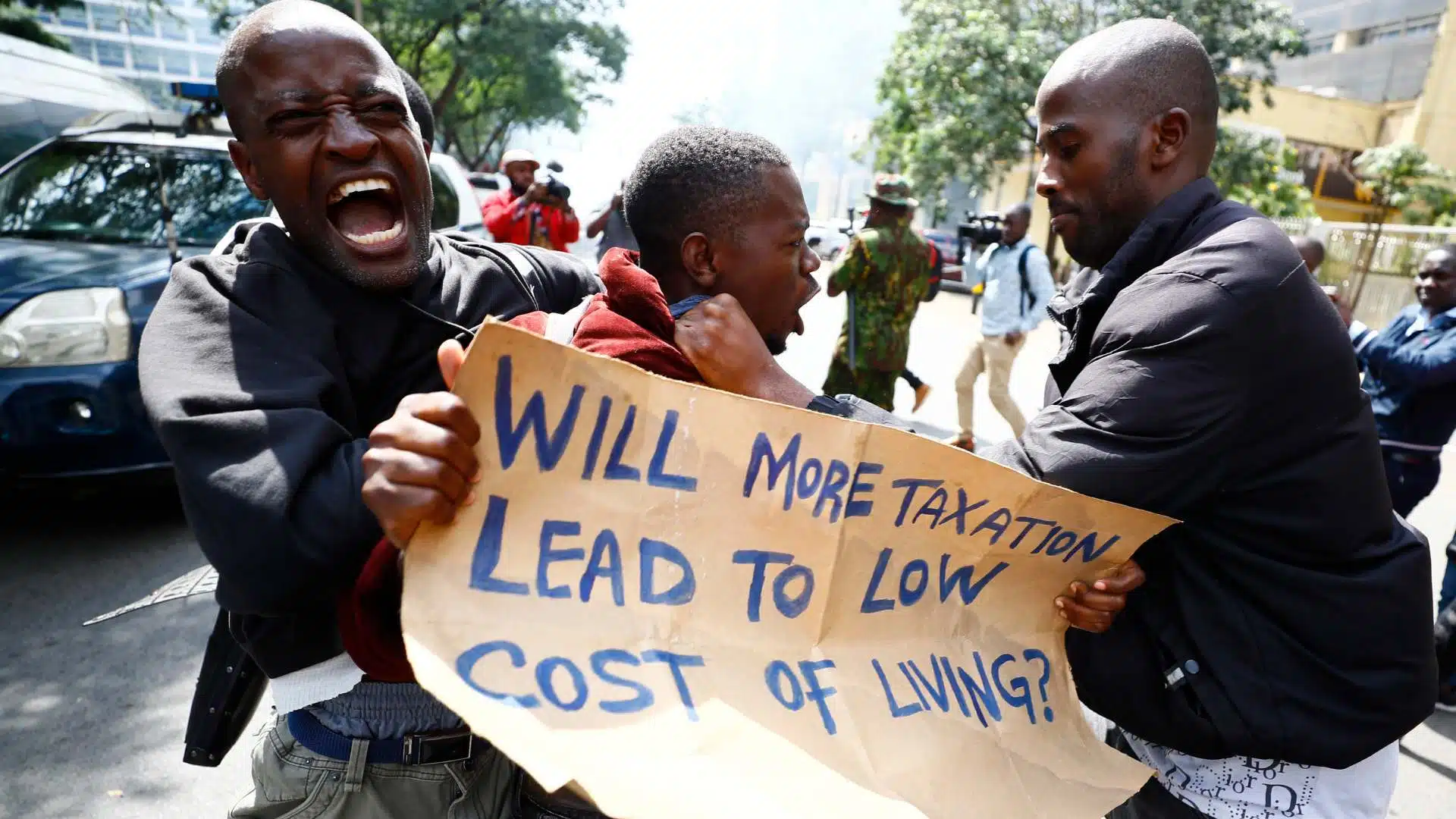
The rising cost of living was identified as the issue that has had the greatest impact on Africa over the past five years.
When asked what governments should prioritise, creating well-paying jobs ranked first at 27%, followed closely by reducing government corruption at 25%. Making it easier to start businesses was also identified as an important priority.
The survey found significant improvements in public confidence in countries such as Ghana, Ethiopia and Zambia.
In Ghana, positive views about the country’s direction rose by 51% compared to 2024.
Ethiopia recorded a 44% increase in optimism about the country’s direction, while concern about employment fell sharply. Zambia also registered major gains, with confidence in the country’s direction increasing by 32%.
The commissioner of the African Youth Survey and chairman of the Ichikowitz Family Foundation, Ivor Ichikowitz, said the improved mood among young Africans should not be mistaken for satisfaction.
“Do not mistake this optimism for satisfaction. It is not a vote of confidence in the status quo,” he said.

He said young Africans still face high living costs, unemployment and corruption, and want governments that deliver tangible results instead of empty promises.
“This is a generation that wants delivery, not slogans. It wants jobs, clean government, safety, business opportunity and a real voice in power,” Ichikowitz said.
The survey also found that young Africans are becoming increasingly practical in choosing international partners.
About 70% believe the world is becoming more divided and dangerous.
More than half said African countries should build relationships with nations that can deliver investment and trade benefits regardless of their political systems, while 42% preferred partnerships with countries that share similar democratic values.
When asked what matters most in choosing international allies, respondents ranked investment in infrastructure and the economy first, followed by respect for Africa’s natural resources, democratic values, sovereignty, technology transfer and security cooperation.
The United States and China continue to be viewed as Africa’s two most influential international partners.
The United States was seen as influential by 81% of respondents, while China followed closely at 79%. However, those who recognised China’s influence were more likely to describe it positively than those who viewed American influence favourably.
On governance, the survey found that democracy remains popular among Africa’s youth.
Nearly three-quarters of respondents said democracy is always preferable to any other form of government.
However, 56% argued that Western-style democracy does not adequately reflect African realities and that the continent should develop its own democratic model.
Young people said such a system should prioritise national unity, free and fair elections, leaders who deliver jobs and services, and greater community participation in decision making.
Ichikowitz said young Africans are not rejecting democracy itself but are demanding systems that produce real improvements in people’s lives.
He said they want both freedom and effective leadership, arguing that accountability and economic progress should go hand in hand.
The survey also found that although 70% of young Africans believe their voices matter to national leaders and 84% think they can influence political decisions over the next five years, more than three-quarters believe current leaders do not fully understand the needs and aspirations of young people.
Respondents expressed strong support for reforms that would increase youth participation in government, including creating ministerial positions dedicated to youth affairs and introducing age limits for presidents and prime ministers.
Rwanda recorded the highest confidence levels, with 91% of respondents saying the country is moving in the right direction and 99% saying they feel safe.
Somalia also emerged as one of the survey’s biggest positive surprises, with strong optimism about its economy and future.
By contrast, young people in Kenya, South Africa, Mozambique, Chad and Nigeria were among the most pessimistic about the direction of their countries, their economies and Africa’s future.
Kenya and South Africa also recorded some of the highest levels of pessimism about the continent’s overall direction