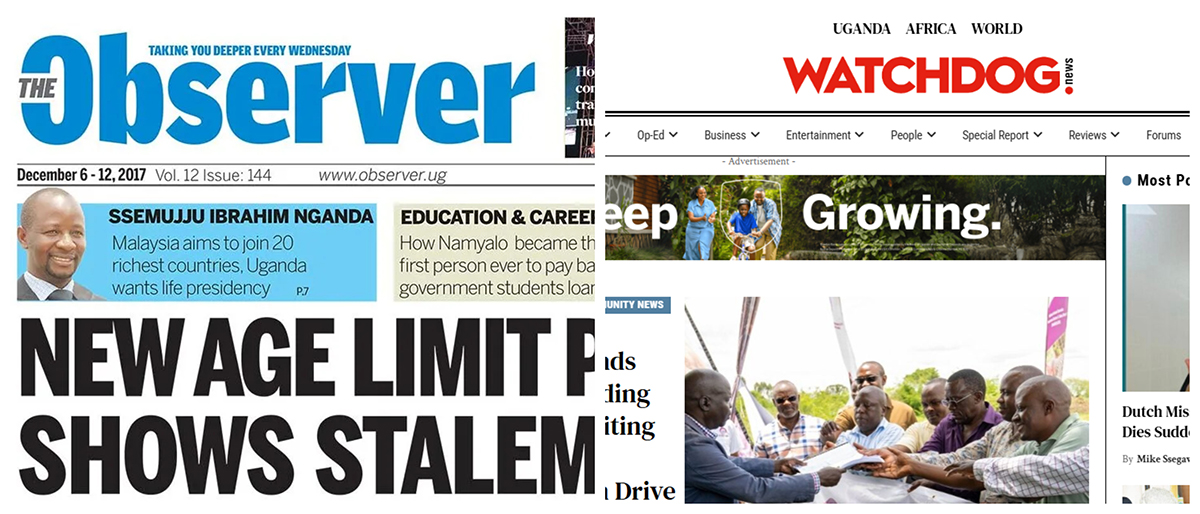
On July 29, 2020, The Observer newspaper published a story titled: “Racism charges, staff troubles hit the UN-FAO agency in Uganda.”
The story was about Kathryn Clark, who was working as a food security and livelihood expert at the Food and Agriculture Organisation (FAO) in Uganda. She was described as someone who “left the Catholic Relief Services under a dark cloud.”
The story also claimed that “many talented staff left… because of failure to work with her.”
A day later, Watchdog Communications (Watchdog Uganda) picked up the story and published another article.
The article said Clark and others were accused of “treating Africans with disrespect and intimidation.”
Clark reached out to the media organisations and said the claims made against her were false.
She acknowledged that some people under her had reported her, but FAO investigated the claims and cleared her of any wrongdoing.
She asked them to remove the articles and apologise. They declined.
In 2023, Clark sued The Observer Media and Watchdog Communications seeking to declare the articles defamatory, order their removal, compel the media houses to apologise, and award her damages. She also wanted exemplary damages.
The Observer and Watchdog did not file their written statements of defence.
Clark’s lawyers from Muwema & Co. Advocates then applied for a default judgment, and on November 4, 2025, the court granted it.
This meant the case would proceed without the media organisations presenting their side.
Clark’s lawyers told the court that the publications were false, malicious, and widely shared online. They argued that the stories harmed her reputation as an international professional.
They said the articles exposed her to “ridicule and hostility” and affected her career opportunities.
They also pointed out that the media houses did not verify the claims before publishing them.
Clark herself said she continues to be questioned about the allegations even in her current job.
Court orders client to pay Macdusman Kabega’s law firm for legal services rendered
After hearing her submissions, Justice Collins Acellam focused on two main questions: were the articles defamatory? Did Clark deserve any remedies?
Justice Acellam defined defamation as “harming the reputation of another by making a statement to a third party.”
He added that the key test is whether the words would lower a person “in the estimation of the right-thinking member of society.”
“I have had a look at the publication… and indeed they keep mentioning and portraying Clark as a racist and a hard person to work with,” he said.
He concluded that such statements were harmful, especially given Clark’s work in international organisations. Clark won the case and was awarded Shs 50 million in general damages.
Justice Acellam said this was to compensate her for the harm to her reputation and career.
“The said publications derailed her career trajectory… and caused her ridicule and distress,” he said.
The court also ordered The Observer and Watchdog to pay Clark’s legal costs, remove the articles, and publish an unconditional apology on their platforms.
One of the key reasons the two media companies lost the case is that they did not defend themselves, leaving Clark’s claims to go unchallenged.