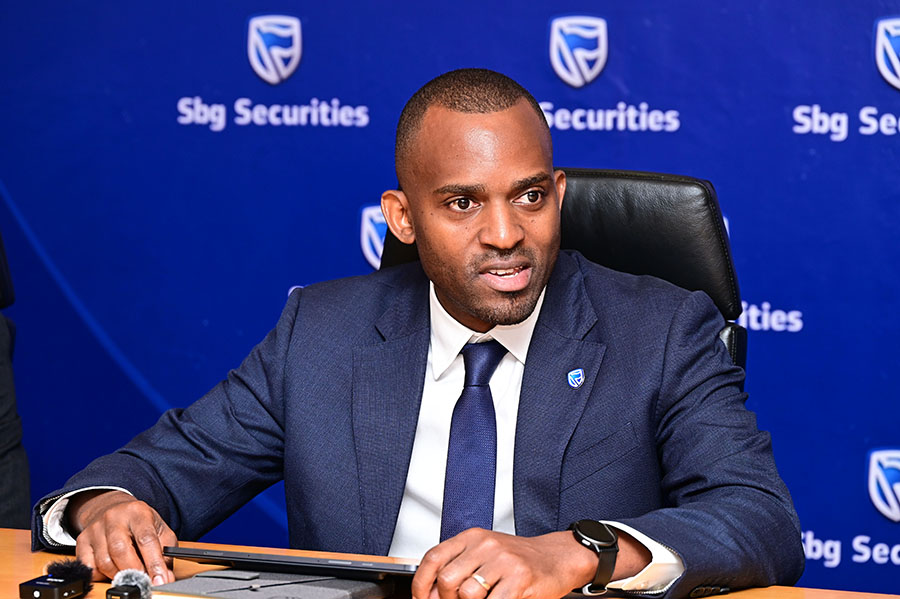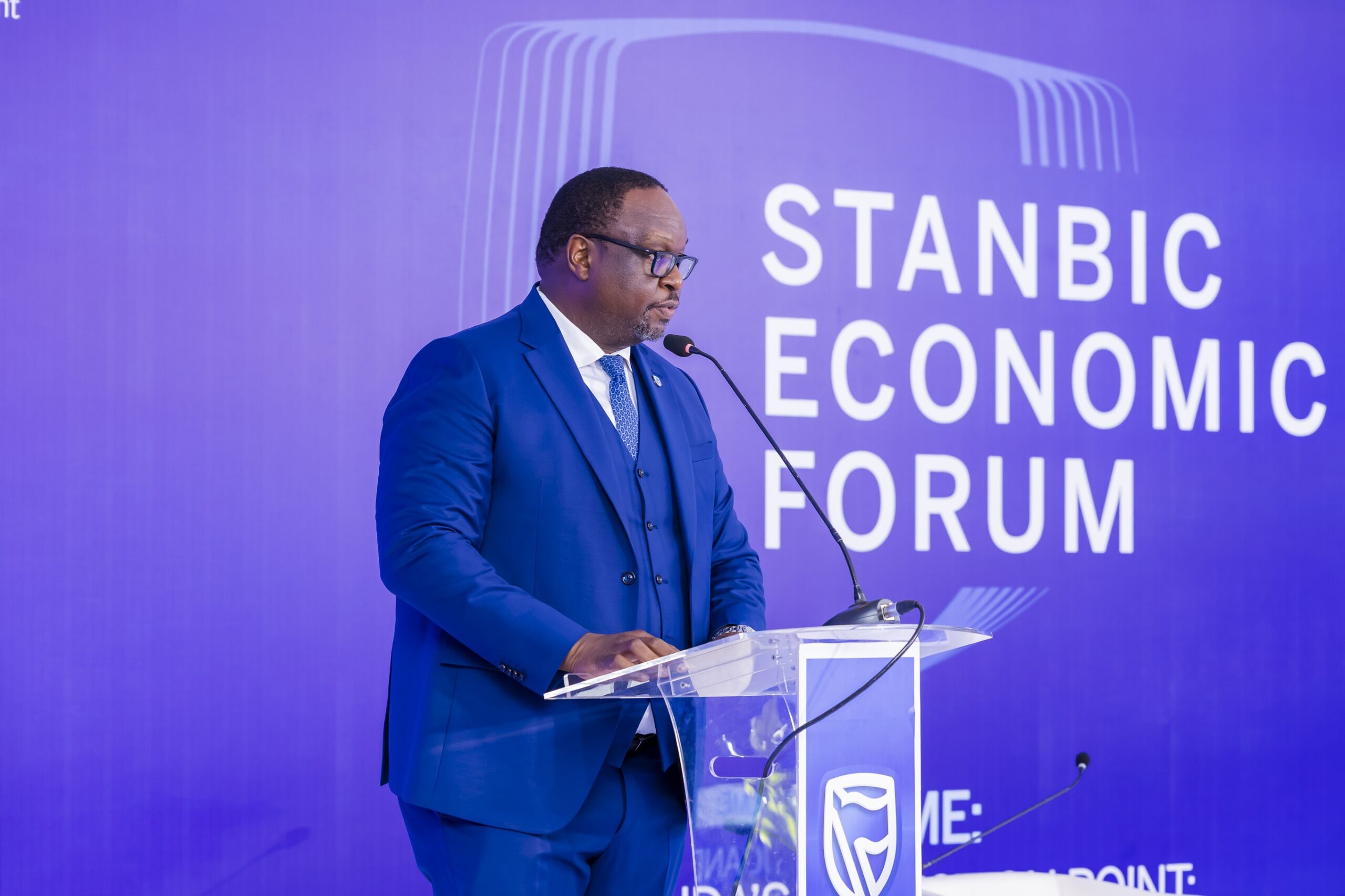
Stanbic Bank Uganda’s chief executive, Mumba Kalifungwa, has urged leaders across government, business and finance to turn Uganda’s macroeconomic gains into inclusive and long-term prosperity as the country approaches commercial oil production.
Speaking at the fifth Stanbic Economic Forum in Kampala, Kalifungwa said Uganda’s future “is not something to be observed from a distance, but something to be actively shaped”.
The forum was held under the theme, “Uganda’s Inflection Point: Competing in a Rewired Global Economy”.
Kalifungwa said the near completion of the East African Crude Oil Pipeline (EACOP), now estimated at 97% complete, marked one of the most consequential infrastructure investments in Uganda’s history.
“With an estimated 1.6bn barrels of recoverable reserves and peak production of 230,000 barrels per day, first oil expected later this year will reshape Uganda’s fiscal position, industrial capability and regional standing,” he told invited guests.
He said the real value of the oil and gas sector goes beyond production figures and export revenues.
According to Kalifungwa, the sector presents opportunities for job creation across the value chain, development of local suppliers, skills transfer and the building of long-term national capacity.
He also highlighted global headwinds and opportunities that will shape Uganda’s competitiveness, including shifting trade regimes, supply chain realignments, uncertainty around the future of the African Growth and Opportunity Act, and the rapid rise of artificial intelligence.
“Africa’s AI market is projected to nearly quadruple by 2030,” he said. “AI is no longer a distant frontier. The question is not whether Uganda participates, but how inclusively and competitively it does so.”
Kalifungwa said Stanbic Bank had partnered with Uganda for more than 35 years, financing infrastructure, supporting enterprises and helping families build economic security under its purpose statement: “Uganda is our home, we drive her growth.”
He said the bank’s strategy focuses on financial inclusion, enterprise development, infrastructure financing, climate resilience and corporate philanthropy, with particular emphasis on women, young people and farmers.
The keynote speaker, Jibran Qureishi, Standard Bank Group’s head of Africa regions economic research, gave a cautiously optimistic macroeconomic outlook.
He said Uganda was steadily approaching the 7% GDP growth threshold.
Following growth of about 6.3% in the 2024/25 financial year, Qureishi projected expansion of between 6.5% and 6.7% in 2025/26. Growth could approach or exceed 7% in 2026/27, largely driven by oil sector investment and continued public infrastructure spending.
However, he cautioned that while first oil, expected from late 2026, represents a historic turning point, the most significant macroeconomic effects will be felt later.
He said fiscal revenues, foreign exchange earnings and improvements in the balance of payments were likely to become more pronounced closer to 2030, in line with global oil production ramp-up trends.
Qureishi commended the government’s fiscal discipline over the past decade, particularly its decision to avoid prematurely monetising future oil revenues.
That restraint, he said, had helped preserve macroeconomic stability and sustain investor confidence.
He warned, however, that strong macroeconomic performance does not automatically translate into improved household welfare.
Capital-intensive growth, a large informal sector, inflation shocks since the Covid-19 pandemic and fiscal adjustments supported by the International Monetary Fund have widened the gap between headline economic growth and lived experience.
“The challenge we face is increasingly about asset holders versus non-asset holders,” Qureishi said, adding that unresolved economic grievances can quickly evolve into social and political pressures.
On the external front, he pointed to a sharp recovery in Uganda’s foreign exchange position.
Gross foreign exchange reserves rose from about $3bn at the end of 2024 to nearly $6bn by December 2025, strengthening import cover and reflecting an improved balance of payments position.
For the past five years, Stanbic Bank has convened public and private sector stakeholders to assess Uganda’s economic prospects and policy priorities.