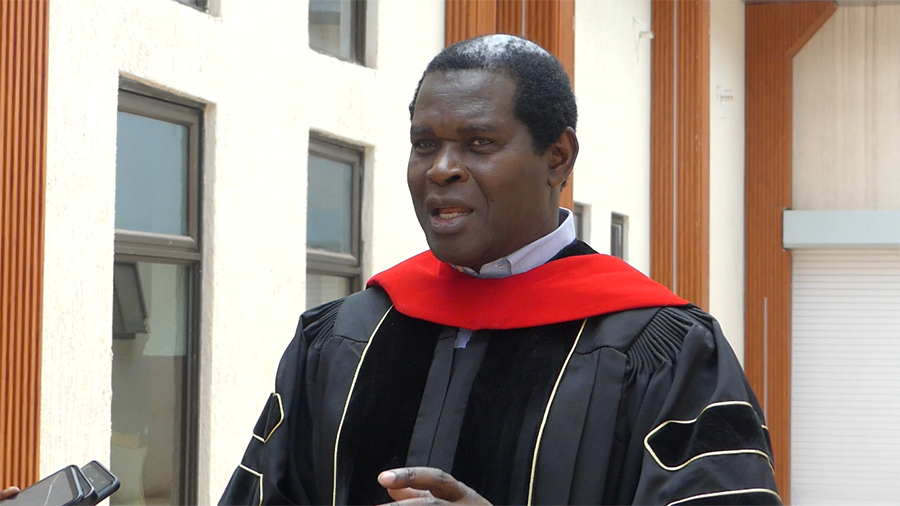
Pastor Robert Kayanja of Lubaga Miracle Centre Cathedral has reiterated his long-held view that the Bulokole (Pentecostalism) should not be treated as a religion but as a faith that cuts across denominations and transforms individuals regardless of background.
Kayanja made the remarks during the 17th graduation ceremony of Bible Miracle College held at Lubaga Miracle Centre, where 1,902 students graduated with certificates, diplomas, and degrees in discipleship and leadership.
He argued that when formal religions were introduced in Uganda, including Anglicanism, Catholicism, and Islam, they came with distinct cultures and norms that unintentionally entrenched divisions within society.
By contrast, Kayanja said Bulokole, which emphasises salvation and personal faith, calls on believers from different denominations to unite rather than compete.
“Bulokole is not a religion. It is about salvation and faith. It is meant to change people and bring unity, not division,” he said.
The graduation ceremony, which will run for four days, focuses on equipping Christians with theological knowledge, leadership skills, and practical tools to serve God and their communities.
Kayanja said Bible Miracle College was established after sustained public criticism that born-again Pentecostals lacked formal training, a situation he said had led to misuse of the faith by some preachers.
“We started the Bible college after several complaints from the public that born-again Pentecostals were not trained to serve God and ended up misrepresenting the faith,” he said.
He also reflected on the historical challenges faced by Pentecostal Christians before the National Resistance Movement (NRM) came to power in 1986, noting that some born-again believers were restricted from preaching, a period he said saw the killing of more than 1,000 pastors.
According to Kayanja, the situation changed after President Museveni took power and introduced freedom of worship, allowing Pentecostal churches and other faith groups to operate freely.
On that basis, he called on leaders across the country to put aside religious and political differences and work together for Uganda’s development.
“Development requires unity. Leaders must rise above affiliations and focus on building the nation,” he said.
Kayanja said the idea of starting a Bible college was conceived nearly three decades ago, following the liberalisation of worship under the NRM government, which allowed Pentecostal churches to evangelise openly.
He revealed that the institution is currently seeking accreditation from the National Council for Higher Education (NCHE), adding that it is already affiliated with the Association of Independent Christian Colleges and Seminaries in the United States.
Pastor Kayanja is one of Uganda’s most prominent Pentecostal leaders and the founder of Miracle Centre Ministries, which has branches across the country and abroad.