The 2024 Housing and Population Census paints a troubling picture for Uganda: youth unemployment stands at 16.1% among those aged 18 to 30, more than 10 million young people are outside work or training, and about 700,000 new job seekers enter the labour market each year.
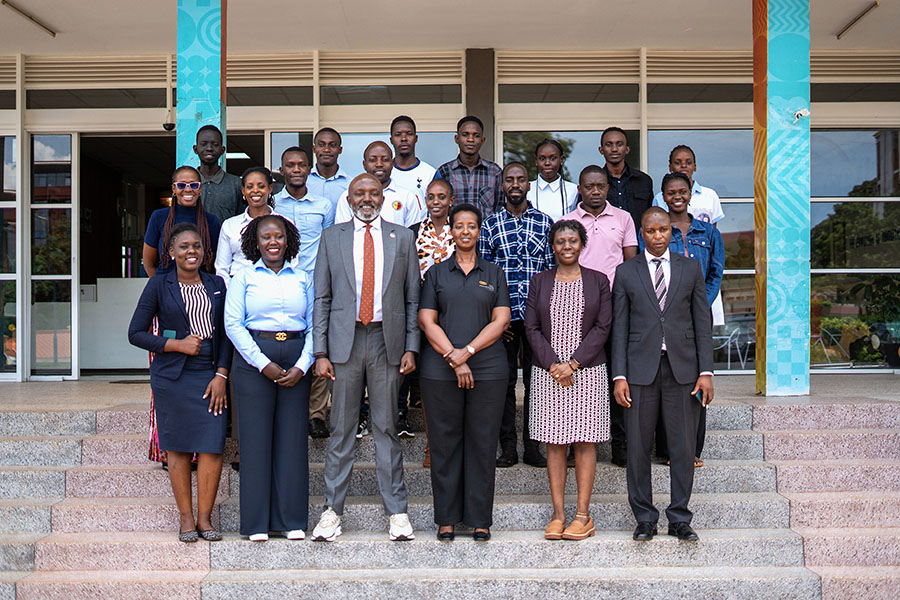
It was against this backdrop that Allen Kagina, a trustee on the MTN Foundation board, visited the National ICT Innovation Hub in Nakawa on Tuesday and delivered a measured verdict: the intervention is working.
The MTN ACE Tech Programme, funded by MTN Uganda and implemented by Centenary Technology Services, has since 2022 invested in the hub’s infrastructure, equipped it with industry grade tools and created a pathway for digital skills training, incubation and acceleration.
Programme data shows that 32,125 individuals have been trained since 2022. Of these, 19,781 are male, 12,248 female and 96 are persons with disabilities.
About 90% of advanced trainees secured employment or started a business within six months of completing the programme, according to an independent monitoring and evaluation framework.
Kagina’s assessment focused on practical outcomes saying that computer laboratory, noting that for many trainees it offers their first access to a reliable, connected workstation.
“That is the difference between a young person who has potential and one who can act on it,” she said.
She described the hub’s video conferencing suite as a gateway to global markets, aligning it with Uganda’s National Business Process Outsourcing Policy launched in February 2025.
The policy aims to create 150,000 jobs by 2030 by positioning Uganda as a continental outsourcing hub in a global market valued at more than $250bn.
“A young professional with the right skills can serve a client in London or New York from this building. The conferencing suite is not a convenience. It is a job creation tool,” Kagina said.
She also highlighted the internet of things laboratory, which houses MTN funded 3D printers, as critical in reducing the cost and time required to turn ideas into working prototypes.
Flavia Opio, head of the National ICT Innovation Hub, said the partnership had transformed the facility’s ability to deliver on its mandate.
“Before this programme, we had the mandate but not the means. MTN Uganda’s investment has made it possible for us to actually serve as the infrastructure required under Uganda’s Digital Transformation Roadmap and the National Development Plan IV,” she said.
Steven Kirenga, general manager for product and business development at Centenary Technology Services, said the programme’s long term impact lies in the operational systems established at the hub.
He said his team developed 10 core processes covering areas such as onboarding innovators, managing incubation and ensuring data compliance.
“Equipment can be replaced. Processes define what an institution can do. We did not just equip this hub. We gave it an operating system,” Kirenga said.
Uganda’s National Development Plan IV targets the creation of 884,962 jobs annually up to 2030 and aims to reduce youth unemployment to 12.9 percent. Analysts say the formal sector alone cannot absorb the growing labour force, increasing the importance of the digital economy, outsourcing and entrepreneurship.
Kagina said private sector players must take responsibility for areas where they can have impact.
“MTN Uganda is not waiting for someone else to solve the part it can solve. What I saw today is serious investment, sustained over years and measured honestly,” she said.
The programme has now entered its second phase, which will expand activities to regional centres including Gulu, Kabale, Busitema and Soroti, in line with national policy frameworks that call for innovation infrastructure beyond Kampala.