High Court judge, Justice Henry Kaweesa, has urged Ugandans to pursue additional knowledge and practical skills as a sustainable way of improving their standards of living and fighting poverty.
Justice Kaweesa said he personally chose to study at Miracle Bible College to deepen his understanding of godly principles and strengthen his ability to deliver balanced judgments.
“We go to church to receive instruction from God. Some people say judges and lawyers are liars, but when you go to church everything changes,” Kaweesa said.
He explained that engaging with “seasoned men” and “women of God” helps leaders to emulate the character of Jesus Christ and apply knowledge and wisdom responsibly when making decisions.
“In many cases, people who know God are needed more in offices than those who end up embezzling taxpayers’ money,” he said.
Kaweesa also emphasised the need to prioritise skills development across the country, describing it as one of the most effective ways to lift Ugandans out of poverty.
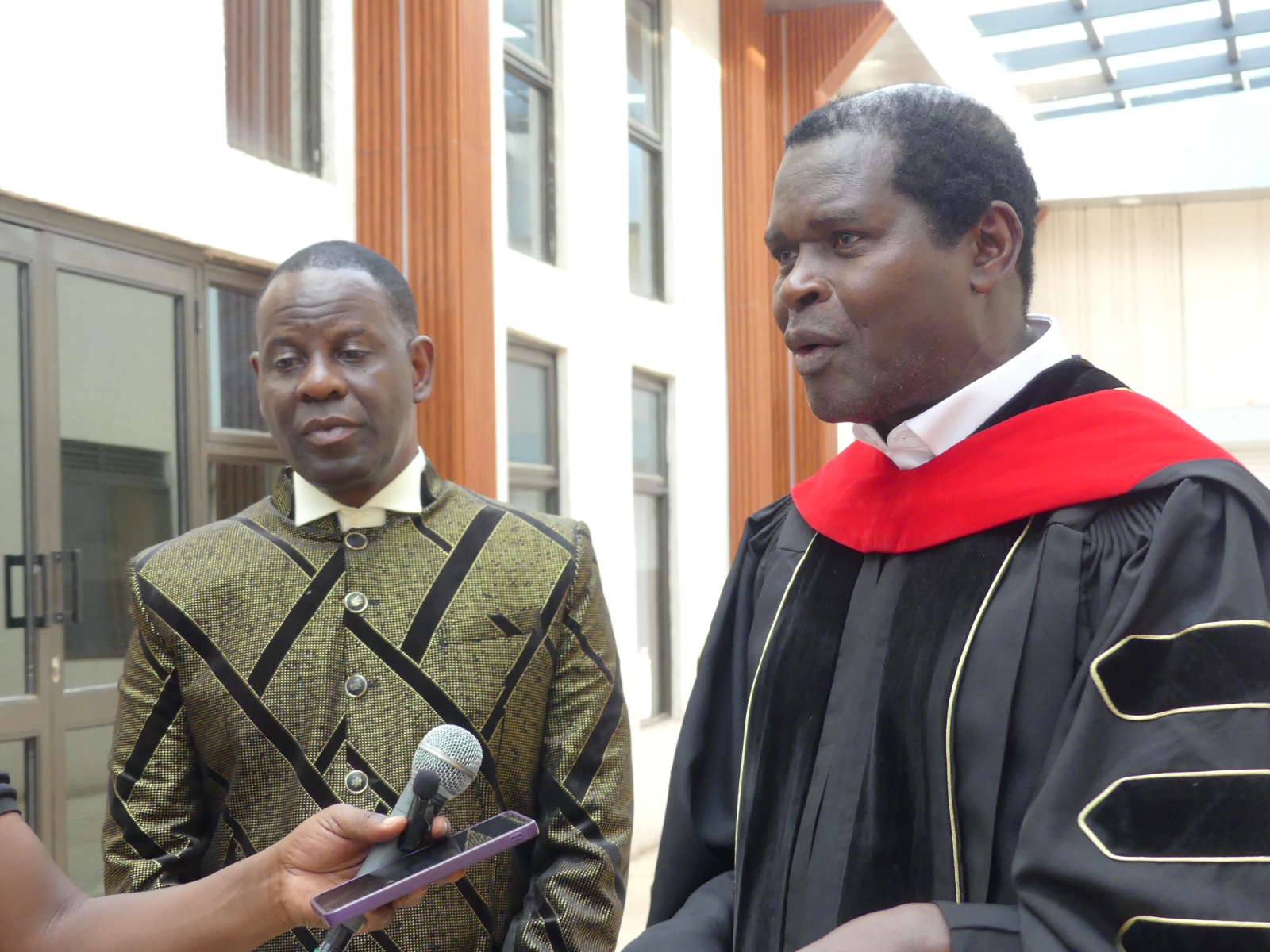
He was speaking at the close of a four-day graduation ceremony at Miracle Bible College, where more than 1,900 students graduated in discipleship, leadership and theology.
Speaking at the same event, Pastor Robert Kayanja of Lubaga Miracle Centre and president of Miracle Bible College, challenged born-again Christians to rethink their spending habits, especially during festive seasons.
Kayanja suggested that if Christians fasted for one year and saved the money typically spent on Christmas celebrations, many would be able to raise enough capital to start income-generating activities.
He said born-again Christians currently number about seven million in Uganda, spread across more than 50,000 households. If each household saved about Shs 100,000 during Christmas, the total savings could reach about Shs 200 billion in a single day.
“To me, Shs 200 billion can be used as starting capital for Christians to move out of poverty,” Kayanja said.
He added that many born-again Christians and other Ugandans spend large sums of money during Christmas, Easter and other celebrations without realising that such funds could be redirected into productive investments, if people committed to collective saving.