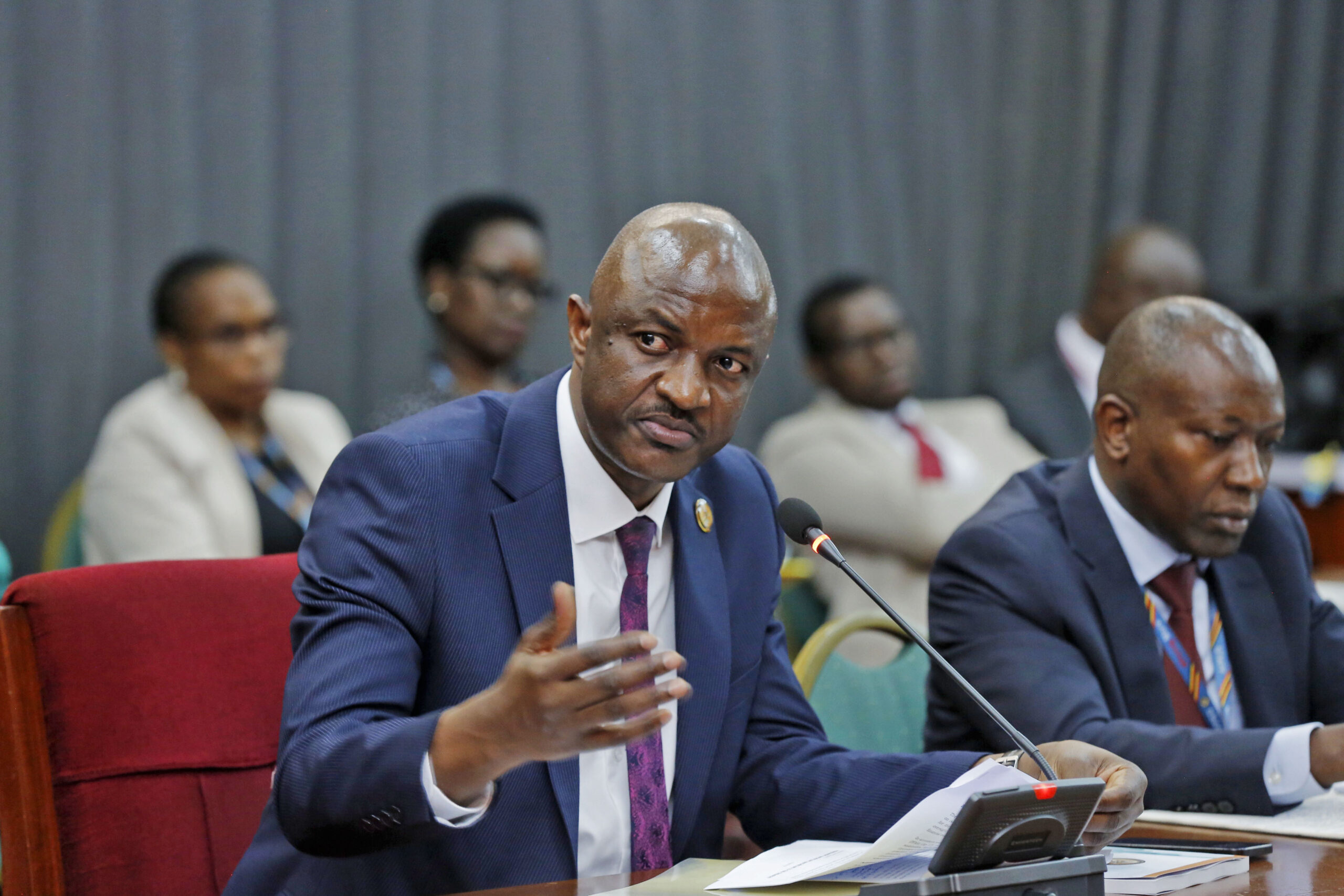
Government has pledged to support businesses investing in high-risk sectors by enabling them to access affordable loans through commercial banks.
Dr Ramathan Ggoobi, the Permanent Secretary in thhe Ministry of Finance, made the assurance while appearing before the Public Accounts Committee (PAC).
The committee, chaired by Mawogola South MP Goretti Namugga, was scrutinising issues raised in the Office of the Auditor General report for the financial year that ended in 2025.
Ggoobi said the government was strengthening financial inclusion so that more Ugandans can participate in economic activities.
“Uganda’s economy is progressing because, as government, we have deepened financial inclusion to bring on board all people through various government development programmes,” he said.
He told MPs that businesses investing in high-risk sectors could benefit from affordable credit facilities provided through commercial banks and development finance institutions such as the Uganda Development Bank.
According to Ggoobi, banks are increasingly offering capital and business loans at relatively low interest rates, which has helped entrepreneurs expand their operations.
He added that small and medium enterprises were also benefiting from incentives that government extends to large and foreign investors.
Ggoobi was responding to questions from MPs, including Namugga, who said some coffee farmers in her constituency had not yet benefited from government financial support.
The finance ministry, he said, is supporting coffee farmers in phases. He noted that the programme had started in parts of Luwero District and would gradually be extended to other areas including Mawogola, Sembabule District and the Bugisu sub-region.
Ggoobi also said the banking sector in Uganda remains stable, noting that lending rates had fallen to about 18.5 percent. He expressed optimism that the rates would decline further as government works with the Bank of Uganda to implement measures aimed at easing the cost of credit.
He said government had established several programmes to support income generation and expand financial access. These include the Parish Development Model, Emyooga Programme and Operation Wealth Creation.
On the use of credit reference bureaus, Ggoobi said commercial banks rely on the system to identify creditworthy borrowers in both the formal and informal sectors. The system, he said, helps lenders assess risk and protects financial institutions from bad debt.
He added that the expansion of financial services had contributed to improvements in livelihoods, including increased life expectancy and reduced income inequality among Ugandans.
Responding to concerns about staffing gaps in government ministries, departments and agencies, Ggoobi said recruitment was being handled gradually depending on the availability of resources to support the wage bill.
He noted that priority sectors such as education, health and transport would continue to receive attention.
Ggoobi also said government had ensured that key programmes such as the Parish Development Model (PDM), human capital development initiatives, capitation grants, transfers to local governments and road maintenance were funded through the recurrent budget to sustain development activities.