President Museveni has told many untruths in his political life. He once claimed to oppose life presidency, arguing that leaders who never leave power are Africa’s problem. He later removed both term and age limits.
He alleged that the National Unity Platform stole his votes in the 2021 presidential election, despite being in charge of the electoral machinery. Museveni lies with a straight, sometimes smiling face. He has perfected the craft.
To serve him, one must be prepared to tell shameless lies. That is what a high-profile Museveni delegation comprising the Deputy Speaker, Thomas Tayebwa, the security minister, Jim Muhwezi, and the ICT minister, Chris Baryomunsi, did on December 20, 2025, in Rukungiri, in the Kigezi region. T
hey falsely told Ugandans that Dr Kizza Besigye’s lawyers were responsible for the delay in his treason trial.
The facts say otherwise.
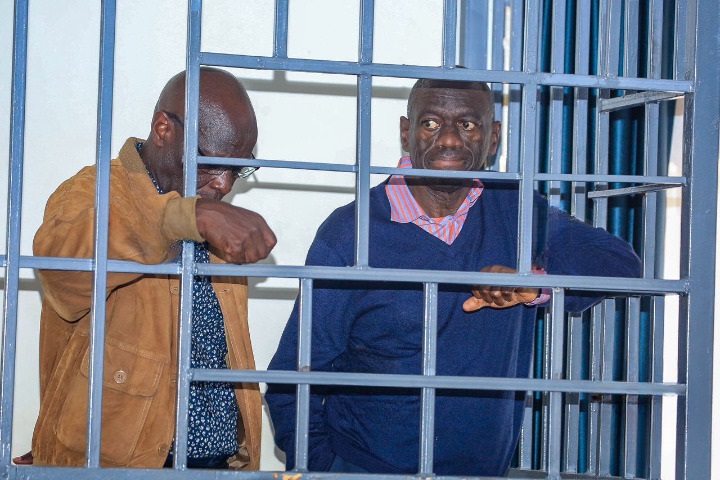
Besigye and Haji Lutale Obeid, were abducted on November 16, 2024, rendered from Kenya to Uganda without due process, and detained illegally and incommunicado at Makindye military barracks for four days.
The military then escalated their political persecution by subjecting them to unconstitutional and illegal proceedings before the General Court Martial at Makindye, acting on the faulty advice of the then judge advocate, Tukacungura.
On January 31, 2025, the Supreme Court halted those proceedings. The state, including President Museveni and his son, the Chief of Defence Forces, openly attacked the judiciary and defied the court’s orders.
It was only in late February that police took over the case file and arraigned Besigye and Lutale before the Nakawa magistrate’s court. Until then, their detention by the Uganda Prisons Service lacked a valid warrant, which had expired on January 31.
Besigye did not take himself to a court without jurisdiction. He did not order his own illegal detention. He did not abduct or render himself. These acts were carried out on Museveni’s orders. The responsibility for this chain of injustice, impunity and abuse of power lies squarely with the president.
Even suspects accused of treason retain fundamental human rights. They are innocent until proven guilty in a fair trial before an impartial court. Yet Besigye and Lutale have repeatedly been denied bail, including constitutionally mandated bail, on flimsy grounds tied to their “high profile”. In a normal legal system, high profile status favours the grant of bail.
Besigye has previously been granted bail on treason charges. That was at a time when judicial officers had the courage to resist political interference and defend judicial independence, whether subtle or brazen.
Besigye believes his current judicial harassment, presided over by Justice Emmanuel Baguma, whom he considers biased and incompetent, is the latest chapter in a long campaign of persecution for opposing military rule in Uganda.
On May 29, 2025, the state told Besigye it was ready to try him and committed the case to the International Crimes Division of the High Court. This commitment was made despite the state not being ready to present witnesses, a fact it later openly admitted in court on December 30, 2025. The move amounted to a textbook abuse of office by the Director of Public Prosecutions (DPP).
In rejecting some of Besigye’s bail applications, Justice Baguma advised him to abandon bail efforts and focus on the commencement of trial, despite knowing that the prosecution had not disclosed the evidence it intends to rely on. To date, no such disclosure has been made.
On December 30, 2025, prosecutors admitted in open court that they were still unprepared to disclose evidence. They further stated that they had not yet applied for witness protection, claiming this as a precondition for disclosure. There is no constitutional basis for such a condition.
More than a year after Besigye’s arrest, the state remains unable or unwilling to take this “simple” procedural step. This confirms what is increasingly clear: the state is not ready to try Besigye.
The pretence of urgency serves a political purpose, aimed at calming public anger, particularly among Besigye’s supporters, while keeping him incarcerated.
Besigye recently expressed his frustration in court. Lutale remarked that he had hoped to appear before a temple of justice, only to find himself before Satan. The conduct of the state towards them and other political detainees is indeed cruel and dehumanising.
A trial cannot proceed without disclosure of evidence to the defence. When pressed on timelines, prosecutors refused to commit. The court instead scheduled a conference for January 21, 2026, ostensibly to address disclosure issues.
This date falls after the January 15 presidential election, by which time Museveni’s objective of jailing his political rival throughout the electoral period will have been achieved.
Further evidence of the state’s unreadiness came on December 29, 2025, when prosecutors amended the indictment to clarify the names of co-accused and the relevant High Court division.
More than a year after arrest, the state was still correcting basic errors, including the name of a soldier allegedly linked to the case. The following day, prosecutors admitted they had forgotten to amend the summary of the case.
The state is not serious about prosecuting Besigye. It has, however, been very successful in persecuting him and ensuring his incarceration during the election period.
This campaign of persecution has real human consequences. Besigye and Lutale are elderly men with families who depend on them. They have health, dignity and family life at stake. It is bad enough to persecute citizens. It is far worse to claim they are responsible for their own suffering.
This madness must end.
The author is a Human rights lawyer