“I used to feed my children from my own garden. Now I buy food, and sometimes we sleep hungry.”
That is how one of the residents interviewed by the Africa Institute for Energy Governance (AFIEGO) describes life after being affected by the East African Crude Oil Pipeline (EACOP) livelihood restoration programme.
Her words capture the key finding of AFIEGO’s new research report, which assesses how the EACOP livelihood programme has affected people in Uganda’s oil districts.
Instead of restoring livelihoods to pre-project levels, many of the project-affected persons, the 53-page report reveals, say their lives have become more uncertain, more painful, and more dependent.
The East African Crude Oil Pipeline is a 1,443-kilometre heated pipeline that is expected to transport crude oil from Uganda to the Tanzanian port of Tanga.
It is being developed by EACOP Ltd, a company led by TotalEnergies in partnership with China National Offshore Oil Corporation (CNOOC) and the governments of Uganda and Tanzania.
In Uganda, the pipeline cuts through several districts in the oil region, affecting thousands of households through land acquisition.
To address the loss of land and livelihoods, the project developers promised compensation and livelihood restoration programmes. These programmes, according to official documents, were meant to ensure that affected households are not left worse off.
However, the new report by AFIEGO paints a troubling picture.
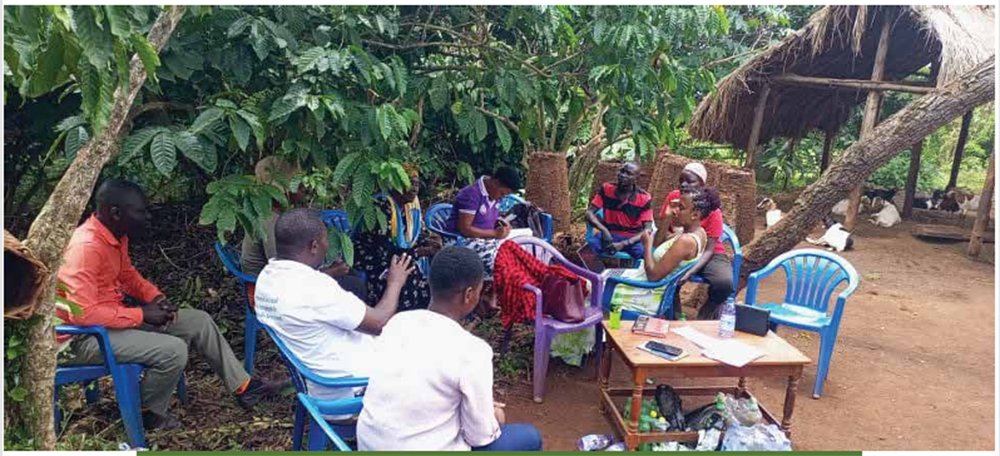
The research on interviews with project-affected persons in oil districts. Many of them speak of broken promises, poor-quality support, delays, and deep emotional distress.
“I was told that the project would improve my life. But since they took my land, I have only known suffering, “one of the people affected by the project told the researchers.
According to the findings, land was the backbone of most affected families. It provided food, income, identity, and security.
Once acquired for the pipeline, many families were left waiting for compensation for long periods. During this waiting time, they were reportedly restricted from planting perennial crops or making long-term developments on their land.
The report notes that this created what many residents described as a “suspension of life” as people could not invest in their land because it had been marked for acquisition. Yet they had not received money to start new lives elsewhere.
Some of the people interviewed told researchers that they were instructed not to plant certain crops. As a result, food production dropped sharply.
“We were stopped from planting coffee and bananas. They said the land was already taken. But compensation was delayed. So what were we supposed to eat?” one of the farmers asked.
The report notes that this period of uncertainty pushed many households into poverty even before they received compensation.
When compensation eventually came, the amounts were often inadequate to purchase equivalent land. Land prices in the affected areas reportedly rose sharply after the oil projects were announced, making it difficult for displaced families to find affordable alternatives.
“Before oil, land was cheap here. After oil came, even a small piece is very expensive. The money they gave me cannot buy the same size of land I had,” one of the respondents said.
Beyond the economic loss, several respondents described stress, anxiety, and family conflict resulting from EACOP.
One woman recounted how disputes over compensation money had created tension in her household.
“The money came and brought quarrels. My husband wanted to use it his way. I wanted to secure land for the children,” she said.
The report documents cases where families allegedly broke apart under the pressure of managing compensation funds. In some cases, money was reportedly misused or quickly depleted, leaving households worse off.
One of the aims of the livelihood restoration programme, which included support such as seedlings, livestock, and training in alternative income-generating activities, was to cushion families from these shocks.
But many respondents say the support was either insufficient or inappropriate.
“They brought goats. But we had lost grazing land. Where were we to keep them?” he asked.
Others, according to the study, say they received seedlings without adequate follow-up support or extension services from the government and EACOP partners. Some said the inputs were of poor quality.
“We were given seedlings, but many dried. There was no proper guidance,” one of the respondents said.
The findings indicate that the livelihood programme did not fully take into account the local realities of affected communities.
For farmers who had relied on fertile land and large gardens, small-scale activities could not match previous income levels.
The report concludes that many households have not been restored to their pre-EACOP standard of living. Instead, some have become more vulnerable, with reduced food security and unstable incomes.
Particularly affected, the report notes, are women, elderly persons, and those without formal land titles. In some cases, women say they were sidelined during compensation processes, even though they depended heavily on the land for household food production.
“I used to decide what to plant and when. Now I have no garden. I depend on my husband for everything,” one of the women told the researchers.
Several respondents said they did not fully understand how compensation rates were calculated. Others felt their grievances were not adequately addressed.
The EACOP project has faced criticism from environmental and human rights groups, both locally and internationally, over its climate impact, risks to biodiversity, and effects on communities.
Supporters of the project argue that it will bring revenue, infrastructure, and jobs to Uganda. The government has repeatedly defended it as a key driver of economic transformation.
Yet on the ground, AFIEGO’s findings suggest that for many directly affected families, the transition has been painful.
The report makes several recommendations aimed at improving outcomes for project-affected persons.
First, it calls for a comprehensive review of the livelihood restoration programme to assess whether it has genuinely restored incomes and food security to pre-EACOP levels.
Where gaps are identified, the report recommends additional support tailored to the specific needs of affected households.
Second, the report urges project developers and government authorities to ensure timely and fair compensation. Delays, it argues, should be avoided because they create prolonged uncertainty and deepen poverty.
Third, it recommends strengthening transparency in valuation processes. Affected persons should clearly understand how compensation amounts are determined, and they should have access to independent advice where possible.
For many of the people interviewed, these recommendations cannot come soon enough.
“I do not hate development. But development should not destroy the poor,” one elderly man said.
The promise of oil wealth has long been presented as a turning point for Uganda, and the pipeline is a key piece of that promise.
But the report suggests that unless livelihood restoration is handled more carefully, the costs may fall on those who can least afford them.
“We gave our land for the country. But who will give us back our life?” one of the female respondents, a widow, queried.